The 2026 jewellery market operates at the intersection of high-frequency fashion cycles and long-term capital preservation. To navigate this space, a buyer must move beyond the subjective "gift guide" and adopt a valuation framework based on three specific variables: material purity, artisanal scarcity, and the liquidity of the secondary market. Most consumers overpay for brand equity while ignoring the underlying asset value. Success in 2026 requires identifying pieces where the delta between the retail price and the intrinsic value of the raw materials is minimized, or where the "provenance premium" is mathematically justified by historical auction performance.
The Hierarchy of Value Retention
The primary failure of standard jewellery curation is the lack of distinction between "consumable" jewellery and "durable" assets. To solve for long-term value, items must be categorized into a strict hierarchy based on their recovery value.
- Tier 1: Sovereign Bullion and High-Purity Metals. Pieces composed of 22k or 24k gold, where the design is secondary to the weight. These function as wearable currency.
- Tier 2: Certified Investment Grade Stones. Natural diamonds or "Big Three" colored gemstones (Ruby, Sapphire, Emerald) with GIA or SSEF certification. The value is concentrated in the stone, not the setting.
- Tier 3: Heritage House Signatures. Pieces from established Maisons (Cartier, Van Cleef & Arpels, Bulgari) that command a consistent 70-90% retention rate in the resale market due to archival demand.
- Tier 4: Contemporary Design and Vermeil. Primarily aesthetic purchases with a recovery value often below 10% of the purchase price.
Structural Integrity and the 18k Standard
While 24k gold offers the highest purity, it lacks the Vickers hardness required for daily utility in complex settings. 18k gold (75% purity) remains the structural benchmark for 2026. The alloying process—typically involving copper and silver—provides the tensile strength necessary to secure prongs and tension settings. When evaluating a gift, the weight of the metal should be a transparent part of the transaction. A "heavy" feel is not merely a tactile preference; it is a calculation of the metal’s volume ($V$) and density ($\rho$), where $Mass = \rho V$. In 2026, savvy collectors are demanding the gram weight of pieces before purchase to calculate the "markup over spot."
The Three Pillars of 2026 Gemstone Acquisition
The gemstone market has undergone a bifurcation. On one side, lab-grown diamonds have reached a state of commodity saturation, driving prices toward the cost of production. On the other, the scarcity of "conflict-free, origin-verified" natural stones has created a price floor.
1. The Saturation of Lab-Grown Diamonds
The 2026 market recognizes that lab-grown diamonds are a technological triumph but a financial liability. Because the supply is theoretically infinite, the depreciation curve is steep. For a gift intended to hold sentimental or generational value, lab-grown stones should be viewed as high-end costume jewellery. The procurement strategy here is simple: pay for the design, but assume the stone's resale value is zero.
2. The Rise of the "Unheated" Colored Stone
A significant shift in 2026 is the premium placed on unheated gemstones. Thermal enhancement is standard in the industry to improve clarity and color, but "completely natural" stones—those that have reached their aesthetic peak through geological pressure alone—now command a 30% to 50% premium over treated counterparts. When selecting a sapphire or ruby, the absence of heat treatment is the single greatest predictor of future value appreciation.
3. Traceability as a Value Multiplier
Regulatory frameworks like the EU’s "Digital Product Passport" have made traceability a non-negotiable metric. A piece of jewellery without a blockchain-verified provenance trail is a "blind asset." The 2026 buyer must verify the mine-to-market journey. This transparency reduces the risk of ethical liability and ensures the stone is not part of a sanctioned supply chain, which would otherwise render it unsellable in institutional secondary markets.
Architectural Design Trends and Engineering
Jewellery in 2026 has moved away from the "minimalist" trend of the early 2020s toward "Structural Maximalism." This is characterized by bold, geometric forms that require advanced CAD/CAM (Computer-Aided Design and Manufacturing) and 3D metal printing.
- The Re-emergence of the Yellow Gold Collar: A reaction against the delicate "neck-mess" trend. These are solid, articulated segments that require precise hinge engineering to sit flush against the clavicle.
- Mixed-Media Fusion: The integration of non-traditional materials like titanium and ceramic with precious metals. Titanium is particularly valued for its strength-to-weight ratio, allowing for massive earrings that do not distend the earlobe.
- Kinetic Settings: Rings and pendants with moving parts (e.g., rotating bezels or sliding stones). These pieces are prone to mechanical failure; the quality of the internal ball bearings or friction-fit joints determines the lifespan of the gift.
The Cost Function of Branding
The price of a jewellery gift in 2026 is composed of four distinct layers:
$$Price = M + L + O + B$$
- M (Materials): The spot price of gold and the wholesale cost of stones.
- L (Labor): The cost of the bench jeweler, stone setter, and polisher.
- O (Overhead): Retail rent, insurance, and marketing.
- B (Brand Premium): The intangible value added by the logo.
In luxury "Heritage" brands, $B$ can represent 60% to 80% of the total price. While this seems inefficient, $B$ acts as a hedge. A Cartier "Love" bracelet, for instance, has a high $B$ component, but its liquidity is so high that it can be liquidated for cash in any major city in under two hours. This "liquidity premium" is a feature, not a bug, for those who view jewellery as a portable reserve of wealth.
Tactical Selection: The 12 Benchmarks
To apply this logic to specific acquisitions in 2026, use the following criteria to evaluate the "12 best" types of jewellery.
The Anchor Assets (High Retention)
- 24k Investment Bangles: Focus on "Chit" gold or 99.9% purity. These should be purchased at a maximum 10-15% markup over the current gold fix.
- Certified Natural Diamond Studs: Specifically 1.0ct to 1.5ct per ear, G-H color, VS1 clarity. This is the "sweet spot" for resale liquidity.
- Signature Maison Rings: Look for archival designs that have remained in production for over 20 years. Avoid "seasonal" collections which suffer from rapid stylistic obsolescence.
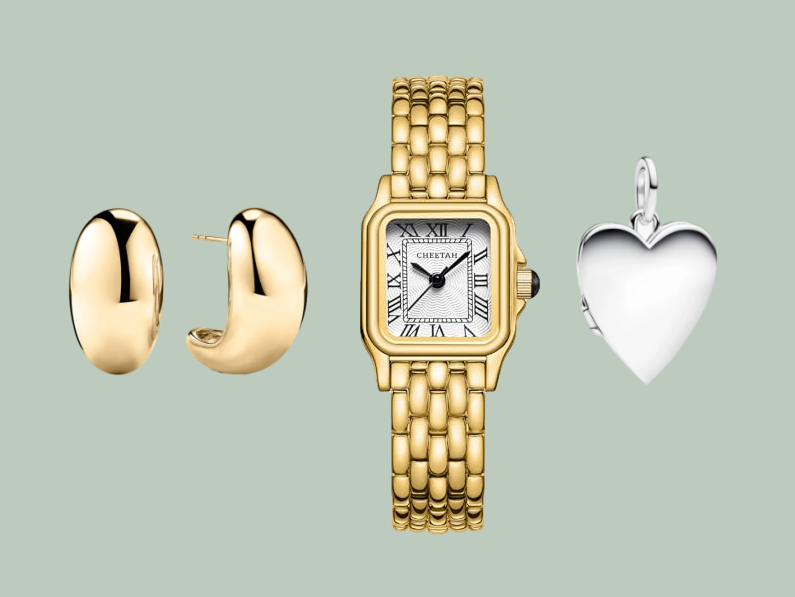
- The Precision Timepiece as Jewellery: Specifically, "jewelry-first" watches (e.g., Piaget or Cartier Baignoire). The value is in the gold weight and the brand’s historical catalog.
The Design Assets (Moderate Risk)
- Heavy Link Chains: 18k solid gold (not hollow). The weight-to-visual impact ratio is the key metric. If the links are hollow, the durability is compromised, and the "dent risk" increases.
- Architectural Cuffs: Pieces that utilize "Lost Wax" casting for complex, organic shapes. The value here lies in the difficulty of reproduction.
- Bespoke Signet Rings: Custom-engraved using traditional "deep seal" techniques rather than laser etching. The depth of the engraving ensures the design survives decades of wear.
- Unheated Teal Sapphires: A specific 2026 trend. These stones offer a unique color profile (blue-green) that is currently undervalued compared to traditional cornflower blue.
The Speculative Assets (High Aesthetic Value)
- Titanium Statement Earrings: Large-scale designs that are physically impossible to execute in gold due to weight constraints.
- Articulated "Snake" Necklaces: High-complexity engineering where dozens of individual gold scales are pinned together.
- Cultured Pearl Strands with Modern Hardware: The focus is on the clasp—it should be 18k and functional as a standalone design element.
- Ceramic and Gold Hybrids: A "Lifestyle" category purchase. High durability but zero metal recovery value in the ceramic components.
Maintenance and the Total Cost of Ownership
The purchase price is not the final cost. High-value jewellery requires an ongoing maintenance budget.
- Prong Inspection: Diamonds set in platinum or gold are subject to "prong lift." A bi-annual inspection is required to prevent stone loss.
- Rhodium Plating: 18k white gold is an alloy of yellow gold and white metals, typically plated in rhodium. This plating wears off over 12-24 months, requiring a re-dipping process to maintain the "bright white" finish.
- Insurance Appraisals: In a volatile gold market, appraisals must be updated every 24 months to ensure coverage reflects current replacement costs.
Strategic Acquisition Path
The optimal strategy for 2026 is to diversify the "Jewellery Portfolio." Allocate 50% of the budget to Tier 1 and Tier 3 Anchor Assets (gold weight and heritage brand liquidity). These serve as the financial foundation. Allocate 30% to Certified Stones, ensuring all documentation is digitized and stored in a secure vault. The final 20% should be reserved for Speculative Design, where the value is derived from the immediate psychological utility of the gift rather than financial return.
Before finalizing any purchase, demand a "spec sheet" that includes the total gram weight, the metal fineness, and a full gemstone lab report. If a retailer cannot or will not provide these metrics, the "Brand Premium" is likely inflated beyond the point of rational acquisition. The goal is to exit the transaction with an asset that is as beautiful as it is balance-sheet compliant.
For those looking to maximize the 2026 market, the most efficient move is to seek out "Pre-owned Heritage" pieces from reputable secondary dealers. This allows for the acquisition of Tier 3 assets while bypassing the initial 30-40% "retail margin" hit, effectively starting the investment at a higher equity position.