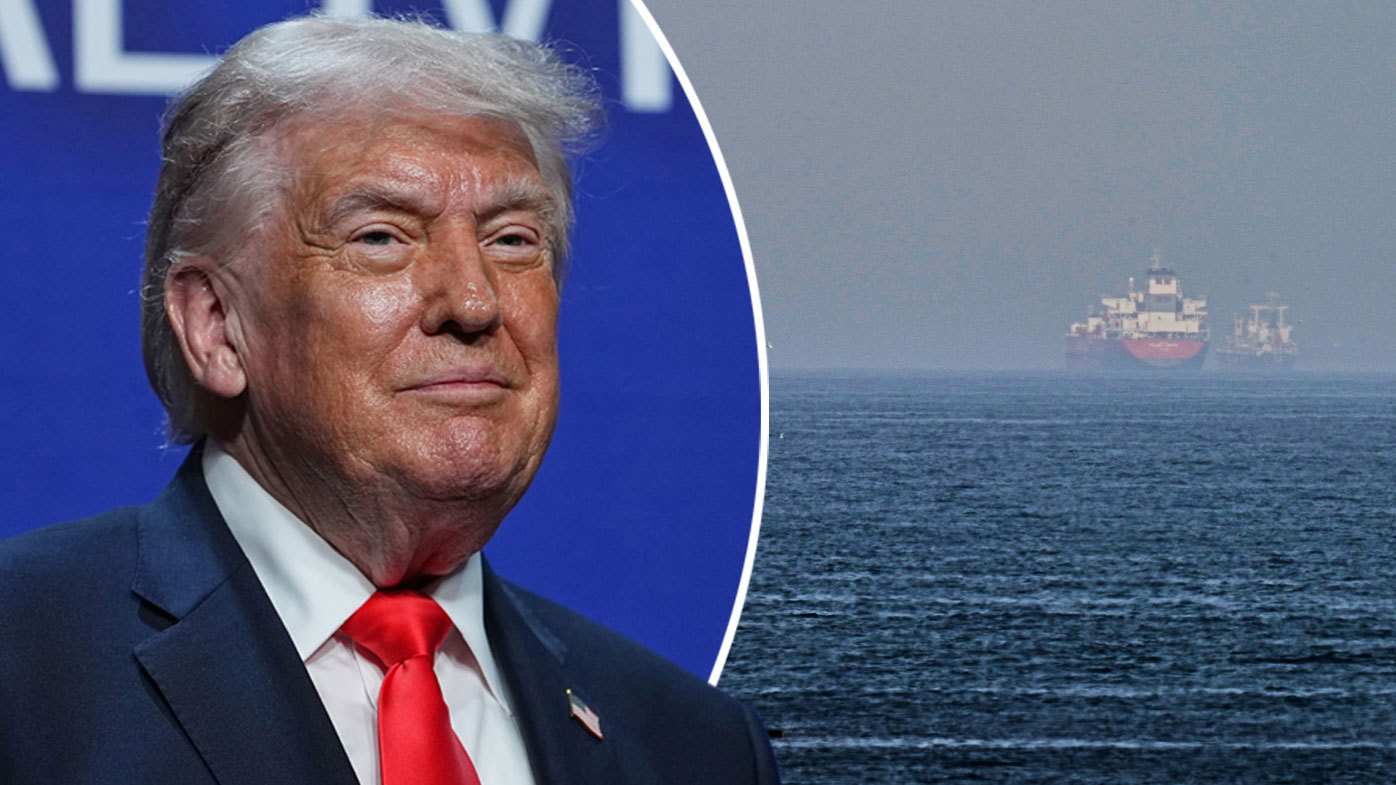
The sea is a heavy, oily black under the moon. Somewhere off the coast of Oman, a tanker the size of an upright skyscraper wallows in the swells, carrying two million barrels of crude oil. It is a silent, steel beast, but inside the bridge, the air is thick with a very human brand of anxiety. The captain isn't watching for storms. He is watching a radar screen for small, fast-moving blips that shouldn't be there. He is watching for a "tollbooth" he never agreed to pay.
Most people think of global trade as a series of digital transactions—clicks on a screen, credit card numbers, and the magic arrival of a cardboard box on a porch. We forget that the world is still stubbornly physical. Everything you own—the phone in your pocket, the grain in your bread, the gasoline in your tank—likely spent weeks at the mercy of a few narrow strips of water. In other updates, we also covered: Strategic Deficit and the Transatlantic Security Equilibrium.
The Strait of Hormuz is the narrowest, most dangerous needle eye of them all.
The Thirty-Three Mile Throat
At its narrowest point, the Strait is only 21 miles wide. However, the shipping lanes—the actual "roads" deep enough for these massive vessels—are only about two miles wide in each direction. Imagine driving every single Amazon delivery truck in the world through a single two-lane alleyway. Now, imagine that alleyway is flanked by players who want to decide who gets to pass and at what cost. NBC News has analyzed this important topic in extensive detail.
The United States recently issued a jarring warning regarding a new kind of interference in these waters. It isn't just about the threat of missiles or sea mines anymore. It is about the "tollbooth" effect. This is the calculated, systematic harassment of commercial shipping by regional actors—primarily Iranian fast boats—seeking to assert a shadow sovereignty over international waters.
Consider a hypothetical merchant sailor named Elias. He isn't a soldier. He’s a guy from Manila with a wife and three kids who spends ten months a year on a rust-streaked deck. When a swarm of armed speedboats circles his ship, shouting commands over the radio and demanding to see manifests, Elias isn't thinking about geopolitical leverage. He is thinking about whether he will see his kids for Christmas.
This is the human face of a "maritime warning." It is the conversion of a global commons into a gauntlet of intimidation.
Why Your Morning Coffee Just Got Riskier
When a government issues a warning about a chokepoint like Hormuz, the immediate reaction is often a shrug. It feels distant. But the economy is a nervous system, and Hormuz is the carotid artery.
About 20% of the world’s total oil consumption passes through this strait every single day. If that flow is constricted, the price of oil doesn't just "go up." It spikes. That spike ripples through the plastic in your toothbrush, the fertilizer used by farmers in the Midwest, and the cost of shipping every other good on the planet.
The "tollbooth" isn't just about physical boarding. It’s about the uncertainty tax.
When the risk of seizure or harassment increases, insurance companies—the quiet giants who actually run global trade—raise their "war risk" premiums. These are not small numbers. A single trip through the Persian Gulf can see insurance costs jump by tens of thousands of dollars overnight. The shipping company doesn't eat that cost. You do. You pay it at the pump, at the grocery store, and in the shrinking value of your paycheck.
The Psychological Siege
The tactic being employed in the Strait is a masterclass in "Gray Zone" warfare. It is designed to be aggressive enough to disrupt but quiet enough to avoid a full-scale shooting war.
By shadowing tankers, flying drones at low altitudes over civilian decks, and issuing "regulatory" demands, the goal is to create a new reality: one where the Strait of Hormuz is no longer international water, but a private driveway.
Imagine you are driving to work on a public highway. Suddenly, a neighbor stands in the middle of the road with a shotgun. He doesn't shoot. He just watches you. He records your license plate. He follows you for three miles, bumper-to-bumper. Technically, you got to work. But tomorrow, you might take a different route. Or you might stay home.
That is the psychological siege of the shipping industry. The US warning is an attempt to shine a spotlight on this behavior before the "neighbor with the shotgun" becomes the undisputed owner of the road.
The Fragility of the Modern World
We live in an age of perceived invincibility. We have satellites that can read a golf ball from space and AI that can write poetry. Yet, our entire global civilization rests on the safety of a few men on steel ships in a 21-mile-wide strip of water.
There is a profound vulnerability in that.
The Strait of Hormuz is a reminder that we are never more than one bad day away from a systemic collapse of the "just-in-time" delivery world we’ve built. The warning issued by the US isn't just a memo for ship captains; it is a flare sent up for the rest of us. It is a signal that the rules of the road—the invisible agreements that keep the lights on and the shelves full—are being tested.
History shows that once a "toll" is established on a free road, it never goes away. It only gets more expensive.
The tankers continue to move for now. They glide through the dark water, their crews staring at the radar, hoping the blips stay at a distance. But the tension is no longer a temporary flare-up. It is the new climate. We are watching the slow-motion closing of a throat, and the world is starting to hold its breath.
The ocean is vast, but the world is very, very small.