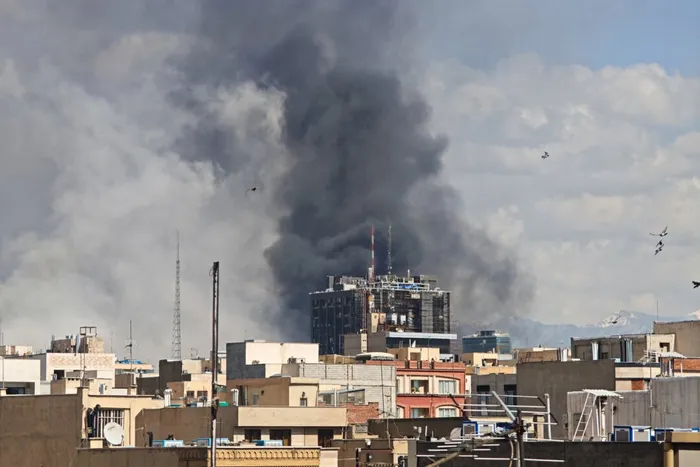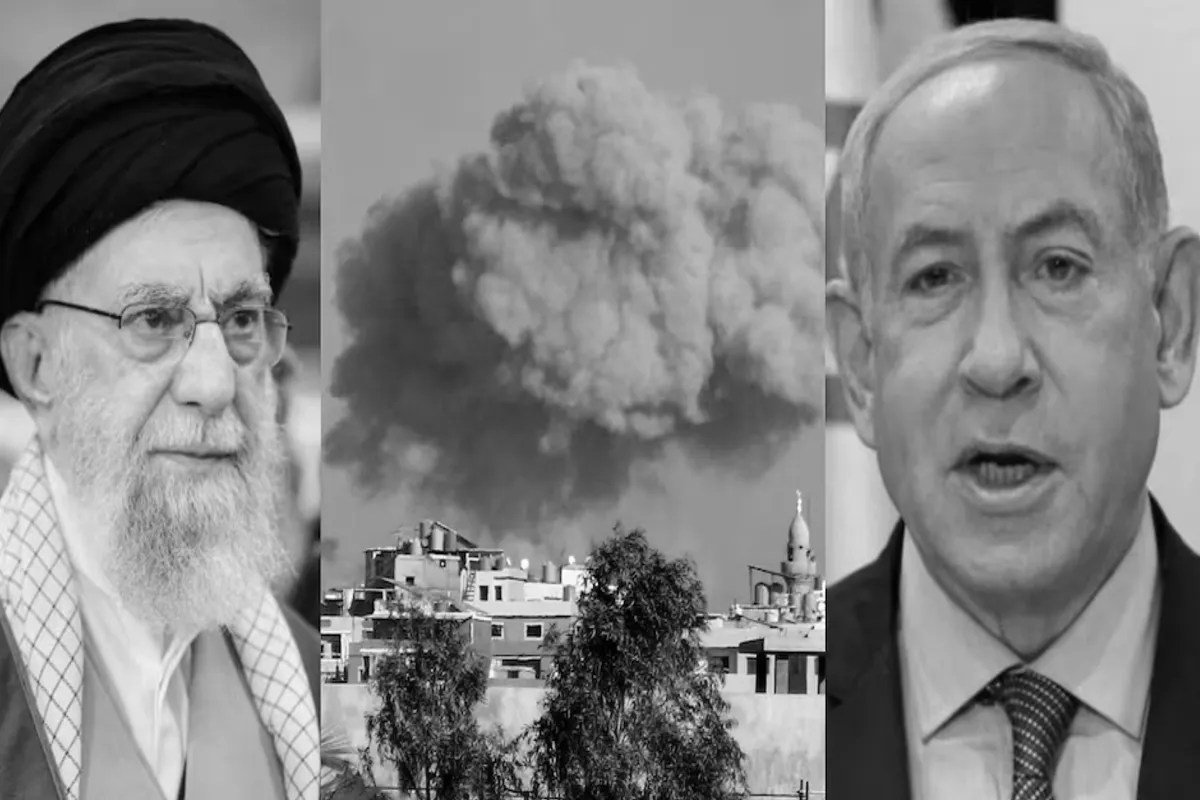
The scent of burning oil doesn't just linger over the Persian Gulf. It drifts across the Arabian Sea, settling into the tea stalls of Mumbai and the power corridors of Islamabad. We often treat geopolitics like a chess match played with cold, plastic pieces. But when Israel and Iran exchange fire, the board isn't made of wood. It is made of nerves, bank accounts, and the fragile stability of a billion lives in South Asia.
For a long time, India and Pakistan have operated under a certain set of assumptions. India looked West and saw a gateway to energy and modern technology. Pakistan looked West and saw a strategic depth and religious brotherhood. Now, those old maps are catching fire.
The Architect’s Dilemma
Consider a port manager in Chabahar. He isn't a diplomat, but his ledger tells the story of India’s biggest headache. For years, New Delhi has poured capital into this Iranian port, envisioning a golden path that bypasses Pakistan to reach the mineral-rich heart of Central Asia. It was a masterpiece of strategic positioning.
Then the missiles flew.
When the sky over Isfahan or Tel Aviv lights up, the "India-Middle East-Europe Economic Corridor" (IMEC) dims. This isn't just about delayed shipping containers. It is about a fundamental shift in risk. Investors are like migratory birds; they don't stick around when they smell smoke. India has spent a decade meticulously balancing its friendships, holding the hand of Israel for defense and technology while embracing Iran for energy and transit.
Now, that balance feels less like a dance and more like a tightrope walk over a canyon during a hurricane. If the Strait of Hormuz—the narrow throat through which a massive chunk of India's energy flows—is squeezed, the impact isn't just a statistic. It is the rickshaw driver in Delhi who can no longer afford the fuel for his daily shift. It is the manufacturing plant in Pune that sees its margins evaporated by a sudden spike in crude prices.
The Strange Luck of the Neighbor
Across the border, the mood is different, though no less tense. Pakistan finds itself in a peculiar, almost uncomfortable position of accidental advantage.
For decades, Pakistan’s relationship with Iran was a masterpiece of "frenemy" dynamics—border skirmishes one day, talk of a gas pipeline the next. But as Iran becomes more isolated and more aggressive, Pakistan’s strategic stock rises in the eyes of its Western creditors and its Gulf allies.
There is a grim irony here. While India’s ambitious transit projects are tied to a peaceful Middle East, Pakistan’s relevance often spikes during regional chaos. If the Middle East remains a tinderbox, the world remembers that Pakistan sits on the edge of that box. The "Pivot to Asia" suddenly requires a stable, or at least cooperative, Islamabad.
Yet, this isn't a win in the traditional sense. It is a reprieve bought with instability. The Pakistani leadership knows that an emboldened Iran might exert more influence over its own restive border regions. They are watching the horizon, aware that the fire next door might keep the international community’s checks coming, but it also threatens to singe their own backyard.
The Ghost in the Machine: Crude Oil
We have to talk about the $100 barrel.
To a trader in London, it’s a number on a screen. To the Indian economy, it is a predator. India imports nearly 85% of its oil. Every time a drone is launched in the Middle East, the Indian Rupee shudders. The government’s fiscal math begins to crumble. Money meant for schools, bridges, and digital infrastructure is diverted to pay for the literal lifeblood of the nation.
Imagine a kitchen in a middle-class suburb of Bengaluru. The conversation isn't about the tactical capabilities of the Iron Dome or the range of a Shahab-3 missile. It is about the price of cooking oil and the rising cost of a commute. This is how a war thousands of miles away enters the home. The geopolitical becomes the personal.
Iran and Israel are not just fighting for regional hegemony; they are inadvertently dictating the inflation rates of the world’s most populous nation. India’s "strategic autonomy"—the pride of its foreign policy—is being tested by the sheer volatility of the global energy market. You cannot be truly autonomous if your neighbor’s feud can bankrupt your transport sector overnight.
The Religious and Social Echoes
The stakes aren't purely economic. They are emotional.
South Asia is home to one of the largest concentrations of Shia and Sunni Muslims in the world. When Tehran speaks, people listen—from the valleys of Kashmir to the streets of Karachi. An escalation between Israel and Iran doesn't just stay in the Middle East; it resonates in the Friday sermons and the social media feeds of millions.
This creates an internal security pressure that rarely makes it into the "dry" news reports. Governments in New Delhi and Islamabad have to manage the narrative carefully. They have to ensure that a foreign war doesn't ignite local sectarian tensions. It is a layer of complexity that European or American analysts often overlook. In South Asia, the Middle East is not just a "region"; it is a cultural and spiritual heartbeat.
The Shifting Sand
India is now forced to play a high-stakes game of "multi-alignment." It needs Israeli Pegasus tech and defense systems to keep its borders safe. At the same time, it needs Iranian cooperation to keep the door to Russia and Central Asia open.
But what happens when the two sides of your strategy are trying to destroy each other?
The silence from New Delhi during the peak of these escalations is loud. It is the silence of a country that realizes its grand plans for a "connected Eurasia" are hostage to two old rivals who have forgotten how to de-escalate.
Pakistan, meanwhile, watches the Arab world’s reaction. If Saudi Arabia and the UAE move closer to Israel to counter Iran, Pakistan’s traditional alliances are thrown into a blender. Does it follow the money of the Gulf, or the ideological pull of its immediate neighbor, Iran? There is no right answer, only a series of increasingly expensive mistakes.
The Price of a Fragmented World
We are witnessing the end of the "Global Village" myth and the birth of a fractured reality. In this new world, geography is once again destiny. India’s dream of becoming a global manufacturing hub requires cheap, steady energy and open sea lanes. Iran and Israel are currently playing with matches in the middle of those lanes.
The real tragedy isn't found in the charred remains of a missile casing. It is found in the uncertainty of a small business owner in Lahore or a tech startup founder in Hyderabad. They are building their futures on a foundation they thought was solid, only to realize they are living on a fault line they didn't create.
The maps are being redrawn, but the ink is blood and oil. As the smoke clears over the Levant, the people of South Asia are left to wonder if the path to their own prosperity has just been blocked by a wall of fire that shows no sign of dying down.
The sun sets over the Arabian Sea, the water dark and deceptively calm. Somewhere beneath those waves, the cables and the tankers carry the world’s secrets and its survival. In the distance, the horizon glows—not with the sunrise, but with the flicker of a distant, relentless conflict that has finally come home.
Would you like me to analyze how this conflict might specifically impact the progress of the India-Middle East-Europe Economic Corridor (IMEC) in the coming fiscal year?