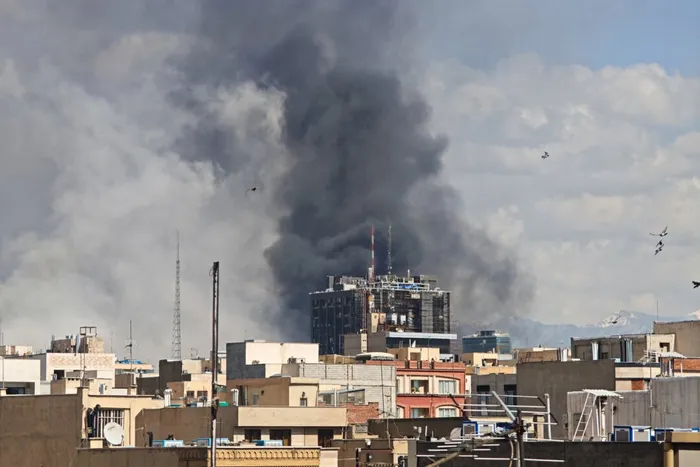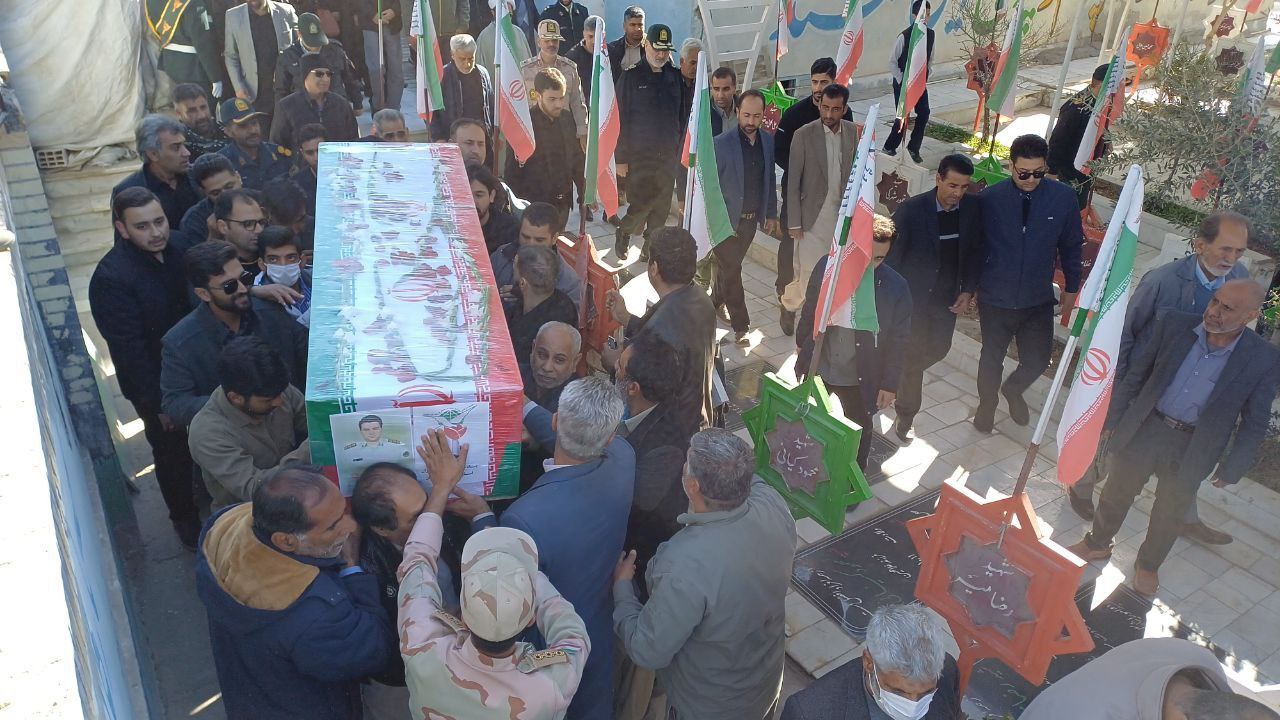
The images broadcast from Ilam and Zahedan follow a rigid, decades-old choreography. Caskets wrapped in the three-colored flag of the Islamic Republic move through crowds on the shoulders of men in uniform. Chants of loyalty ring out, captured by state-run cameras positioned at specific angles to maximize the sense of scale. On the surface, the funerals for security personnel killed in the line of duty are presented as moments of national cohesion. However, look closer at the geography of these specific ceremonies—Ilam in the Kurdish west and Zahedan in the Baluch southeast—and the narrative of unity begins to fray. These are not merely burials. They are high-stakes political theater designed to mask a deepening security crisis in Iran’s restive borderlands.
The official reports describe these men as "martyrs of security," fallen in the fight against "terrorists" or "thugs." What the state media omits is the context of a low-boil insurgency that has plagued the fringes of the country for years. In Zahedan, the capital of Sistan and Baluchestan province, the air is thick with a resentment that dates back generations. In Ilam, the grievances are shaped by ethnic identity and economic neglect. When the state holds a massive funeral in these specific cities, it is not just honoring the dead. It is performing an act of re-occupation.
The Geography of Discontent
To understand why these funerals matter, one must look at the map. Iran is often viewed as a monolithic entity, but its stability relies on its ability to control a periphery populated by ethnic and religious minorities. Zahedan is the heart of the Sistan and Baluchestan region, a place where the Sunni majority often feels like a second-class citizenry under the rule of the Shia-led central government.
The security personnel killed here are frequently members of the Islamic Revolutionary Guard Corps (IRGC) or the Law Enforcement Force (Faraja). When they die, the state uses their funerals to project strength in a region where its actual grip is often tenuous. The massive turnout reported by official outlets is rarely a spontaneous eruption of grief. It is a mobilized display involving civil servants, students, and loyalist basij members, often bused in to ensure the cameras see a "sea of mourners."
Ilam presents a different but equally complex challenge. Nestled against the Iraqi border, it is a region with a strong Kurdish identity. For Tehran, any sign of instability in Ilam is viewed through the lens of separatism. A funeral for a fallen officer in Ilam serves as a reminder to the local population that the central government's "iron fist" remains firmly clenched. It is a warning disguised as a wake.
The Economic Engine of Insurgency
We often hear the term "terrorism" applied to these border conflicts, but that label simplifies a much grittier reality. Much of the violence in Sistan and Baluchestan is tied to the economics of the "fuel trade" and smuggling. In a province with the highest poverty rates in Iran, many young men see cross-border trade as their only lifeline.
When security forces crack down on "fuel carriers" (sookhtbaran), the result is often a lethal exchange of fire. The state classifies the resulting casualties among its ranks as victims of organized terror. The locals, however, see it as a desperate fight for survival against a state that offers them no other way to feed their families. This disconnect is why a funeral in Zahedan feels so different to a local resident than it does to a viewer in Tehran.
The "martyrs" being buried are the enforcers of a system that many in the periphery believe is designed to keep them impoverished. The state knows this. Therefore, the funeral becomes a psychological operation. By framing the fallen as defenders against chaos, the government attempts to delegitimize the very real economic grievances that drive the unrest.
The Shift in Tactics
Over the last two years, the nature of these skirmishes has changed. We are no longer seeing just random shootouts at checkpoints. Groups like Jaish al-Adl have grown more sophisticated, utilizing coordinated ambushes and improvised explosive devices. The funerals in Zahedan are becoming more frequent, a grim indicator that the security apparatus is losing its ability to deter these cells.
The response from Tehran has been a surge in "security-oriented" development, which usually translates to more barracks and more surveillance rather than more factories or schools. This creates a self-perpetuating cycle. Increased militarization leads to more friction with the local population, which leads to more casualties, which leads to more high-profile funerals.
The ritual of the state funeral also serves to insulate the leadership from criticism. When a young officer is buried with such fanfare, any questioning of the underlying policy—why were they there? was the mission flawed?—is branded as an insult to the "blood of the martyrs." It is a shield made of caskets.
The Silenced Counterpoint
What happens when the cameras turn off? In the neighborhoods of Zahedan, the day after a massive state-sponsored funeral is often marked by silence. There are no state flags on the small, dusty side streets. There, the "martyrs" are the locals who died in the same skirmishes, their burials small, private, and often watched over by plainclothes intelligence officers.
This duality is the most dangerous threat to the Iranian state. You cannot hold a country together forever through the sheer force of televised mourning. In Ilam, the Kurdish population watches these ceremonies with a practiced indifference. They have seen regimes come and go, and they know that a casket draped in a flag does not pave a road or provide a job.
The state is currently doubling down on the "martyrdom" narrative because it has few other tools left. Soft power in the provinces has largely evaporated. All that remains is the spectacle of the fallen and the threat of the survivor.
Infrastructure of Grief
The logistics of these ceremonies are telling. The IRGC has a dedicated department for the "Preservation of the Values of the Holy Defense," which handles the optics of these events. They ensure that the rhetoric used by the speakers—often high-ranking generals—links the current border skirmishes to the 1980-1988 Iran-Iraq War.
By framing a local clash over fuel smuggling as a continuation of the "Holy Defense," the state attempts to tap into a deep well of nationalistic sentiment. It is an attempt to make the provincial struggle a national one. But for a young person in Zahedan or Ilam, the 1980s are ancient history. Their reality is the inflation rate, the lack of water, and the heavy presence of riot police.
The Cracks in the Facade
If these funerals were truly a sign of strength, the government wouldn't need to shut down the internet in these regions during periods of high tension. They wouldn't need to arrest local activists in the days leading up to the processions. The very fact that these events require such massive security cordons proves that the "unity" they celebrate is fragile.
The state is stuck in a loop. It needs the martyrs to justify its presence in the provinces, but its presence in the provinces is what creates the martyrs. Every time a funeral procession winds through the streets of Ilam or Zahedan, it isn't just a tribute to the past. It is a preview of a future where the center and the periphery continue to drift apart, separated by a gap that no amount of flags or chanting can fill.
The real story isn't the number of people in the street; it is the number of people staying home in protest. In the borderlands, silence is the loudest form of dissent. The Iranian state can command the funeral, but it can no longer command the heart of the provinces.
Identify the specific units mentioned in the funeral announcements. If the casualties are primarily from the Saberin Special Forces, it indicates a high-intensity combat environment that the state is hesitant to fully acknowledge.