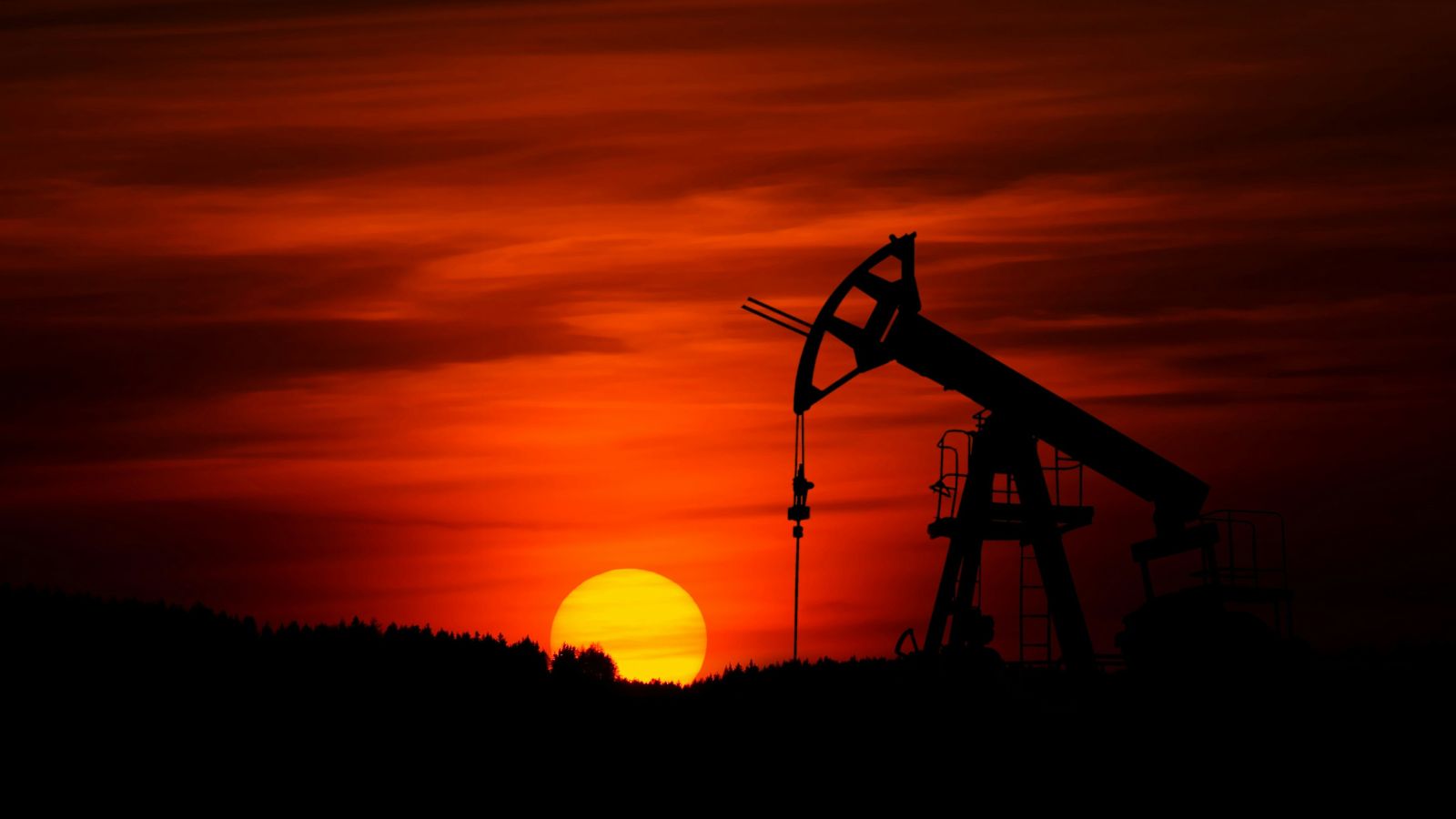
The flickering orange glow of a gas station sign at 3:00 AM isn't usually a place for geopolitical contemplation. For most of us, it is a place of mild annoyance, a brief pause in a long commute, or a necessary drain on a weekly budget. But if you look closely at those shifting numbers on the pump—the way they tick upward or stubbornly refuse to drop—you aren't just seeing local taxes or corporate greed. You are seeing a silent, high-stakes negotiation occurring in a wood-panneled room thousands of miles away.
Recently, that room belonged to OPEC+.
The headlines read like a technical manual: "Production Adjustments" and "Market Stability." It sounds clinical. It sounds boring. It is anything but. To understand what happened in that meeting, you have to stop thinking about barrels of crude oil and start thinking about a global game of Jenga where every player is terrified of the person sitting across from them, and the floor is made of dynamite.
The Anatomy of a Nervous Market
Market stability is a polite term for managed panic. When the representatives from the Organization of the Petroleum Exporting Countries and their allies (the "+" in the equation, most notably Russia) sat down to talk, the air was thick with the scent of gunpowder. Iran and Israel were trading threats. The Strait of Hormuz, a narrow neck of water through which a fifth of the world’s oil flows, felt less like a shipping lane and more like a tripwire.
Imagine a baker who knows that a riot might break out in the wheat fields tomorrow. Does he bake more bread today to prepare? Or does he hike the price now because he knows his ovens might go cold next week?
OPEC+ chose a middle path, one designed to project a calm they likely didn’t feel. They reaffirmed their commitment to production cuts, essentially telling the world, "We aren't going to flood the market, and we aren't going to let it starve." They are trying to hold the global economy in a state of artificial suspension.
This isn't just about big numbers for oil giants. It’s about the cost of a gallon of milk in Ohio. It’s about whether a logistics company in Berlin can afford to keep its fleet on the road. When oil prices spike because of "tensions," it’s a regressive tax on the world's poorest people. The invisible hand of the market often feels like a fist.
The Iran Factor
The specter of Iran hung over the meeting like a shadow. To the analysts in tailored suits, Iran is a "supply risk." To the rest of us, it's the reason we check the news before we check our bank accounts.
If Iran’s output is choked off by conflict or sanctions, a hole appears in the world’s energy supply. Usually, when a hole appears, someone else fills it to make a quick buck. But OPEC+ operates on a different logic. They aren't just looking for a quick profit; they are looking for a "floor." They want to ensure that oil never becomes so cheap that their national budgets—which pay for everything from Saudi skyscrapers to Russian military boots—collapse.
Consider a hypothetical family, the Al-Sauds or the Sokolovs. Their entire livelihood depends on selling one specific crop. If the neighbor's farm catches fire, they could raise their prices and feast. But if the fire spreads to their own barn, the price doesn't matter because they have nothing left to sell.
By holding production steady despite the chaos, OPEC+ is trying to prevent a "fear premium" from spiraling out of control. They are acting as the world’s uneasy central bank for energy.
The Fragile Alliance
It is easy to view OPEC+ as a monolith, a singular villain or hero depending on your politics. In reality, it is a fractious marriage of convenience.
Russia needs high prices to fund its ongoing exhaustion in Ukraine. Saudi Arabia needs high prices to fund "Vision 2030," an audacious plan to build futuristic cities in the desert. Meanwhile, smaller members are itching to pump more oil just to keep their heads above water.
There is a visceral tension in these meetings. Every time a minister stands up to speak, they are balancing their own survival against the collective's goals. If one country "cheats" and produces more than their quota, the whole system can fail.
It’s like a group of hikers lost in the woods with one gallon of water. They all agree to take only one sip an hour. But as the sun gets hotter and the trail gets steeper, the temptation to take a long, illicit gulp becomes almost unbearable. OPEC+ is currently the group of hikers trying to convince the world—and each other—that no one is cheating.
The Human Cost of "Adjustments"
We talk about "adjustments" as if they are knobs on a machine. They are not. They are life-altering decisions.
When production is cut to keep prices high, a trucker in Brazil might have to decide between filling his tank or fixing his brakes. A factory owner in India might have to cut a shift, leaving fifty families without a week's wages. These aren't abstract data points. They are the friction of human existence.
The irony is that "market stability" for the producer often means "financial instability" for the consumer. When OPEC+ says they are committed to a stable market, they mean a market where they can predict their revenue. They aren't necessarily looking out for the person at the 3:00 AM gas station.
But they have to be careful. If they push the price too high, they accelerate the very thing they fear most: the transition to electric vehicles and renewable energy. They are walking a tightrope. On one side is a price crash that bankrupts their nations. On the other side is a price surge that makes oil obsolete.
The Ghost in the Machine
The most fascinating part of the latest OPEC+ move wasn't what they said, but what they didn't. They didn't panic. Despite the headlines of missiles and drones, they stuck to the script.
This suggests a new kind of maturity, or perhaps a new kind of desperation. They know the world is watching. They know that any sign of internal cracking would send the markets into a tailspin that no one can afford.
The "ghost" in this machine is the sheer uncertainty of the 2020s. We are living through an era where a single social media post or a stray drone can shift the global GDP by a percentage point in an afternoon. In that context, a boring, standard press release from a group of oil ministers is actually a monumental feat of willpower.
It is an attempt to impose order on a chaotic world.
The Long Game
Will it work? History suggests that these alliances are always one crisis away from dissolving. But for now, the "adjustments" have served their purpose. The price of oil hasn't shot to $150, but it hasn't dropped to $40 either.
The commitment to "stability" is a promise made in a storm. It’s the captain of a ship telling the passengers that the swaying is intentional, that the leaks are under control, and that the destination is still in sight.
We live in the wake of these decisions. Every time we fly to see family, every time we order a package that is delivered by a van, every time we turn on a light in a city powered by gas turbines, we are participating in the narrative written by OPEC+.
The next time you see those numbers changing at the pump, don't just think about your wallet. Think about the room. Think about the tension. Think about the men and women trying to hold back the tide of a volatile world with nothing but a few spreadsheets and a desperate need for the status quo.
The pump is just the end of the line. The story starts in the dark, with a group of people hoping that today is not the day the Jenga tower finally falls.