The screen glows in a muted gray office in London. It is 3:00 AM. A trader named Elias—let’s call him that for the sake of the human heart behind the algorithm—watches a flickering line on his monitor. That line represents the price of Brent crude oil. Thousands of miles away, the horizon over the Strait of Hormuz is not gray; it is a bruised purple, vibrating with the mechanical hum of drones and the silent, heavy tension of a region waiting for a spark.
Elias doesn’t see the drones. He doesn’t see the sailors on the tankers gripping the railings as they navigate the world’s most dangerous chokepoint. He sees "volatility." To most people, volatility is a word that describes a bad breakup or a stormy weather pattern. In the glass towers of Shell, BP, and TotalEnergies, volatility is a crop. And right now, the harvest is record-breaking. In related updates, read about: The Invisible Hand and the Iron Fist.
While the world watches the escalating shadow war between Israel and Iran with a knot in its stomach, the balance sheets of Europe’s oil giants are singing. Recent analysis of market data and corporate filings reveals a staggering reality: these companies have pulled in as much as $4.75 billion in additional profits directly linked to the wild price swings caused by the Middle East conflict.
This isn't just about selling oil at a higher price. That’s the old way. This is about "trading around the asset"—a polite, bloodless phrase for betting on the chaos itself. Investopedia has analyzed this fascinating subject in great detail.
The Mechanics of a Crisis
To understand how $4.75 billion appears out of thin air, we have to look past the gas station pump. When a missile is launched or a tanker is seized, the price of oil doesn't just go up; it jitters. It leaps and retreats.
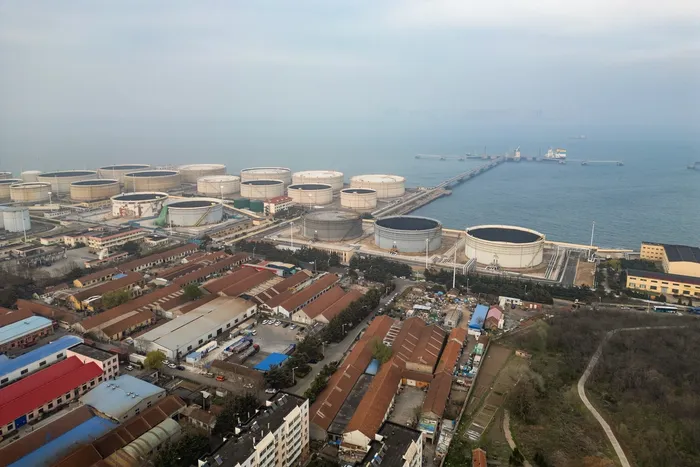
Most of us view this as a tragedy or an inconvenience. But for an integrated oil major, this friction is fuel. These companies own the ships, the refineries, and the storage tanks. They have "eyes" everywhere. While a pension fund manager in Ohio is reacting to a news report on CNN, a trader at a major European oil firm already knew the tanker’s GPS coordinates had gone dark twenty minutes earlier.
They use that information to play the "spread." They buy when the panic is localized and sell when the panic goes global. They move millions of barrels between ports like chess pieces, capturing pennies on the gallon that, when multiplied by the thirst of a planet, turn into billions of dollars.
Consider the hypothetical case of a cargo ship diverted from the Red Sea. For the crew, it means weeks of extra time at sea, exhaustion, and the fear of a stray projectile. For the company's trading desk, that diversion is a data point. It changes the "delivered price" in Rotterdam. It creates a temporary shortage that can be exploited by offloading a different shipment held in reserve.
The chaos is the catalyst. Without the threat of war, the markets are efficient, calm, and—crucially for the bottom line—far less profitable.
The Great Disconnect
There is a profound, almost ghostly disconnect between the reality of these earnings and the experience of the average person. You feel it at the grocery store. You feel it when the utility bill arrives. Inflation is often discussed as a natural phenomenon, like a tide coming in, but it has architects and beneficiaries.
When Iran and Israel exchange threats, the global market reacts by "pricing in risk." This risk is a ghost tax that everyone pays. You pay it in the price of a loaf of bread that had to be trucked across a state line. You pay it in the cost of a plane ticket.
But for companies like BP and Shell, this "risk" is the very thing they are experts at managing. They have built some of the most sophisticated internal hedge funds on Earth. In fact, Shell’s trading division is so massive and secretive that it often generates more profit than the actual act of pumping oil out of the ground.
During the most volatile quarters of the Iran-Israel tension, these trading desks became the engines of the corporate machine. While their "upstream" divisions (the ones getting dirty in the fields) dealt with the logistics of war, the "downstream" traders were feast-harvesting.
$4.75 billion.
It is a number so large it becomes abstract. To ground it, think of it this way: that sum could fully fund the transition of millions of households to renewable energy, or it could repair the entire infrastructure of a war-torn province. Instead, it sits on a ledger, a testament to the fact that in the modern economy, instability is a commodity.
The Ethics of the Algorithm
We like to think of our energy leaders as stewards of a vital resource. We want to believe that when the world teeters on the edge of a wider conflict, there is a sense of shared gravity. But the spreadsheet has no pulse.
The algorithm doesn't care if the price spike was caused by a diplomatic failure or a human catastrophe. It only sees the "delta"—the difference between what was and what is.
There is a lingering question that we often refuse to ask because the answer is uncomfortable: If a company makes billions specifically because the world is becoming more dangerous, does that company have a vested interest in peace?
The oil majors argue that their trading desks provide "liquidity" and "stability" to the markets. They claim that by moving oil to where it is needed most during a crisis, they are actually preventing the price from going even higher. There is a sliver of truth in that. Without these vast logistical networks, a supply shock could be even more devastating.
But there is a difference between providing a service and capturing a windfall. A windfall is an unearned gain, a gift from the gods of chance. In this case, the gift was wrapped in the smoke of Middle Eastern geopolitical strife.
The Invisible Stakes
Behind every cent of that $4.75 billion is a story of a person trying to make ends meet.
Imagine a delivery driver in Marseille. He doesn't know about the "spread" or "contango" or the nuances of the Brent-Dubai price differential. He only knows that it now costs him 15% more to fill his tank than it did last month. He cuts back on his daughter's extracurricular activities. He worries about the winter.
He is the one paying for the volatility. He is the one funding the "stellar" quarterly earnings reports that make shareholders cheer on the London Stock Exchange.
The invisible stakes of oil trading are the silent transfers of wealth from the vulnerable to the entrenched. It is a machine that functions best when the world is at its worst. When we see headlines about "Iran war volatility," we shouldn't just think of missiles and maps. We should think of the massive vacuum cleaner of the global commodities market, sucking up the crumbs of the global middle class and depositing them into the vaults of the few.
The traders in London and Paris will go home tonight, perhaps stopping for an expensive dinner to celebrate a successful week. They are not "villains" in a comic book sense; they are professionals doing a job they were hired to do. They are optimizing. They are leveraging. They are being efficient.
But as Elias closes his laptop and steps out into the cool night air, the line on his screen stays with him. It is a jagged, nervous thing. It is the heartbeat of a world on edge. And as long as that heart beats with the frantic rhythm of fear, the money will keep flowing.
The harvest continues. It doesn't matter if the fields are burning, as long as the price of the smoke is right.