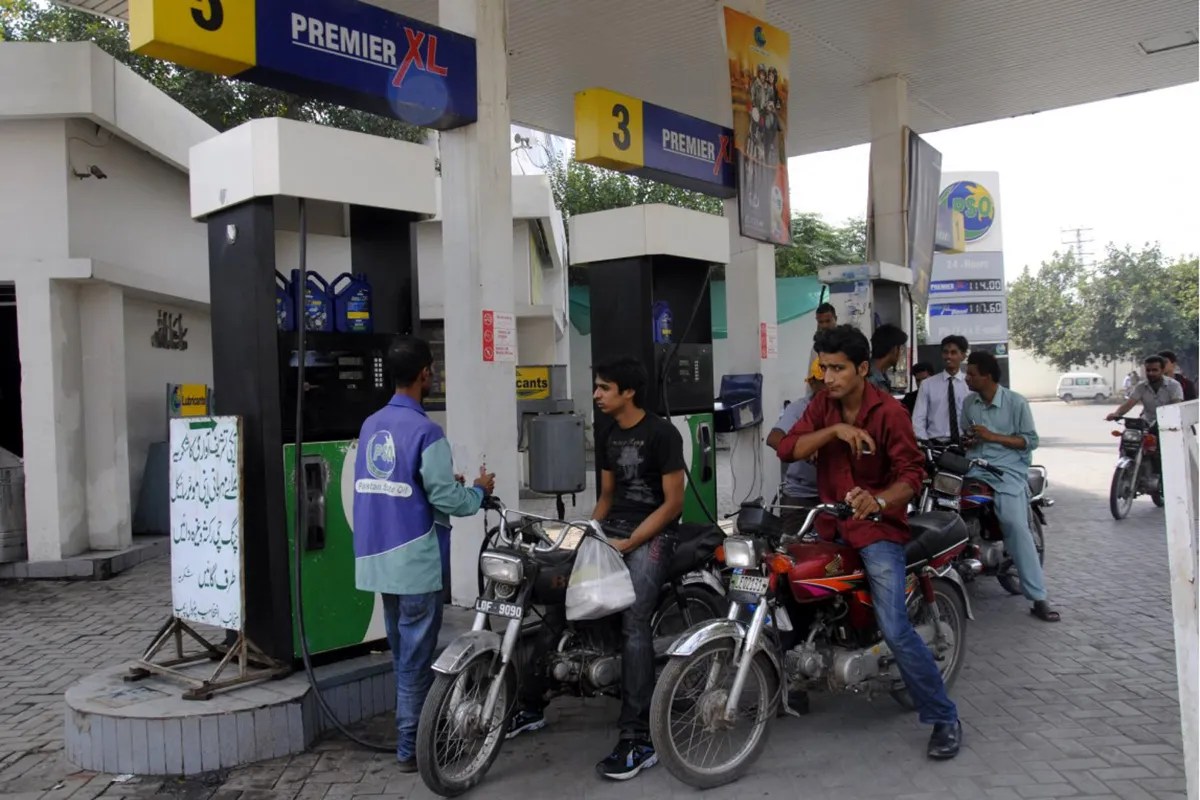
The metal nozzle clicks. It is a sharp, mechanical sound that signals the end of a transaction, but for millions of people across South Asia this week, that click sounds more like a closing door.
In Islamabad, a father named Arshad stares at the digital display on the fuel pump. The numbers spinning on the screen are moving faster than the liquid flowing into his motorbike. For Arshad, this isn't just about "global crude benchmarks" or "fiscal deficits." It is about the choice between riding to work or walking three miles in the heat so his children can have milk with their breakfast.
Fuel is the ghost in the machine of our daily lives. We don't eat petrol, yet it dictates the price of every onion and every grain of rice on our plates. When the cost of moving goods rises, the world shrinks. This week, as borders shifted and policies pivoted, the map of the subcontinent became a study in contrasts—a jagged line between relief, crisis, and a precarious, waiting silence.
The Weight of a Rupee
Pakistan is currently a country holding its breath. The government recently announced a staggering hike in petrol and diesel prices, pushing the cost of living into a territory that feels increasingly hostile to the common citizen. High-speed diesel jumped by 8.16 PKR per liter, while petrol climbed by 4.53 PKR.
Numbers on a spreadsheet are bloodless. To understand them, you have to look at the logistics of a single meal. Consider a small-scale farmer in the Punjab province. He relies on diesel to run the tubewells that irrigate his crops. When the price of that diesel spikes, his cost of production vanishes into the overhead. He cannot simply "absorb" the cost. He passes it to the wholesaler, who passes it to the trucker, who passes it to the vendor at the local mandi.
By the time that onion reaches a kitchen in Karachi, it carries the weight of every kilometer it traveled.
The volatility in Pakistan is driven by a cocktail of IMF mandates and a desperate need to bridge a fiscal gap that has been widening for years. There is no easy way out. The government is walking a tightrope made of razor wire, trying to satisfy international lenders while keeping a lid on a boiling pot of public frustration.
The View from the Mountains
Cross the border into Nepal, and the story takes a sudden, almost surreal turn. While its neighbor to the west is tightening the belt until it draws blood, the Nepal Oil Corporation (NOC) decided to cut prices.
This wasn't a massive, life-altering drop, but in a world of constant inflation, any reduction feels like a gift. They trimmed the price of petrol, diesel, and kerosene by small margins—roughly 1 to 2 NPR per liter.
Why the difference? Nepal’s pricing model is tethered to the Indian Oil Corporation (IOC). When the purchase price from India dips, the NOC has the breathing room to pass those savings down to the people in the Kathmandu Valley and beyond. It is a reminder that geography is destiny. In the shadow of the Himalayas, the cost of a commute just became slightly more bearable, a rare moment of legislative mercy in a region defined by struggle.
The Great Indian Waiting Game
Then there is India.
In the bustling heart of Delhi or the coastal humidity of Mumbai, the price at the pump feels like a dormant volcano. It is high—historically high—but it has been strangely still. For months, the major oil marketing companies have kept prices frozen, despite the chaotic churning of the global oil market.
India is the world's third-largest consumer of oil. Its economy is a massive, hungry engine that requires constant feeding. But the stability we see at the petrol station is a curated one. The government has utilized a complex system of excise duty cuts and strategic reserves to keep the "sticker shock" from sparking national unrest.
However, "stable" does not mean "cheap."
Ask a delivery driver in Bengaluru about the price of petrol. He will tell you that he spends nearly forty percent of his daily earnings just to keep his scooter moving. He isn't looking at the Brent Crude charts in London. He is looking at his digital wallet. He knows that if India decides to "align with market realities," his entire livelihood could evaporate overnight.
The silence in India is heavy. It is the silence of a dam holding back a massive volume of water. We know the pressure is building. We know that the global price of a barrel of oil is subject to the whims of conflicts in the Middle East and production quotas in Russia. Yet, for now, the Indian consumer lives in a state of suspended animation, grateful for the stasis but terrified of the thaw.
The Invisible Stakes
We often speak of energy security as a matter of national defense or corporate strategy. We rarely speak of it as a matter of human dignity.
When a grandmother in a rural village can no longer afford the kerosene to light her stove, her world goes dark. When a student can’t afford the bus fare because the transit authority hiked prices to cover fuel costs, an entire future is delayed. These are the "invisible stakes." They don't make it into the headlines of business journals, but they are the primary forces shaping the social fabric of the subcontinent.
The disparity between Pakistan, Nepal, and India reveals a fundamental truth about our modern world: we are all connected by a pipeline, but some of us are at the end of the line, catching the fumes.
The volatility isn't just about economics. It's about the psychological toll of uncertainty. Imagine waking up every Monday morning not knowing if your commute will cost ten percent more than it did on Friday. You can’t plan. You can’t save. You can only survive.
The Ghost in the Machine
There is a metaphor often used in mechanical engineering: the "friction loss." It is the energy wasted when parts rub together, lost as heat rather than used for movement.
In our society, high fuel prices are the ultimate friction loss. They slow down the movement of ideas, people, and goods. They create heat—political heat, social heat, the heat of anger.
As we look across the borders of South Asia, we see three different ways of managing that friction. One country is being burned by it. One is finding a momentary lubricant. And one is pretending the friction isn't there, even as the engine begins to smoke.
The tragedy is that the people with the least amount of power are the ones who pay the highest price for the "market corrections." Arshad in Islamabad doesn't care about the nuances of the "interbank exchange rate." He only knows that his tank is empty, and the walk home is getting longer every day.
The next time you hear the click of that fuel nozzle, listen closely. It isn't just the sound of a tank being filled. It is the sound of a world trying to decide who gets to move forward and who is left standing by the side of the road, watching the tail-lights fade into the distance.


