The silence in a Tehran pharmacy is different from the silence in a library. It is heavy. It smells of floor wax and desperation. A man named Arash—let’s call him that, though his name changes a thousand times across the Iranian plateau—stands at the counter. He holds a crumpled prescription for his daughter’s insulin. The pharmacist doesn’t look up. He doesn’t need to. He knows the shelves are thin. He knows the refrigerated vials that used to arrive from Europe are now stuck in a digital limbo, caught in a web of codes and compliance officers thousands of miles away in Manhattan or Washington D.C.
This is the front line of modern conflict. There are no craters. No smoke. No sirens. Just a "Transaction Denied" message on a glowing screen.
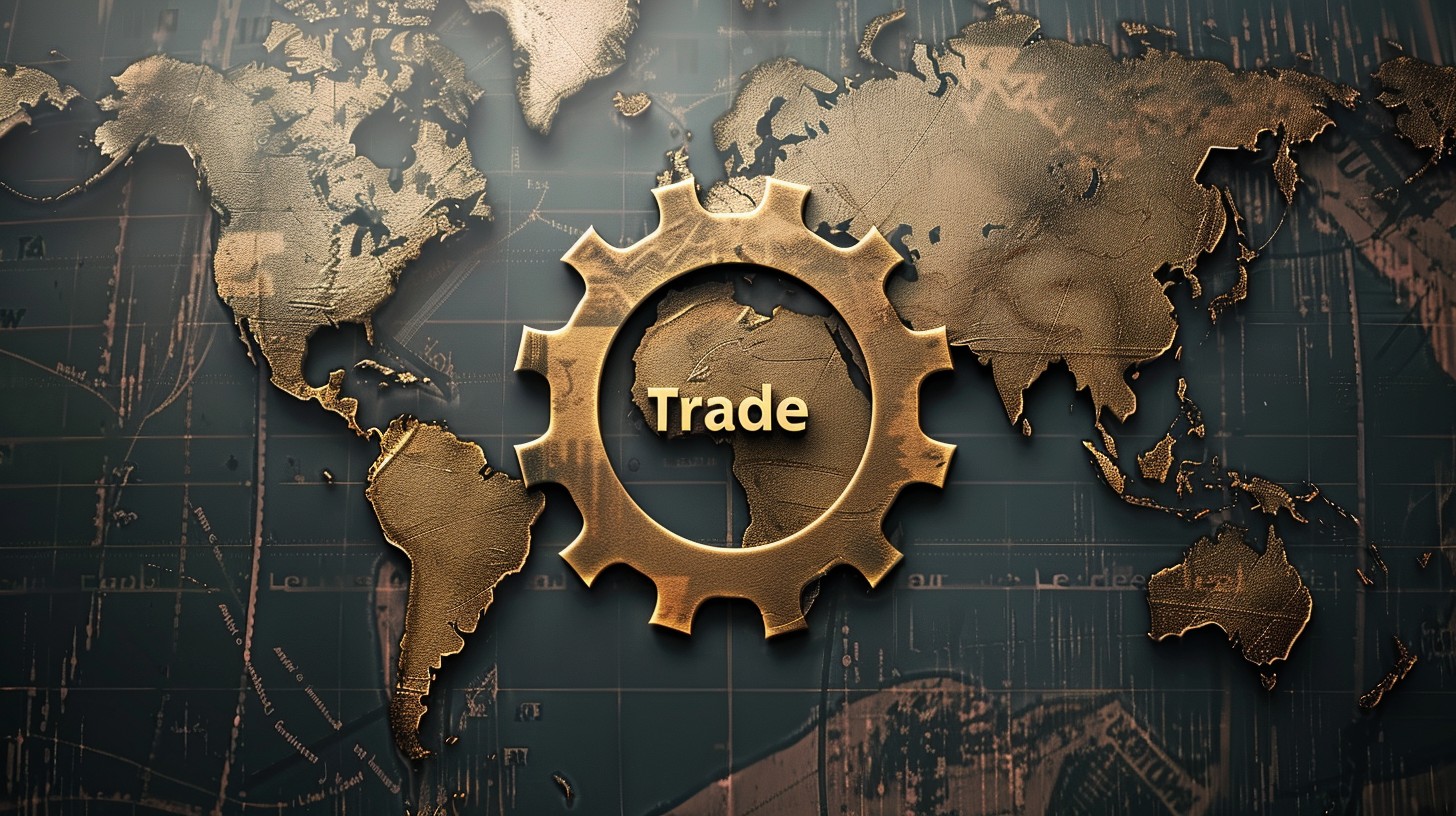
For decades, the projection of power meant moving steel. It meant aircraft carriers casting long shadows over the Strait of Hormuz and the deafening roar of sorties. But the world changed. The Pentagon realized that while bombs can level a building, a frozen bank account can paralyze a nation. The United States has pivoted from the kinetic to the systemic. It has weaponized the very plumbing of global commerce.
We are witnessing the era of the invisible siege.
The Architecture of the Digital Wall
To understand how a bureaucrat in a suit can be more effective than a pilot in a cockpit, you have to look at the pipes. Most of the world’s money moves through a system called SWIFT. Think of it as the nervous system of global finance. If you are disconnected from SWIFT, you are effectively a ghost in the machine. You can have billions in oil wealth, but if you cannot send a secure message to verify a payment, that wealth is as useless as sand.
The U.S. dollar is the world’s reserve currency. Because of this, almost every significant international transaction eventually touches a U.S. bank. This gives the American Treasury Department a "God View" of the world's ledger. When the U.S. decided to pivot away from direct military confrontation with Iran, it didn't retreat. It simply changed the theater of operations. It moved the battlefield to the spreadsheets.
Consider the "Maximum Pressure" campaign. It wasn't just a catchy political slogan. It was a manual for economic strangulation. By blacklisting the Central Bank of Iran and threatening any foreign company that dared to trade with Tehran, the U.S. created a secondary boycott. If a French pharmaceutical company wants to sell medicine to Arash’s daughter, they have to ask themselves a terrifying question: Is this $50,000 shipment worth losing access to the multi-trillion-dollar U.S. financial market?
The answer is almost always no.
The logic is brutal and efficient. The U.S. doesn't have to stop the shipment itself. It just has to make the risk of sending it radioactive.
The Ghost Economy
When the front door of the global economy is locked, people start looking for the basement windows.
Life in Iran has become a masterclass in improvisation. Because they cannot use standard credit cards or international bank transfers, a shadow financial system has emerged. It is a world of hawala—an ancient system of trust-based money brokers—and volatile cryptocurrency.
Imagine a businessman in Isfahan who needs to import spare parts for a factory. He can’t wire the money. Instead, he hands a bag of cash to a broker in a back office. That broker calls a cousin in Dubai. The cousin in Dubai pays a supplier in China. No money actually crosses the border. It is a system built on handshakes and Telegram messages.
But this "ghost economy" comes with a crushing tax.
Every middleman takes a cut. Every shadow transaction carries the risk of theft or discovery. The result is a skyrocketing cost of living that bleeds the middle class dry. The inflation isn't just a statistic in a report; it is the sound of a father explaining to his son why they are having plain rice for dinner again. It is the sight of elderly pensioners selling their jewelry to pay for heating.
While the elite in any sanctioned country usually find ways to bypass the restrictions—using shell companies in the British Virgin Islands or luxury condos in Turkey—the average citizen is the one who feels the squeeze. The policy is designed to create domestic unrest, to make the cost of the government’s behavior so high that the people demand change. But history shows this is a gamble with human lives. Often, the pressure only hardens the resolve of the regime while hollowing out the very civil society that might have pushed for reform.
The Weaponization of Compliance
There is a specific kind of fear that exists in the compliance departments of major global banks. It is the fear of the "Consent Decree" and the multi-billion-dollar fine.
Over the last fifteen years, the U.S. has turned bank regulators into a paramilitary force. When a bank like BNP Paribas or HSBC is caught facilitating transactions for sanctioned entities, the penalties are astronomical. We are talking about fines that exceed the GDP of some small nations.
This has led to a phenomenon known as "de-risking."
Banks are so terrified of the U.S. Treasury that they don't just stop doing business with sanctioned individuals; they stop doing business with entire regions. They close the accounts of charities, students, and legitimate businesses just to be safe. It is easier to cut off a million innocent people than to risk one mistake that invites a federal investigation.
This is the "collateral damage" of economic warfare. In a traditional war, a stray missile might hit a hospital. In an economic war, a compliance algorithm can accidentally shut down the funding for that hospital’s electricity. The effect is the same, but the optics are cleaner. There are no bloody photos for the evening news. Just a balance sheet that no longer adds up.
The Fracture of the Global Order
For a long time, the U.S. could do this because there was no alternative. If you wanted to be a part of the modern world, you had to play by the dollar’s rules. But pressure creates counter-pressure.
By using the financial system as a weapon, the U.S. has signaled to the rest of the world that the "neutral" pipes of commerce are, in fact, political tools. This has sparked a global race to find a way out. China is building its own international payment system. Russia is experimenting with digital currencies. Even the European Union attempted to create a "Special Purpose Vehicle" to bypass U.S. sanctions and trade with Iran, though it largely withered under American pressure.
We are entering a fragmented era. The dream of a single, unified global market is dying. In its place, we see the rise of financial blocs. It is a return to a kind of digital mercantilism, where your ability to buy bread or sell oil depends entirely on which side of a geopolitical divide you fall on.
This shift has profound implications for the future of peace. Historically, trade was seen as a deterrent to war. The idea was that if our economies were intertwined, we wouldn't dare fight. But when trade itself becomes the weapon, that incentive disappears. If you can be unplugged from the world at any moment, the logical response is to become self-sufficient and aggressive.
The Ledger Remains
Back in Tehran, Arash leaves the pharmacy empty-handed. He walks out into a city that looks normal on the surface. The traffic is still chaotic. The cafes are still full of young people scrolling through VPN-enabled Instagram feeds. But beneath the surface, the structural integrity of a society is being tested to its breaking point.
Economic warfare is sold as a "humane" alternative to bombing. It is marketed as a way to exert pressure without the messiness of boots on the ground. But for the person who can't get medicine, or the small business owner who loses everything they built over thirty years, the distinction is academic.
Pain is pain.
The pivot from bombs to banks has not ended the conflict; it has simply made it permanent and pervasive. It is a war that never sleeps because the markets never sleep. It is a war that doesn't require a declaration, only a signature on an executive order.
As the sun sets over the Alborz mountains, the digital ledgers in New York and London continue to pulse. Bytes of data move across the ocean, deciding who can prosper and who must wither. The bombs have stopped falling, but the siege is far from over. It has just become invisible, tucked away in the fine print of a global system that was supposed to bring us together, but is now being used to tear us apart.
The most dangerous weapon of the 21st century isn't a nuclear warhead. It’s a line of code that says "No."