The Theatre of "Begging"
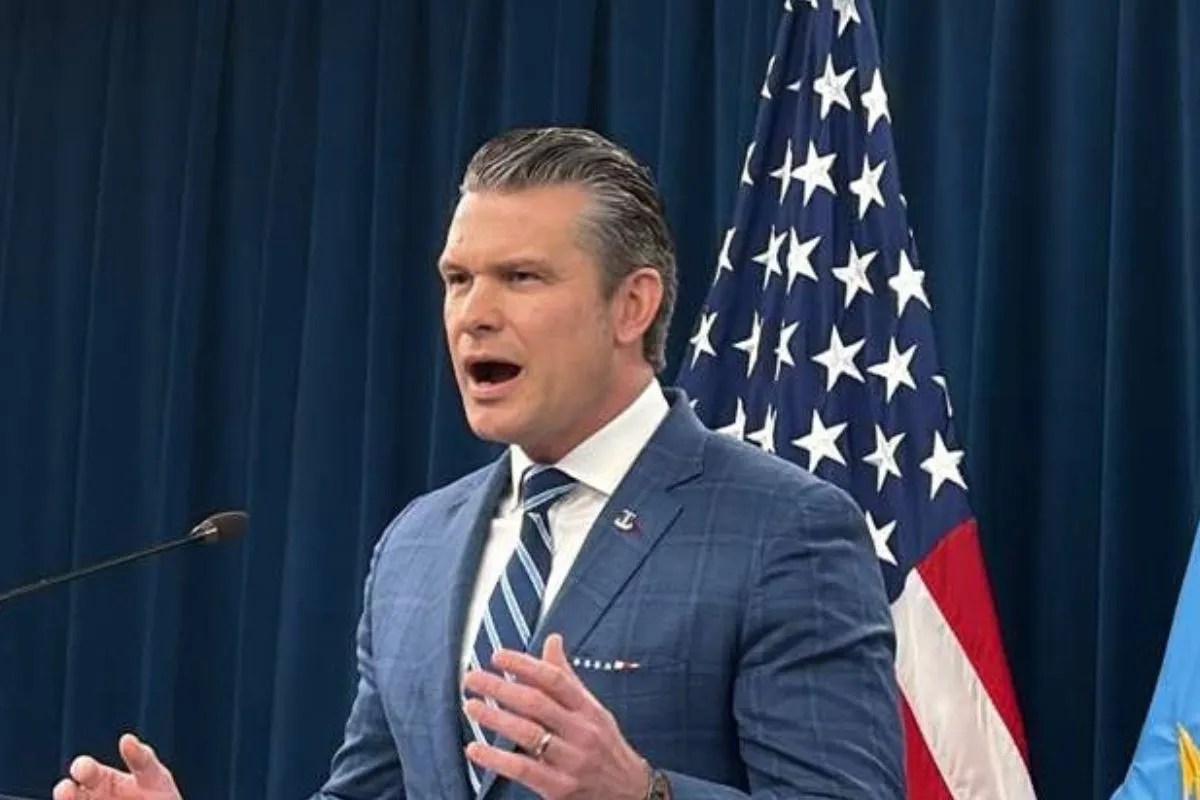
The headlines are predictable. The rhetoric is loud. Defense Secretary Pete Hegseth claims Iran is "begging" for a ceasefire. It makes for a great soundbite. It fuels nationalist pride. It also fundamentally misreads the mechanics of modern Middle Eastern power dynamics.
Calling a tactical pivot "begging" isn't just a linguistic flourish; it's a strategic error. In the world of high-stakes geopolitics, desperation is rarely broadcasted through official channels. What the establishment calls a plea for peace is actually a calculated reorganization of assets. If you think Tehran is on its knees, you aren't paying attention to the asymmetrical reality of 21st-century warfare. Read more on a similar subject: this related article.
Hegemony Is Not A Scoreboard
Washington loves to treat conflict like a scoreboard. We count the number of missiles intercepted. We track the degradation of proxy leadership. We assume that because the kinetic pressure is high, the will of the adversary is crumbling.
I’ve spent enough time analyzing defense procurement and regional strategy to know that "winning" a news cycle is not the same as winning a theater. Iran’s strategy has never been about matching the United States or Israel in a head-to-head conventional exchange. It is about friction. It is about making the cost of engagement higher than the value of the objective. Additional analysis by NPR highlights comparable views on the subject.
When Hegseth claims they are "pleading," he ignores the fact that Iran has successfully shifted the baseline of regional tension. They haven't lost; they’ve merely redefined the terms of the stalemate.
The Proxy Paradox
The common misconception is that if you squeeze the center, the limbs will fall. The "lazy consensus" suggests that a weakened Tehran means a neutered Hezbollah or Houthi movement.
It works the other way.
As the central node feels the heat, the decentralization of these groups accelerates. We are seeing a shift from command-and-control structures to autonomous, tech-driven cells. They don't need a direct wire from the IRGC to launch a swarm of low-cost drones that cost $20,000 to build and $2 million to intercept.
- The Math of Attrition: We use $S$-tier interceptors against $C$-tier delivery systems.
- The Economic Reality: A "ceasefire" allows the adversary to replenish cheap stockpiles while we burn through expensive, slow-to-manufacture munitions.
Who is actually begging for a breather? The side spending billions to maintain a status quo, or the side spending millions to disrupt it?
Deconstructing the "Pressure Works" Myth
The establishment insists that maximum pressure creates a path to a better deal. History suggests otherwise. Pressure creates adaptation.
Iran has spent decades building a "resistance economy." They have integrated their black-market oil sales into a global shadow fleet that defies traditional sanctions. To suggest they are suddenly desperate because of a change in rhetoric at the Pentagon is to ignore the resilience of their parallel financial systems.
Imagine a scenario where a business is told it can no longer use the traditional banking system. For the first year, it struggles. By year five, it has built an entirely new supply chain that you no longer have visibility into. That is the current Iranian state. They aren't begging to come back to your table; they are building their own table in a different room.
The Intelligence Blind Spot
The loudest voices in the room are often the ones with the least nuanced intelligence. When a high-ranking official uses emotive language like "begging," it usually masks a lack of a long-term plan.
What happens the day after a ceasefire?
Does the ideology vanish?
Does the drone technology disappear?
No. A ceasefire in this context is a software update. It’s a period of debugging and refueling. By framing it as a total surrender, we set ourselves up for a "shock" when the next flare-up occurs with more sophisticated, harder-to-track weaponry.
The Technology Gap Is Closing
We rely on our technological superiority as a security blanket. But the democratization of lethality is real.
The Pentagon is still thinking in terms of aircraft carriers and massive troop movements. Iran and its affiliates are thinking in terms of cyber-disruption, electronic warfare, and mass-produced loitering munitions.
- AI-Driven Targeting: You don't need a massive intelligence apparatus when you can use commercially available satellite imagery and basic AI to coordinate strikes.
- Subsurface Capabilities: While we watch the skies, the development of unmanned underwater vehicles (UUVs) is progressing in the Persian Gulf.
- Information Warfare: By leaking "pleas" for peace, Tehran can play the role of the rational actor to a global audience, making the US look like the aggressor if the conflict continues.
This isn't a sign of weakness. It's a masterful use of the "victim" narrative to gain diplomatic leverage in the Global South.
Stop Asking If They Are Losing
The question isn't whether Iran is losing. The question is whether we can afford to "win" at this price point.
The American public is told that victory is just one more sanction away, one more aggressive speech away. This is a fallacy. We are engaged in a permanent state of managed chaos. Calling it "begging" is a way to sell that chaos to a domestic audience that is tired of forever wars.
The Brutal Truth
Iran is seeking a ceasefire because it is the logical move for a rational actor who wants to preserve its gains. It is a tactical reset, not a white flag.
If we continue to mistake a pause for a collapse, we will be caught off guard when the next phase of this conflict begins. The Pentagon needs to stop reading its own press releases and start looking at the hard data of regional influence.
Power doesn't beg. It waits.
Stop celebrating a victory that hasn't happened. Start preparing for the version of the adversary that emerges after the "peace" begins.