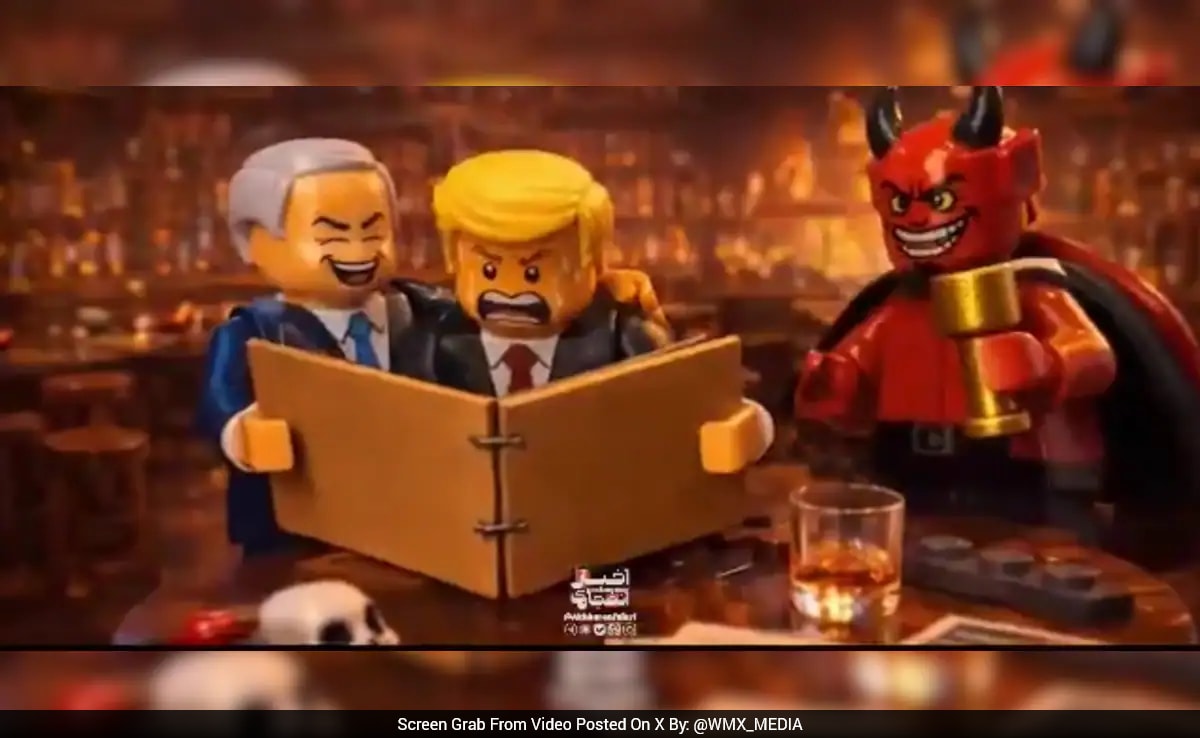
Propaganda isn't what it used to be. Gone are the days of grainy, monochromatic broadcasts of soldiers marching in lockstep. Today, the Iranian regime is reaching for something far more surreal to send its messages of vengeance. They're using Lego-style animation. It sounds like a joke, but for the Islamic Revolutionary Guard Corps (IRGC), these plastic-brick dioramas are a serious weapon in their psychological arsenal.
You've probably seen the clips circulating on social media. Little yellow figurines, unmistakably resembling high-profile political figures, meet their demise in blocky, simulated explosions. It’s a bizarre juxtaposition. We associate these toys with childhood creativity and harmless fun. Iran uses them to depict the assassination of world leaders and the destruction of naval fleets.
This isn't just about being "cheap" or lacking a CGI budget. It’s a calculated move to bypass traditional media filters and land directly in the feeds of a younger, digitally native audience. By using a medium that feels familiar and even playful, the regime can package extreme violence and political threats in a way that feels oddly digestible, even as it remains deeply disturbing.
The psychology of the plastic soldier
Why would a state military apparatus bother with toy-based storytelling? Honestly, it’s about the "uncanny valley" in reverse. When you see a high-end CGI recreation of a missile strike, your brain treats it like a movie. It’s polished, distant, and clearly fake. But when you see a Lego-style recreation, it hits a different nerve. It feels DIY. It feels like something anyone could make in their basement, which ironically makes the threat feel more grassroots and pervasive.
There's also the "meme-ability" factor. In 2026, information doesn't move through official press releases as much as it moves through viral clips. A 30-second animation of a plastic Benjamin Netanyahu being targeted at Mossad headquarters is designed to be shared. It’s short, visual, and carries a punchline of political violence that resonates with the regime’s base. It’s the gamification of warfare.
Replaying history with bricks
Iran has a track record of using animation to rewrite their losses or project their "harsh revenge." We saw this clearly after the 2020 assassination of Qassem Soleimani. The IRGC-linked media outlets released multiple animations showing the "final moments" of the general, often portraying him as a stoic martyr who knew his fate.
- The Trump target: Videos have depicted a remote-controlled car or a drone infiltrating Mar-a-Lago to take out the former president.
- The Carrier strike: Plastic versions of US aircraft carriers are regularly "sunk" in these digital toy worlds, demonstrating a naval power that the real Iranian navy often struggles to project in the physical world.
- The Mossad "hit": Recent clips show elaborate Lego-style sets representing Israeli intelligence hubs, complete with tiny computers and security guards, before the inevitable "click" of a detonator clears the board.
These videos serve as a coping mechanism for a regime that often finds its conventional military options limited by the overwhelming technical superiority of its rivals. If you can't sink a real carrier today, you can at least show your followers what it would look like if you did—using the same toys their kids play with.
Reaching the global youth
Don't think for a second this is only meant for domestic consumption. These videos are frequently translated into English, Hebrew, and Arabic. The goal is to project an image of a tech-savvy, creative resistance. They want to show that they aren't just "old men in robes" but a force that understands modern digital culture.
There's a darker side to this "playful" approach. By using toys to depict death, the regime effectively desensitizes the viewer. It turns the horror of an assassination or a drone strike into a "level" in a game. It removes the humanity from the targets. When the person on the screen is a yellow block with a painted-on suit, it’s much easier to cheer for their demise.
Digital warfare in the age of AI
As we move deeper into 2026, these animations are getting more sophisticated. We’re starting to see a blend of traditional stop-motion aesthetics with AI-generated textures and backgrounds. The line between "amateur toy video" and "state-sponsored psychological operation" is thinning.
The US and Israel have responded with their own digital campaigns, often using high-fidelity footage of actual strikes to counter the Iranian "toy" narrative. It’s a clash of styles. One side uses the brutal reality of 4K drone feeds; the other uses the surreal fantasy of plastic bricks.
If you want to understand where the next front of the Middle East conflict is, don't just look at the Persian Gulf. Look at your "Explore" tab. Look at the weird, blocky animations that seem too strange to be official. They're often the most honest look at a regime's intentions you'll ever get.
Stay skeptical when you see these "viral" clips popping up on your feed. Check the source before you share. If an animation looks like it was made with toys but carries a heavy political message, you're likely looking at a piece of state-sponsored content designed to manipulate your perception of power. Pay attention to the credits—or the lack of them—at the end of these videos to spot the tell-tale signs of IRGC-affiliated production houses like Fars News.