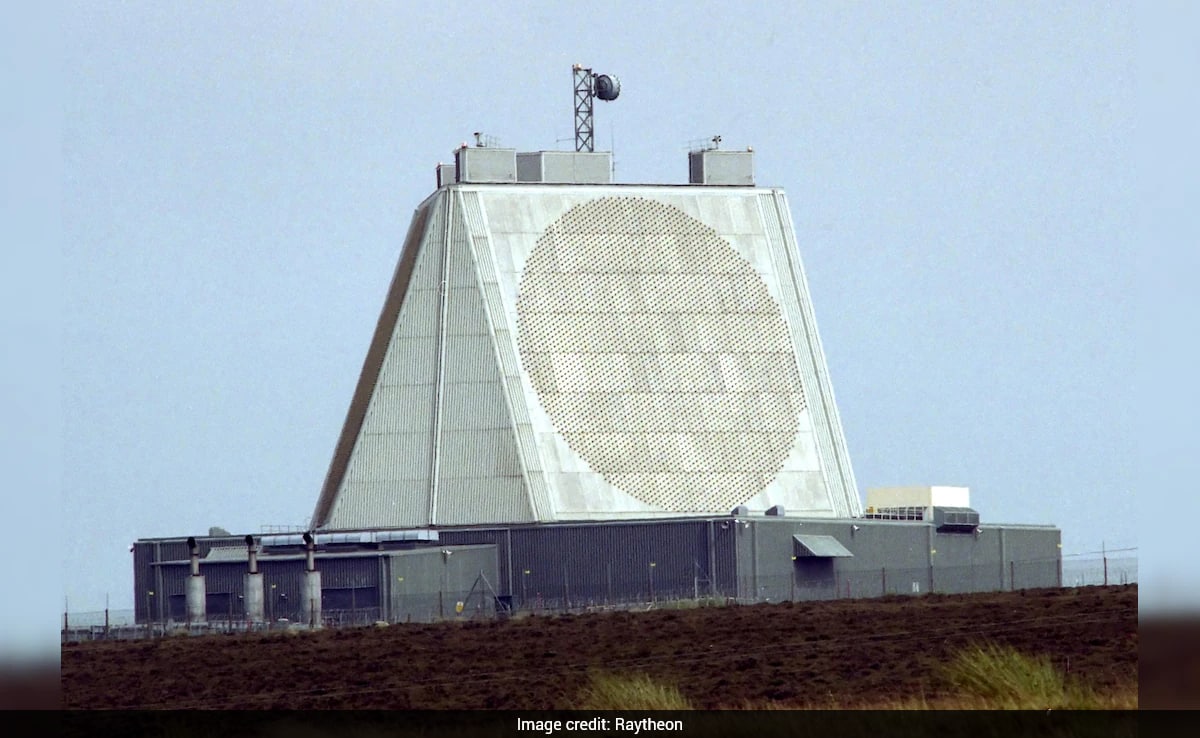
The fog of war in the Persian Gulf just got a lot thicker. On February 28, 2026, Iran’s Islamic Revolutionary Guard Corps (IRGC) dropped a bombshell. They claim they didn’t just scratch a US asset; they claim they completely liquidated the AN/FPS-132 Block 5 Upgraded Early Warning Radar (UEWR) at Al Udeid Air Base in Qatar.
This isn't just another piece of hardware. It’s a $1.1 billion sentinel. If the IRGC’s "Operation True Promise 4" actually turned this machine into a pile of scrap metal, the US missile defense umbrella in the Middle East just developed a massive, gaping hole.
The Billion Dollar Target in the Crosshairs
Let’s be real about what the AN/FPS-132 is. It’s a massive, fixed, phased-array radar that looks like a concrete pyramid from a sci-fi movie. It doesn't move. It doesn't hide. Its job is to stare into space and detect ballistic missiles from up to 5,000 kilometers away.
Think about that range. From its perch in Qatar, this radar can "see" launches from deep inside Asia or even parts of Europe. It’s the primary "lookout" for the entire US Central Command (CENTCOM). When Iran fires a missile, this radar is supposed to be the first thing that screams "incoming" to the Patriot and THAAD batteries protecting US troops and Gulf cities.
The IRGC says they used a precision missile strike to "completely destroy" it. Qatari officials—usually very quiet about US military mishaps on their soil—have reportedly corroborated that the site was hit. The US? They’re being predictably tight-lipped, though they’ve confirmed American combat deaths in the region recently.
Why Losing This Radar Is a Nightmare for Washington
You might think, "It’s just one radar, right?" Wrong.
In modern missile warfare, it's all about the "sensor-to-shooter" timeline. You need to see the threat, identify it, and tell your interceptors where to fly—all in a matter of seconds. The AN/FPS-132 is a "strategic" sensor. It provides the long-range cueing that makes everything else work.
Without it, the US is forced to rely on smaller, tactical radars like the AN/TPY-2 (used with THAAD). These are great, but they have a much narrower field of view. It’s like trying to watch a football game through a straw. You might see the ball, but you’ll miss the play happening on the other side of the field.
The Real Impact of the "Sensor Gap"
- Reduced Warning Time: Instead of minutes of warning, commanders might only get seconds.
- Redundancy Loss: The Gulf defense was a "layered" system. One layer is now gone.
- Saturation Risk: Iran knows the US is now "blind" in certain sectors. This makes a swarm attack using cheaper drones or cruise missiles much more likely to succeed.
The Massive Price Tag of a Single Strike
Replacing a $1.1 billion asset isn't like buying a new truck. These radars are custom-built, fixed-site installations. You can’t just fly a new one in on a C-17. It takes years of engineering and billions in taxpayer money to get another one operational.
If Iran successfully traded a few precision missiles—costing maybe a few hundred thousand dollars each—for a billion-dollar strategic asset, the "cost-exchange ratio" is terrifyingly in their favor. It’s the ultimate asymmetric win.
Is the US Defenseless Now?
Hardly. But they're definitely sweating.
The US has moved more THAAD batteries and Patriot systems into the region over the last few weeks. They’ve also got Aegis-equipped destroyers in the water that carry their own powerful SPY radars. But those ships have to be in the right place at the right time. They aren't a 24/7, fixed early-warning shield like the facility in Qatar was.
The IRGC also claims to have hit a THAAD radar in the UAE and a naval support ship. If you step back and look at the map, it looks like a coordinated effort to "blind" the US before a larger engagement.
What This Means for the Next 48 Hours
Don't expect the US to sit on its hands. If a billion-dollar radar was indeed taken offline, CENTCOM will likely respond by trying to "neutralize" the launch sites that fired the missiles. We're looking at a cycle of escalation where the "eyes" of the military are the first targets.
If you’re tracking this conflict, stop looking at the number of troops. Start looking at the sensors. In 2026, the side that sees first, wins. Right now, the US just lost a very expensive pair of glasses.
Keep a close eye on official CENTCOM briefings for "operational adjustments" in Qatar. If the US starts moving more Aegis ships into the northern Gulf, you’ll know the Qatar radar is definitely out of the fight.