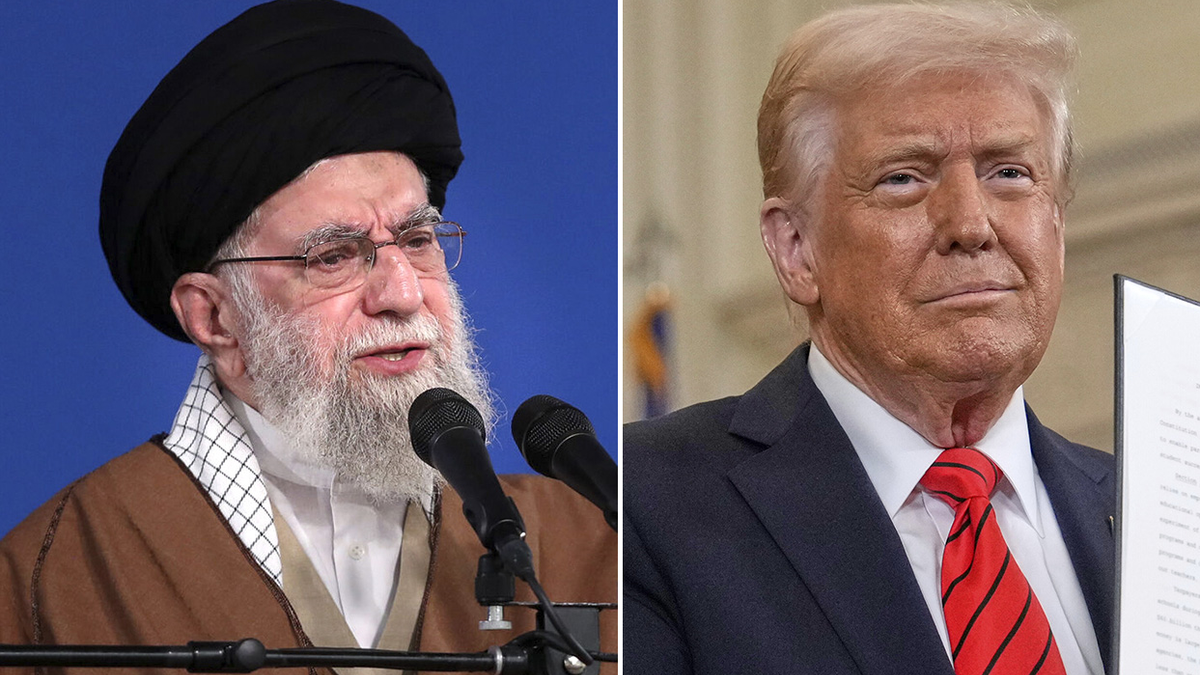
The financial press loves a clean narrative. When an Iranian envoy dismisses a Donald Trump ultimatum as mere market manipulation and denies any back-channel talks, the media lap it up. They frame it as a standard geopolitical standoff. Tehran is defiant, Washington is blustering, and the oil markets are twitching.
They are getting it completely wrong. Meanwhile, you can read other stories here: Federal Shield Cracks in Minnesota as Prosecutors Take on ICE.
The lazy consensus treats diplomacy and market movements as two separate gears grinding against each other. In reality, they are the exact same machine. When Tehran publicizes its refusal to talk, it is not shutting the door. It is setting the opening bid.
Let us dismantle the theater and look at how global energy markets and sanctions realpolitik actually operate. If you think this is just about a tweet or a press briefing, you are falling for the script. To see the complete picture, check out the detailed report by NBC News.
The Illusion of the Non-Communication
The biggest fallacy in international relations is that a lack of official meetings means a lack of communication.
In the real world, governments talk through price signals, enrichment levels, and shipping insurance premiums. To say "no talks are underway" is a semantic game. When Iranian officials scream about market manipulation, they are using the financial press to send a direct message to Wall Street and the White House.
The message is simple: We know how sensitive you are to oil price shocks, and we know how to trigger them.
The Calculus of Public Defiance
Why deny talks publicly if you want them privately? Because in Persian diplomacy—and real estate negotiation—the party that looks like they want the deal loses the deal.
If Iran says, "Yes, we are secretly chatting with Trump's team," three things happen immediately, and all of them are bad for Tehran:
- Hardline factions at home revolt. The internal political stability fractures.
- Oil buyers expect a quick resolution. They pause buying, waiting for sanctions to lift and prices to drop.
- The US gains leverage. Washington realizes the sanctions are biting hard enough to force Iran to the table.
By aggressively denying talks and blaming Trump for manipulating markets, Iran achieves the exact opposite. They project strength to their domestic base, they keep oil traders guessing, and they force the US to make the first conciliatory move.
It is a classic game theory trap. The moment you admit you are playing, you lose your edge.
Why Trump Loves the Accusation
Let us look at the other side of the aisle. Why would a US administration issue ultimatums that look like market manipulation?
Because it works.
The traditional foreign policy establishment views sanctions as a linear tool: you apply pressure, the economy hurts, the behavior changes. That is a naive view. Modern economic warfare is about volatility management.
The Volatility Premium
When the US administration rattles the saber, it introduces a risk premium into global oil markets. Brent crude ticks up.
For a US president focused on domestic energy production, a slight, controlled lift in oil prices is not a bug; it is a feature. It keeps US shale drillers profitable. It keeps Texas and North Dakota pumping.
Imagine a scenario where a US president wants to squeeze Iranian revenues without actually starting a war. You do not need to drop bombs. You just need to drop hints. By creating a cloud of uncertainty, you drive up the cost of doing business with Iran.
- Insurance rates for dark-fleet tankers skyrocket.
- Chinese independent refineries (the "teapots" that buy Iranian crude) demand steeper discounts to cover their risk.
- Transaction costs for moving illicit money increase.
Iran might sell the same number of barrels, but they take home significantly less cash. Trump does not need to block the oil physically if he can block the profit margin psychologically. When the Iranian envoy calls this "market manipulation," he is not exposing a crime. He is reading the scoreboard of a game he is losing.
The Hard Math of Sanctions Evasion
Let us get precise about how these dynamics play out in the shipping lanes and banking servers.
For years, the conventional wisdom was that maximum pressure failed because Iran kept selling oil. Critics point to the illicit trade as proof that sanctions do not work. I have looked at the numbers, and this is a fundamental misunderstanding of how illicit trade operates.
Yes, Iran moves oil. But look at the friction.
The Real Cost of the Dark Fleet
To move oil outside the traditional banking system (SWIFT) and maritime insurance networks (the International Group of P&I Clubs), Iran relies on a massive, aging fleet of shadow tankers.
Here is how the economics of that trade actually work:
| Standard Trade | Illicit Trade | The Friction Difference |
|---|---|---|
| Freight Cost: $2–$3 per barrel | Freight Cost: $7–$11 per barrel | Iran eats the difference. |
| Insurance: Standard P&I rates | Insurance: Proprietary/Sovereign guarantees | High risk of vessel seizure or accident. |
| Payment: Fast, electronic, liquid | Payment: Barter, front companies, physical gold | Huge liquidity trap. Cash is locked up in Chinese banks. |
| Price: Market rate (Brent/WTI) | Price: Massive discounts ($10–$20 below Brent) | Direct revenue loss. |
When the Iranian envoy dismisses Trump’s threats as theater, he ignores the compounding weight of these numbers. Iran is moving oil, but they are bleeding capital to do it. The physical flow of oil is secondary to the net revenue capture.
People Also Ask: The Flawed Premises
Let us address the questions the market is asking, and why the premises of these questions are broken.
Is Trump trying to crash the Iranian economy?
The Wrong Answer: Yes, through total isolation.
The Brutal Truth: No. Total isolation is impossible and dangerous. If the Iranian economy completely collapses, the regime has nothing left to lose. That is when missiles fly in the Strait of Hormuz, shutting down 20% of the world's oil supply. The US goal is not collapse; it is strangulation just short of asphyxiation. You want the regime alive, desperate, and eager to sign a lopsided deal just to breathe.
Can Iran survive without US talks?
The Wrong Answer: Yes, they have pivoted to China and Russia.
The Brutal Truth: Only as a vassal state. China is not buying Iranian oil out of the goodness of its heart. Beijing buys it because it is cheap. If the US and Iran ever normalize relations and sanctions lift, that massive Chinese discount vanishes. China benefits from Iran being sanctioned because it guarantees Beijing cheap energy. Iran’s pivot to the East is not a victory of sovereignty; it is a desperate firesale.
The Fatal Flaw in the Contrarian Bet
I am arguing that public denials are a smokescreen for back-channel positioning. But let us be brutally honest about the massive downside to this strategy.
The downside is that theater can easily become reality.
When you play a high-stakes game of chicken in the public eye to preserve your leverage, you remove your own off-ramps. If Tehran convinces its population and its hardline parliament that the US is an unreliable market manipulator with whom no talks are possible, it becomes politically impossible to sit down when the time is right.
Miscalculation is the ultimate market risk.
If a US administration misinterprets Iranian public defiance as a true refusal to negotiate, it might escalate sanctions to a breaking point. If Iran misinterprets US bluster as pure political theater, it might push its nuclear program too far, thinking the US will not act.
Brinkmanship only works if both drivers know where the edge of the cliff is. Today, the fog of financial and political warfare has obscured the edge.
The Reality of the New Energy Order
Forget the press releases. If you want to know what is actually happening between Washington and Tehran, stop reading the official statements from envoys. Look at the data that cannot lie.
1. Watch the Brent-Dubai Spread
This measures the price difference between North Sea sweet crude and Middle Eastern sour crude. When geopolitical tensions in the Persian Gulf rise, the spread shifts. If the spread is widening while an envoy says "no talks are happening," believe the spread. The market is pricing in a back-channel failure.
2. Track the Vessel Turnaround Times
How long are tankers sitting off the coast of Iran's Kharg Island? If turnaround times are increasing, it means Iran is struggling to find buyers willing to risk sanctions. If turnaround times are fast, it means a quiet understanding has been reached between Washington and Beijing to let the oil flow to keep global inflation down.
3. Monitor the Iranian Rial (IRR)
The currency market in Tehran is the ultimate truth-teller. It does not care about national pride or geopolitical posturing. If the Rial is strengthening while the government denies talks, it means the merchant class in Tehran knows a deal is being cooked. If it is plummeting, they know the public defiance is real and pain is coming.
The narrative of "defiance versus ultimatum" is a bedtime story for cable news viewers. The real story is written in basis points, insurance premiums, and freight rates. Tehran is talking to Trump every single day. They are just using the price of oil to do it.
Stop listening to what politicians say. Watch what the money does.