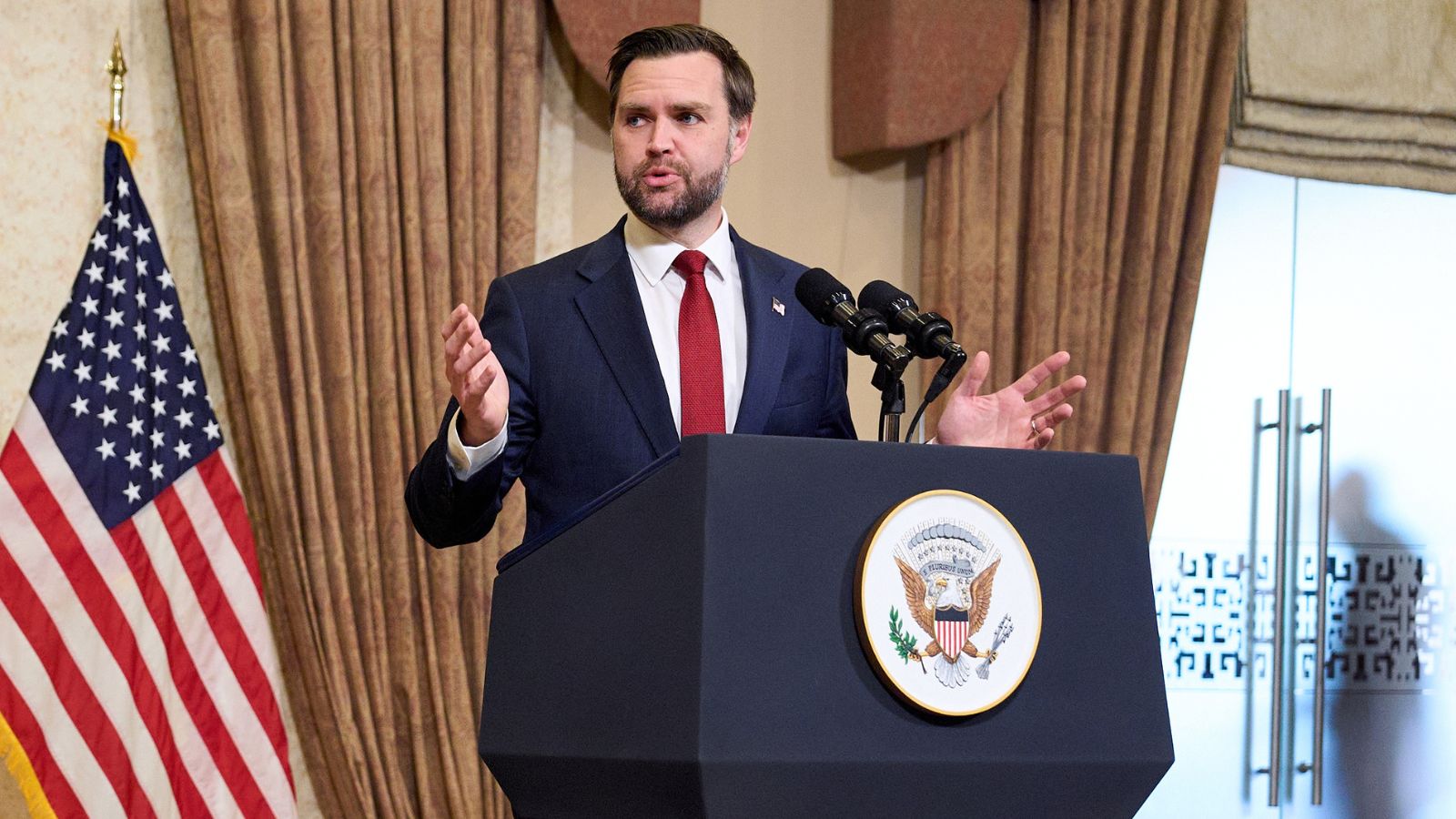
JD Vance isn't pulling any punches regarding the chaos in the Middle East. He's officially labeled Iran’s interference in the Strait of Hormuz as economic terrorism. This isn't just tough talk for a campaign rally. It’s a direct response to a massive shift in global trade security as a US-led blockade officially swings into gear. If you’ve noticed your gas prices ticking up or seen headlines about shipping delays, this is why. The world’s most vital maritime chokepoint is now a literal battleground for global economic stability.
The Strait of Hormuz is a narrow stretch of water between Oman and Iran. It connects the Persian Gulf with the Gulf of Oman and the Arabian Sea. It’s tiny. At its narrowest point, it’s only about 21 miles wide. Yet, about 20% of the world’s total oil consumption passes through here every single day. When Vance talks about economic terrorism, he’s referring to the way Tehran uses its proximity to these shipping lanes to hold the global economy hostage.
Why the Economic Terrorism Label Actually Matters
Calling a nation’s actions terrorism isn't just a rhetorical flourish. It changes the way the US military and Treasury Department handle the situation. For Vance, the argument is simple. By using fast boats, sea mines, and drones to harass commercial tankers, Iran isn't just fighting a shadow war with Israel or the West. They’re attacking the pocketbooks of every person who needs fuel to get to work.
The blockade now in effect is a massive escalation. We’re moving past "freedom of navigation" patrols and into a phase where the US and its allies are actively stopping and searching vessels suspected of carrying Iranian contraband or arms. It's a high-stakes game of chicken. You’ve got the US Navy’s Fifth Fleet on one side and the Islamic Revolutionary Guard Corps (IRGC) on the other.
The Mechanics of a Modern Naval Blockade
People often think of a blockade as a line of ships parked across a harbor. That’s old school. Today, it’s about ISR—Intelligence, Surveillance, and Reconnaissance. We’re talking about high-altitude drones, satellite tracking of AIS (Automatic Identification System) signals, and acoustic sensors on the sea floor.
- AIS Spoofing: Iranian tankers often turn off their transponders to "go dark." The US-led coalition is now using advanced radar to track these "ghost ships" regardless of their digital signatures.
- Ship Boarding: Elite teams, including Navy SEALs and Coast Guard Tactical Law Enforcement Teams, are performing "Visit, Board, Search, and Seizure" (VBSS) missions.
- Financial Interdiction: The blockade extends to the digital world. If a ship is caught, the companies insuring it or the banks processing the payments for the cargo get hit with immediate, crippling sanctions.
Iran's response has been predictable. They’ve increased the frequency of their "swarming" tactics. This involves dozens of small, fast-attack craft buzzing around massive oil tankers. It’s intimidating. It’s dangerous. It’s exactly what Vance means when he says they're terrorizing the flow of goods.
The Massive Ripple Effect on Global Markets
Energy markets hate uncertainty. When a missile hits a tanker or a blockade is announced, traders panic. We’ve already seen Brent Crude oil prices react. But it’s not just about oil. Liquefied Natural Gas (LNG) from Qatar also flows through this strait. Much of the world's energy transition depends on that gas.
If the Strait of Hormuz stays in this state of "active friction," shipping insurance premiums will skyrocket. Those costs don't get absorbed by the shipping giants. They get passed to you. Whether it’s the cost of plastic, the price of shipping a container from Asia, or the heater in your home, the blockade's impact is everywhere.
Vance’s stance is that the US can’t afford to be passive. He’s pushing for a "maximum pressure" 2.0. This means not just stopping the ships, but holding the Iranian regime directly accountable for every dollar of "economic damage" caused by their maritime stunts. It’s a hawkish view, sure, but it’s gaining traction because the old way of just "monitoring" the situation didn't stop the harassment.
The Risks of a Direct Kinetic Confrontation
We’re closer to a hot war in the Persian Gulf than we’ve been in decades. When you have US sailors boarding ships in waters that Iran claims as its backyard, the margin for error is zero. A single nervous sailor on either side could spark a localized conflict that turns into a regional firestorm.
Critics of the blockade argue that it’s an act of war itself. International law is murky here. Usually, a blockade is considered an act of war under the San Remo Manual on International Law Applicable to Armed Conflicts at Sea. The US argues this is a "maritime security operation" to enforce existing UN sanctions and protect commerce. It’s a thin legal line.
What Happens if Iran Closes the Strait
Iran has threatened to "close" the strait many times. Practically, they can’t do it forever. The US Navy is too strong. But they can make it unusable for weeks. By sinking a few large tankers in the narrow channels or littering the area with "smart" mines, they could effectively shut down 20% of the world's oil supply.
That’s the "nuclear option" of economic warfare. It would send the global economy into a tailspin. This is the leverage Iran holds. Vance’s argument is that by labeling them economic terrorists now, the US is setting the stage for more aggressive preemptive actions to make sure that closure never happens.
Moving Beyond the Headlines
The situation in the Strait of Hormuz is evolving hourly. The US blockade isn't just a static event. It’s a shifting operation involving dozens of nations under the "Combined Maritime Forces" umbrella. You need to keep an eye on the "TankerTrackers" data and reports from the UK Maritime Trade Operations (UKMTO). These are the folks on the front lines of reporting actual incidents versus political posturing.
If you're an investor or just someone worried about the economy, watch the "War Risk" surcharges on shipping invoices. That’s the real-world metric of how much this blockade is costing. The rhetoric from JD Vance marks a significant hardening of American policy. It signals that the time for diplomatic "concern" over maritime harassment is over. The blockade is here. The label of "economic terrorism" is stuck. Now, we wait to see if Tehran blinks or doubles down on the chaos.
Check the latest Brent Crude spot prices and maritime security maps daily to see how the blockade is physically moving. Don't just listen to the pundits. Look at the ship tracking data. The truth is in the water.