Kahlil Joseph does not make movies for the casual observer. He constructs sensory environments that demand a specific kind of surrender. While the industry frequently tries to box him into the category of "music video director"—a byproduct of his high-profile collaborations with Beyoncé and Kendrick Lamar—Joseph has quietly spent the last decade dismantling the boundaries between fine art, cinema, and communal ritual. His transition into feature-length territory with BLKNWS represents more than a career milestone. It is a calculated strike against the stagnant ways Black life is captured, edited, and broadcasted to the world.
The problem with most contemporary media is not just a lack of representation, but the persistent reliance on a "crisis" lens. Blackness is often treated as a series of breaking news events, defined by trauma or exceptionalism. Joseph’s work rejects this binary. By treating the screen as a canvas rather than a window, he forces the viewer to confront the texture of the everyday. He is moving away from the linear demands of Hollywood and toward a fragmented, more honest expression of how memory and identity actually function.
The Architecture of the Counter Narrative
To understand where Joseph is going, you have to look at the mechanics of his past. He didn't just stumble into the spotlight. He emerged from an apprenticeship under the late photographer Underground Railroad pioneer Noah Davis, and through a deep immersion in the Los Angeles art scene. This wasn't about learning how to frame a shot; it was about learning how to see what everyone else ignores.
Most directors prioritize the "what" of a story. Joseph prioritizes the "how." In projects like FlyLo FM or his work for the Underground Museum, the narrative is often secondary to the rhythm. He uses slow motion not as a stylistic flourish, but as a way to extend time, allowing the viewer to sit with an image long enough for its deeper meaning to surface. This is a rejection of the "fast-cut" culture that dominates modern streaming platforms. It is an intentional slowing down.
The BLKNWS Protocol
The core of Joseph’s current trajectory is BLKNWS. Originally conceived as a two-channel art installation, it has morphed into a living, breathing entity that challenges the very concept of a "feature film."
- Non-linear curation: The project functions like a news desk from a parallel universe where the editorial priorities are shifted.
- Archival depth: It pulls from home movies, internet clips, and high-fashion photography to create a collage that feels more "real" than a standard documentary.
- Spatial awareness: Joseph often insists that the work be shown in specific contexts—barbershops, galleries, or community centers—rather than just on a laptop screen.
This isn't just art for art's sake. It is an attempt to build a new infrastructure for information. If the mainstream news cycle is a blunt instrument, Joseph is trying to build a scalpel. He is looking at the vast repository of Black creativity and intellectualism and asking why it isn't the baseline for our daily reality.
Why the Industry is Afraid of This Model
Hollywood likes predictable returns. A feature film usually follows a three-act structure, has a clear protagonist, and ends with a resolution. Joseph provides none of these safety nets. This creates a tension between his vision and the commercial entities that want to fund him.
The industry wants to "brand" his aesthetic. They see the grainy film stock and the poetic transitions and they want to apply them to car commercials or prestige TV title sequences. But the aesthetic is inseparable from the intent. When you strip away the purpose—which is the liberation of the Black image—you are left with a hollow shell. Joseph has remained remarkably resistant to this dilution. He understands that his power lies in his refusal to play by the established rules of "watchability."
There is a financial risk here that few analysts talk about. By operating in the space between the gallery and the multiplex, Joseph is essentially creating his own market. He isn't competing with the latest Marvel blockbuster; he is competing for the attention and the souls of people who feel alienated by mainstream garbage. This is a precarious place to be. It requires a level of institutional support from museums and private collectors that most filmmakers never have to consider.
The Ghost of the Feature Film
For years, the question surrounding Joseph was when he would finally make a "real" movie. This question is rooted in a colonial mindset that views the feature film as the highest form of visual expression. It assumes that short films or installations are merely "practice" for the big stage.
Joseph has flipped this script. By turning BLKNWS into a feature-length experience, he isn't conforming to the format; he is colonizing it. He is proving that you can hold an audience's attention for ninety minutes without a traditional plot. This is a technical feat as much as an artistic one. It requires a masterful grasp of pacing and sound design.
The sound is the secret weapon. Joseph’s background in music videos taught him that audio can do the heavy lifting that dialogue often fails to achieve. In his work, the soundscape is often dense, layered, and disorienting. It mimics the psychic noise of modern life. When you watch a Kahlil Joseph film, you don't just see it; you feel it in your chest.
Breaking the Fourth Wall of the Soul
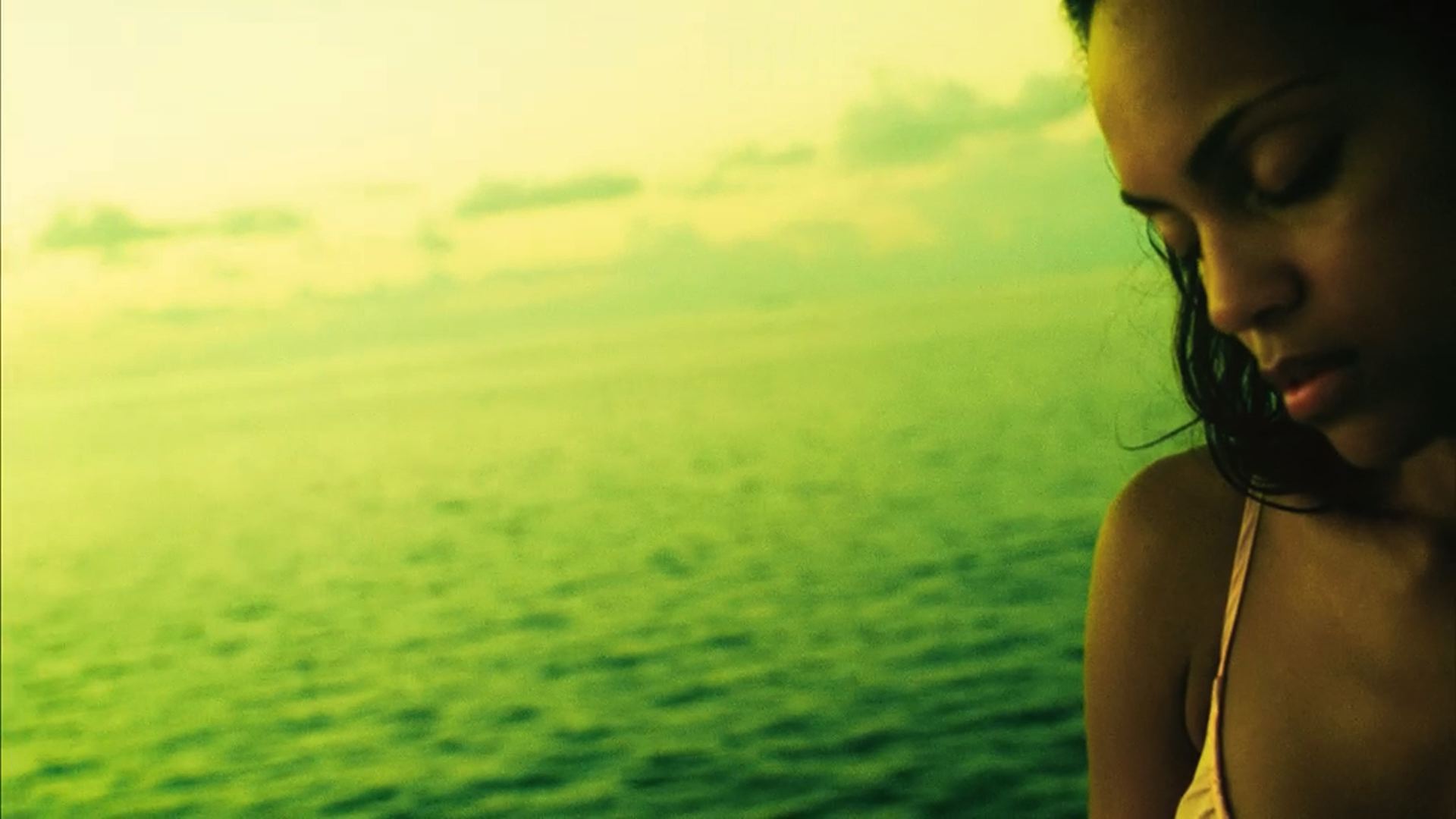
One of the most overlooked factors in Joseph's rise is his ability to foster a sense of intimacy. He captures his subjects in moments of extreme vulnerability or quiet dignity. This isn't the "poverty porn" that often wins awards at film festivals. It is something else entirely—a recognition of the sacred in the mundane.
He achieves this through a specific technical approach:
- Large Format Film: Using 35mm or 65mm gives the images a weight and a depth that digital can't replicate.
- Extended Takes: He stays on a face or a hand for just a second longer than is comfortable, forcing a connection.
- Natural Lighting: He avoids the artificial "pop" of studio lights, opting instead for the honest, sometimes harsh reality of the environment.
The Institutional Pivot
As Joseph moves forward, the challenge will be maintaining this edge while his work is institutionalized. When the MoMA or the Tate buys your work, you are no longer an outsider. You are part of the canon. This transition can be the death of radicalism.
However, Joseph seems acutely aware of this trap. He doesn't just put his work in museums; he questions why the museums exist in the first place. He uses his platform to highlight other artists, creating an ecosystem rather than a monument to himself. This is the "forward" part of his vision. It’s not about one man making one movie. It’s about creating a visual language that others can use to tell their own truths.
The "transcendence" people often cite in his work isn't magic. It is the result of a rigorous, almost clinical dedication to the truth of the image. He is an editor at heart. He knows that what you leave out is just as important as what you put in. By stripping away the cliches of Black cinema, he leaves room for something much more potent to emerge.
The Myth of the "Difficult" Artist
Critics often label Joseph as "challenging" or "abstract." This is a lazy shorthand. His work is only challenging if you are unwilling to let go of your expectations of what a movie should be. If you approach his work the way you approach a piece of music, it becomes entirely accessible.
We don't ask a jazz composition to have a "plot." We don't ask an abstract painting to "explain itself." Why do we demand this of film? Joseph is pushing for a world where cinema is allowed to be as fluid and as complex as any other art form. He is fighting for the right to be ambiguous.
This ambiguity is where the real work happens. It’s in the space between the images where the viewer is forced to do their own thinking. In a world that wants to feed you pre-digested "content," Joseph is handing you the raw ingredients and asking you to cook.
The industry will continue to watch him, waiting for him to "sell out" or to make a straightforward narrative. They might be waiting a long time. Joseph isn't looking back at the history of cinema to find his place; he is looking at the gaps in that history and filling them with something the world hasn't seen before.
Go watch BLKNWS not as a film, but as a broadcast from a future that is already here, if you know where to look. Use it as a prompt to evaluate the images you consume every day on your phone. Ask yourself who edited them, why they were chosen, and what they are trying to make you feel. Once you start seeing the world through that lens, there is no going back to the old way of watching.