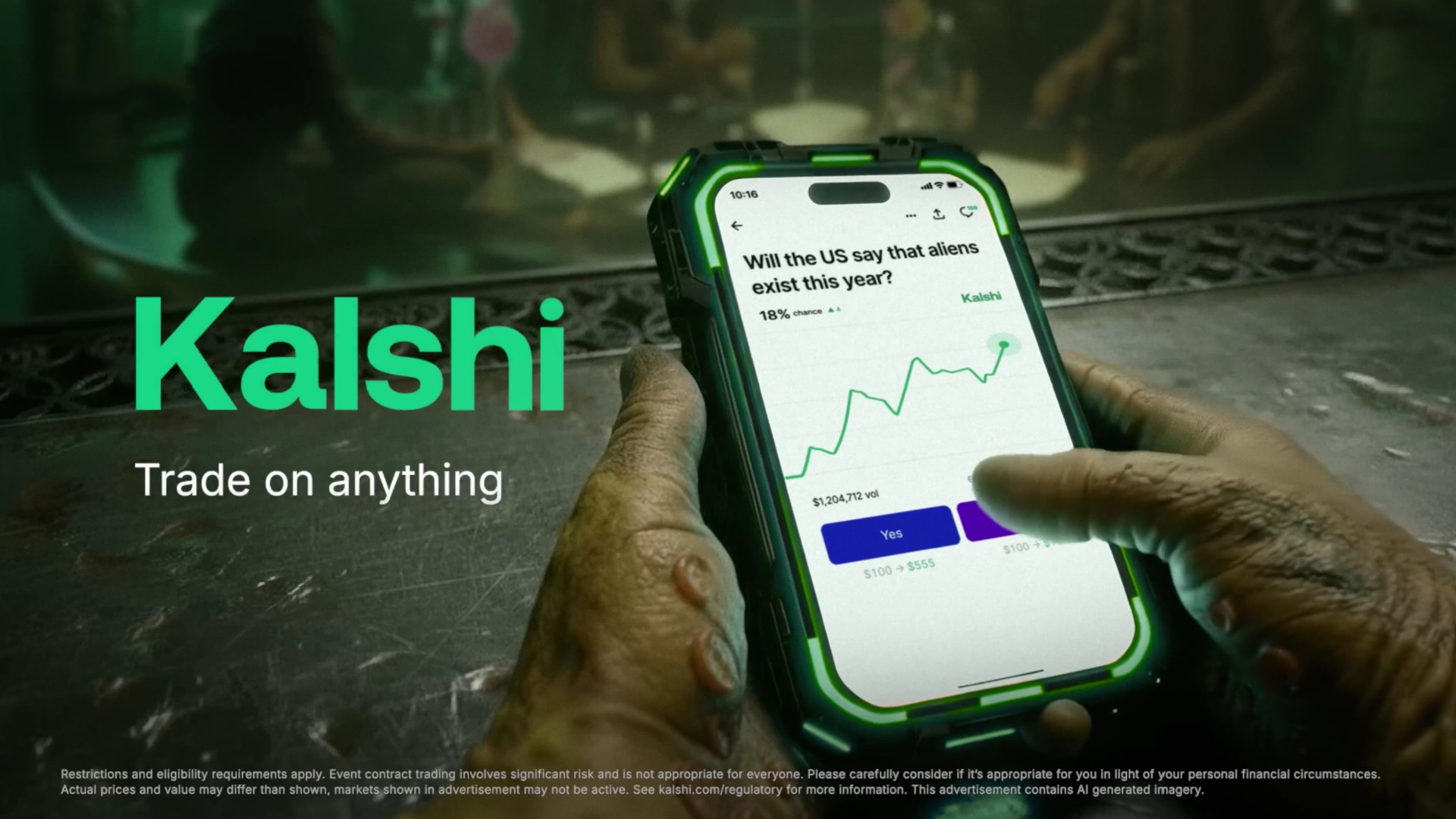
The prediction market Kalshi recently disqualified three U.S. political candidates from betting on their own election outcomes, a move that exposes the volatile friction between decentralized financial forecasting and the ancient machinery of American election law. While the platform framed the decision as a routine enforcement of its terms of service, the move reveals a much larger struggle. It is the first major collision in a new era where financial markets and democratic processes are no longer separate lanes, but a single, tangled web of high-stakes speculation.
By removing these candidates—whose identities remain shielded behind the platform's privacy protocols—Kalshi acted to prevent a scenario where a politician could theoretically hedge their own defeat or manipulate their perceived "electability" through heavy, self-funded betting volume. This isn't just about a few candidates trying to make a quick buck on their way out the door. It is about the integrity of the data that millions of people now use to judge who is winning and who is losing.
Betting on Yourself is a Conflict of Interest
In traditional finance, we call it insider trading. In the world of prediction markets, it has been a gray area that regulators at the Commodity Futures Trading Commission (CFTC) have long warned about. When a candidate bets on their own race, they aren't just an investor; they are the primary actor in the event they are wagering on.
They have access to internal polling that the public hasn't seen. They know if a scandal is about to break or if a major endorsement is locked in. They are essentially playing a game of poker where they can see everyone’s cards while holding the deck.
Kalshi’s decision to "dock" these candidates—essentially freezing their accounts or voiding their positions—was a preemptive strike. The platform is currently in a legal dogfight with the CFTC to remain the premier legal venue for election betting in the United States. Allowing candidates to wager on their own success would have given federal regulators exactly the ammunition they need to shut the whole operation down.
The Mechanics of Market Manipulation
How exactly does a candidate benefit from betting on themselves? It’s rarely about the payout. Most local or congressional candidates aren't going to get rich off a few thousand dollars in a prediction market. The real value is in the narrative.
Modern campaigns are obsessed with "momentum." If a candidate can push their odds from 40% to 55% on a high-profile exchange like Kalshi, they can use those screenshots to solicit more donations, convince voters they are the "frontrunner," and demoralize the opposition. It is a form of cheap, effective propaganda.
By putting their own money into the pool, they create a false signal. Other traders, seeing the price rise, assume someone knows something they don’t. They follow the trend, and suddenly a trailing candidate looks like a winner. Kalshi’s internal monitors flagged the accounts because the betting patterns didn't align with broader market sentiment or public polling; they looked like focused, self-serving injections of capital.
The Demographic Divide in Political Speculation
To understand why this matters, you have to look at who is actually participating in these markets. Prediction markets aren't a microcosm of the American electorate. They are heavily skewed toward specific demographics that don't always represent the broader voting public.
Data from major exchanges and academic studies on prediction market participants suggest a significant lean toward White and Asian males with high incomes and backgrounds in STEM or finance. Specifically:
- Gender: Approximately 85% to 92% of active traders on platforms like Kalshi and Polymarket identify as male.
- Education: Over 70% hold at least a bachelor’s degree, often in quantitative fields.
- Race and Ethnicity: Participation among Black and Hispanic voters remains significantly lower, often hovering below 10% of total active users.
When candidates bet on themselves, they are manipulating a tool used primarily by an elite, tech-savvy slice of the population. This creates a feedback loop where the "market odds" reflect the biases of a specific group, further distancing the prediction from the reality of the ballot box. If a candidate can trick this specific demographic into believing a win is inevitable, they can shift the national conversation through the media outlets that treat these markets as gospel.
The CFTC Shadow and the Search for Legitimacy
Kalshi’s aggressive move against these three candidates is a survival tactic. For years, the CFTC has argued that election betting is "contrary to the public interest" and akin to gaming. The commission fears that if these markets grow too large, they will incentivize bad actors to interfere with elections just to protect their bets.
The platform recently won a landmark court battle that allowed them to continue offering election contracts, but the victory is fragile. The CFTC is currently drafting new rules that could specifically ban any contracts involving political contests.
By policing their own house and kicking off candidates, Kalshi is trying to prove they can self-regulate. They want to show that they are a sophisticated financial exchange, not a digital sportsbook for corrupt politicians.
"The moment a candidate enters the order book, the market ceases to be a tool for discovery and becomes a tool for deception."
This quote, often whispered among market analysts, summarizes the core risk. If the public loses trust in the "wisdom of the crowds" because the crowd is being led by the people on the ballot, the entire business model collapses.
A Structural Failure in Disclosure Laws
The most glaring issue revealed by this incident is that U.S. campaign finance laws are decades behind the curve. Currently, a candidate must disclose if they buy a house, if they receive a gift, or if they spend money on television ads. However, there is no explicit requirement for a candidate to disclose a "short" or "long" position on their own political career.
We have arrived at a point where a politician can legally hold a financial interest in their own failure.
Imagine a candidate in a deep-blue or deep-red district who knows they have no chance of winning. They could quietly bet against themselves on a platform like Polymarket or Kalshi, effectively getting paid to lose. This creates a perverse incentive to run a "phantom campaign"—doing just enough to keep the odds interesting while planning to cash out when the inevitable defeat occurs.
The Problem with Anonymity
Kalshi utilizes KYC (Know Your Customer) protocols, which is how they caught these individuals. However, many other markets—particularly those based on blockchain technology—allow for much higher levels of anonymity.
The three candidates caught by Kalshi were likely amateurs in the world of high-finance evasion. A more sophisticated actor could easily distribute their bets across multiple offshore accounts or use proxies to hide their trail. Kalshi’s intervention is a signal, but it is far from a total solution. It only catches those who are bold or foolish enough to use their own credentials.
The Hidden Risk of "Wash Trading" in Elections
Beyond simple betting, there is the threat of wash trading—a practice where a single entity buys and sells the same asset to create the illusion of high volume and price movement.
In the context of the 2024 and 2026 cycles, wash trading in prediction markets could be used to manufacture a "momentum" narrative for a struggling candidate. If a candidate’s campaign or a friendly Super PAC can pump millions into a market, they can move the needle from 20% to 50% in a single afternoon.
Kalshi’s defense against this is its limit on contract sizes and its oversight as a regulated U.S. exchange. But the pressure is mounting. As more money pours into these markets, the incentive to cheat grows exponentially. The three candidates docked by Kalshi are just the tip of the spear; they represent the first wave of actors realizing that the market is just another battlefield for political influence.
Why This Isn't Just About Betting
We have to stop looking at prediction markets as just "gambling." They have become a primary source of information for the modern news cycle. During election nights, television networks now frequently cite market odds alongside traditional exit polls.
When those odds are compromised, the public’s understanding of reality is compromised.
If a candidate is allowed to manipulate their own price, they are effectively buying their way into the "frontrunner" category of the evening news. This bypasses the traditional filters of journalism and polling. It is a direct injection of capital into the public consciousness.
The Role of High-Frequency Trading
What makes this even more dangerous is the speed at which these markets react. Unlike a poll, which takes days to conduct and analyze, a prediction market moves in milliseconds.
If a candidate makes a gaffe during a debate, their price drops instantly. If they bet on themselves to counter that drop, they can stabilize the price and prevent a negative narrative from taking hold. We are entering an era of "algorithmic campaigning" where the financial markets act as a real-time defense mechanism for political reputations.
The Future of the Regulatory War
The CFTC isn't going to let this go. The agency is looking at the Kalshi candidate ban not as a success of self-regulation, but as evidence of the inherent danger of the product. Their argument is simple: if the platform has to manually "dock" candidates to keep the market clean, then the market is fundamentally unsafe for the public.
Kalshi, on the other hand, argues that their ability to catch and penalize these candidates proves the system works. They point to the transparency of their ledger and their cooperation with federal authorities as a model for how these markets should operate.
The reality lies somewhere in the middle. Prediction markets are undeniably better at forecasting outcomes than many traditional polls, which have struggled with response rates and demographic weighting in recent years. However, the integrity of these markets is entirely dependent on the exclusion of the people who have the power to change the outcome.
A New Standard for Candidates
Moving forward, there needs to be a clear, federal prohibition on candidates, their immediate families, and their senior staff from participating in any market related to their own election. This shouldn't be left to the whim of a platform's terms of service.
It needs to be a matter of law, with penalties that mirror those of insider trading in the stock market. Without a legal deterrent, the temptation to use these markets as a campaign tool will be too great for many to resist.
The Kalshi incident is a warning shot. It tells us that the wall between money and votes has finally crumbled. We are no longer just voters; we are traders in a national experiment where the prize is the presidency and the currency is our collective belief in the numbers on a screen.
The three candidates who tried to bet on their own futures were simply the first to get caught. They won't be the last. As the stakes get higher and the technology gets more seamless, the line between a legitimate forecast and a manufactured reality will continue to blur until it disappears entirely.
Every candidate should be required to sign a pledge of non-participation in prediction markets as a condition of their filing. End of story.