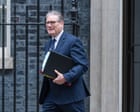
Keir Starmer isn't flinching. Despite Donald Trump essentially holding the UK-US trade deal hostage, the Prime Minister just told the House of Commons that he won't be bullied into a war with Iran. It's a high-stakes game of chicken where the prize is a stable British economy and the penalty is, well, potential global catastrophe.
During a heated session of Prime Minister’s Questions on April 15, 2026, Starmer made it clear that he’s not going to yield. Trump had spent the previous night on Sky News suggesting that the trade agreement brokered just last year "can always be changed." In Trump-speak, that’s a direct threat to hike tariffs unless Britain sends boots or planes to the Middle East.
The Trade Deal on the Chopping Block
The agreement in question was supposed to be the "golden ticket" for post-Brexit Britain. It capped US tariffs at 10% on most British manufactured goods, giving UK exporters a fighting chance in the American market. In exchange, the UK opened its doors to American ethanol and let the US use a couple of military bases for "defensive" tasks.
Now, Trump says he gave the UK a deal that was "better than I had to." He’s clearly frustrated that Starmer isn't playing ball with Operation Midnight Hammer and the subsequent escalation against Tehran. For Trump, the "Special Relationship" is a transaction. If you don't help him with his war, you don't get his trade terms.
Starmer’s Line in the Sand
Starmer’s response was surprisingly blunt for a man often accused of being too cautious. He told MPs, "It is not our war." He admitted that a massive amount of pressure is being applied to him to change course. He even explicitly linked that pressure to Trump’s overnight comments about the trade deal.
The Prime Minister is betting that the UK national interest lies in staying out of a conflict that has already seen Trump threaten to "end a whole civilization." While the US has successfully blockaded Iranian ports, the ripple effects are trashing global markets. Oil prices are spiking, and the cost of food in the UK is climbing again. Starmer’s logic is simple: joining the war won't fix the economy; it'll just make the UK complicit in a conflict without a clear exit plan.
The King’s Visit and the Long Game
Interestingly, Trump hasn't canceled King Charles III’s state visit to the US later this month. He claims the tension won't affect the visit because he respects the monarchy, even if he thinks Starmer’s policies are "insane."
This creates a bizarre split-screen reality. On one side, you have the pomp and ceremony of a royal visit meant to celebrate "links that last beyond whoever is in power." On the other, you have a President threatening to "rip up" the economic foundation of that same relationship because he didn't get his way on a bombing campaign.
Domestic Pressure is Mounting
It’s not just Trump pushing Starmer. At home, the Liberal Democrats and independent MPs like Jeremy Corbyn are screaming for the government to go even further. Ed Davey is demanding that the UK withdraw US access to British airbases immediately. His argument is that if we don't, we’re letting British soil be used for what he calls war crimes.
Starmer is trapped. If he gives in to Trump, he loses his party and likely his job. If he gives in to the Lib Dems, he loses any hope of a relationship with the White House. So, he’s choosing the middle path: stay out of the war, keep the bases open for "defensive" use, and hope Trump is bluffing about the tariffs.
What This Means for Your Wallet
If Trump follows through and "rips up" the deal, expect the 10% tariff cap to vanish. That means British-made cars, machinery, and luxury goods become significantly more expensive in the US. For the average person in the UK, it means the "cost of living crisis" isn't going away anytime soon.
- Watch the King’s visit: If the rhetoric softens during the royal trip, Starmer’s gamble might be working.
- Monitor the Strait of Hormuz: If shipping doesn't resume, Starmer will face even more pressure to join "freedom of navigation" strikes.
- Check the May local elections: Labour is already worried that Reform UK and the Lib Dems are eating into their base because of this "stuck in the middle" foreign policy.
The reality is that Starmer is trying to run a sovereign foreign policy in a world where the biggest player doesn't believe in sovereignty—only loyalty. It’s a messy, dangerous moment for British diplomacy. Don't expect a resolution until someone either blinks or the first round of new tariffs actually hits the docks.