The sirens in Tehran aren't the story. The explosions near the Beit Rahbari complex aren't the story. Even the frantic "Where is Khamenei?" headlines—dripping with the sweat of editors desperate for a regime-change climax—are missing the point. While Western analysts refresh satellite feeds looking for smoke plumes over the Supreme Leader’s office, they are falling for the oldest trick in the Persian playbook. They are looking for a man when they should be looking at a system designed specifically to make that man irrelevant the moment a kinetic strike begins.
The "lazy consensus" suggests that if Ali Khamenei is dead or displaced, the Islamic Republic collapses like a house of cards. This is a fundamental misunderstanding of the Velayat-e Faqih architecture. We have seen this movie before. From the 1980s "War of the Cities" to the targeted strikes on IRGC infrastructure in 2024 and 2025, the West treats Tehran like a corporate headquarters that can be decapitated. It isn't. It’s a distributed network. Meanwhile, you can find similar developments here: The Cold Truth About Russias Crumbling Power Grid.
The Bunker Myth and the Reality of Signal Silence
Every time a precision-guided munition gets within twenty miles of Tehran, the same trope emerges: "Khamenei has been moved to a secure location."
Of course he has. To explore the complete picture, we recommend the detailed analysis by Reuters.
But the obsession with his physical coordinates ignores the Asymmetric Command and Control (AC2) protocols established by the IRGC’s electronic warfare wings. In a modern conflict, the Supreme Leader is not a general moving pins on a map. He is a symbol. His "disappearance" isn't a sign of weakness; it is a tactical blackout. By going dark, the regime forces its adversaries to chase ghosts while the Basij and regional proxies execute pre-programmed "Ghost Orders"—standing instructions that require zero real-time input from a central hub.
If you’re waiting for a "Saddam in a spider hole" moment, you’ll be waiting forever. The Iranian leadership has spent forty years hardening its infrastructure against exactly the type of electronic and kinetic strikes we are seeing today. They don't use iPhones. They don't use Zoom. They use deep-buried fiber optics and human couriers. When the West screams "Where is he?", the silence is the answer.
Why Decapitation Strikes Usually Fail
I have watched intelligence circles dump billions into "High-Value Target" (HVT) sets, operating under the delusion that killing the person at the top stops the machine. It didn't work with Soleimani—it just decentralized the Quds Force and made them more unpredictable.
The Iranian state is built on the theology of martyrdom. From a cold, hard military perspective, a dead Supreme Leader is often more dangerous than a living one. A living Khamenei has to balance factions: the pragmatic clerics, the hardline IRGC, and the restless youth. A martyred Khamenei becomes a permanent, unassailable justification for total regional escalation.
The "Where is Khamenei?" narrative is a distraction for the masses. The real question is: Who holds the keys to the ballistic missile silos when the fiber optic cables are cut? The answer is terrifyingly simple: Colonel-level officers with "Launch on Warning" authority. By targeting the center, Israel and the US aren't stopping a war; they are removing the only person with the religious authority to say "stop."
The Intelligence Failure of "Vibration Analysis"
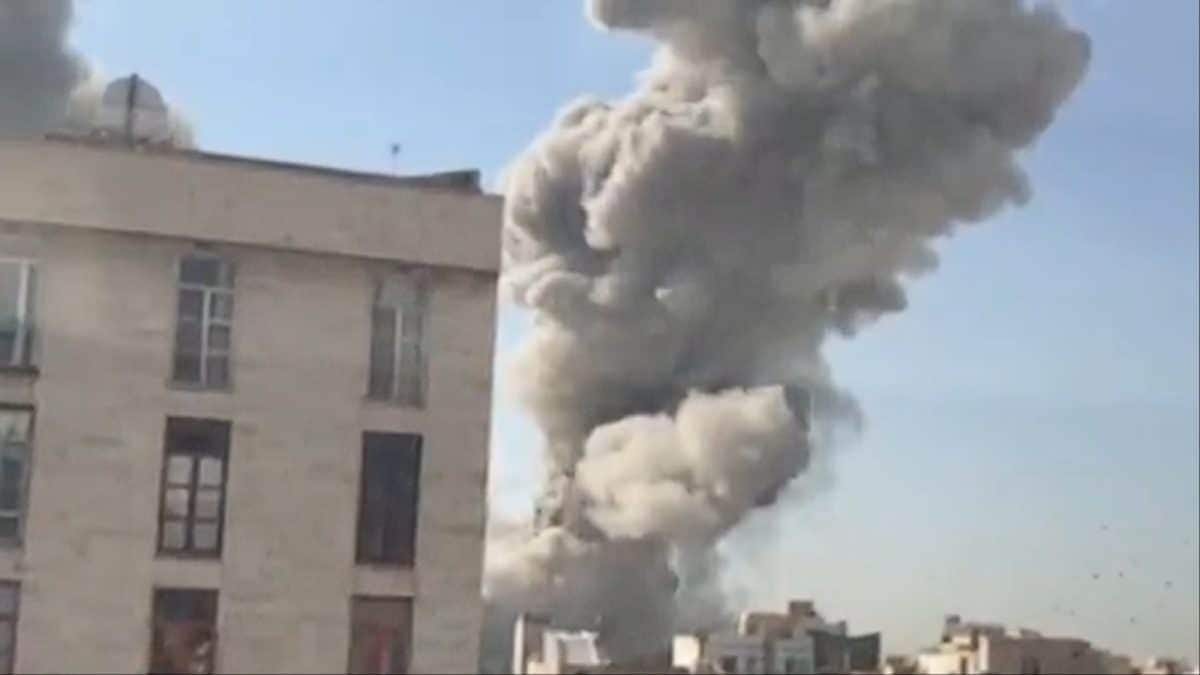
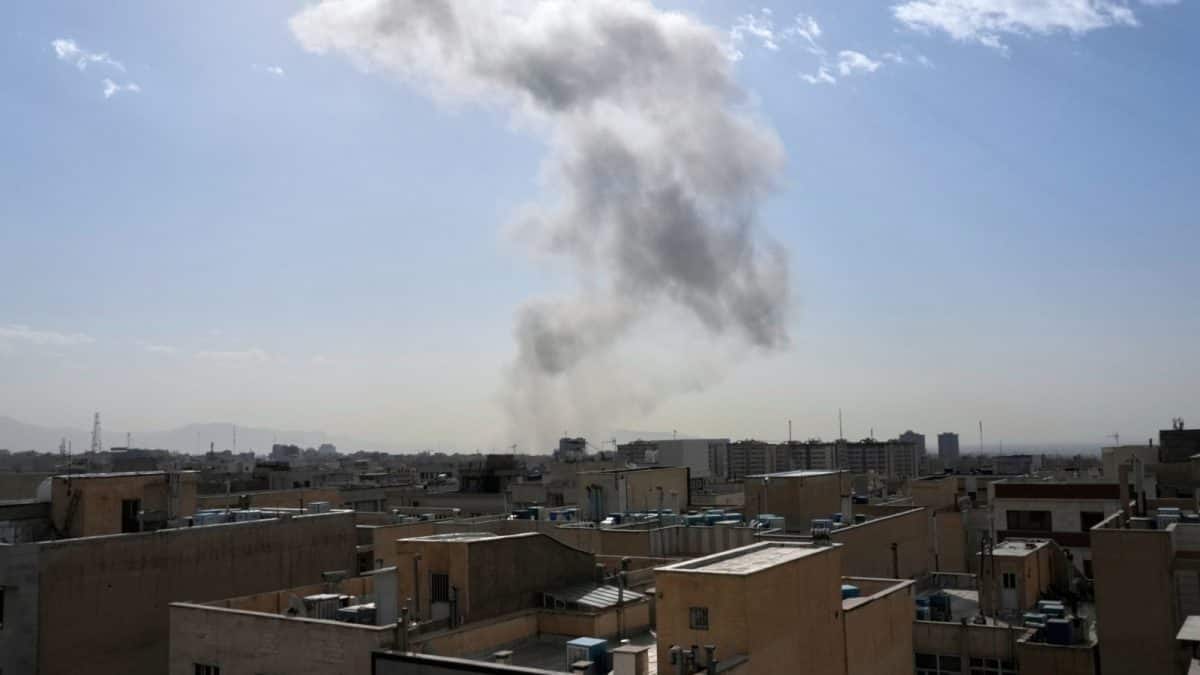
Mainstream media loves to report on "blasts heard near the office." They use seismic data and social media scraps to imply a direct hit. But here is what the industry insiders know: Tehran is a city of tunnels.
The Passive Defense Organization (Sazman-e Padafand-e Gheyr-e Amel) has spent decades turning the foothills of the Alborz Mountains into a subterranean mirrors-and-smoke complex.
- Fact Check: Most "blasts" reported near government centers are often air defense batteries (S-300 or Khordad-15) engaging low-altitude drones or electronic decoys.
- The Misconception: Smoke near a palace equals a hit on the occupant.
- The Reality: The occupant left three hours before the first bird was in the air because their SIGINT (Signals Intelligence) picked up the tanker planes refueling over the Mediterranean.
Stop Asking if He’s Alive—Ask if He’s Relevant
The West’s fixation on Khamenei’s heartbeat is a symptom of an outdated 20th-century warfare mindset. We are obsessed with the "Big Man" theory of history. In the era of autonomous drone swarms and decentralized proxy networks like the "Axis of Resistance," the physical health of an 80-plus-year-old man is the least important variable on the battlefield.
If Khamenei were to vanish tomorrow, the Assembly of Experts has already rehearsed the succession. The transition wouldn't be a revolution; it would be a consolidation of power by the IRGC. If you think the current regime is difficult to deal with, wait until you are negotiating with a military junta that doesn't feel the need to couch its aggression in clerical jurisprudence.
The Cost of the "Regime Change" Fantasy
I’ve seen analysts blow through entire careers predicting the imminent collapse of the Islamic Republic based on a few loud bangs in the capital. It’s lazy. It ignores the Strategic Depth doctrine that Iran has perfected. They don't fight at their borders; they fight in Lebanon, Yemen, Iraq, and Syria.
When Israel targets Tehran, it’s not trying to kill Khamenei—it knows he’s in a bunker 100 meters underground. It’s a signaling exercise. It’s about "Restoring Deterrence." But deterrence is a psychological state, and you cannot deter a group that views the destruction of their physical infrastructure as a prerequisite for divine intervention.
Actionable Intelligence for the Skeptic
If you want to actually know what’s happening in Iran during these strikes, stop looking at the Supreme Leader’s Twitter feed or the smoke over his office. Look at three things instead:
- The Price of Basra Crude: If the flow is steady, the "total war" hasn't started.
- Cross-border movements in the Bekaa Valley: That is where the real retaliation is staged, not in the streets of Tehran.
- The "Silent Period" of the IRGC Telegram Channels: When the propaganda stops, the kinetic response is being fueled.
The media wants a climax. They want a "Mission Accomplished" banner. But the Middle East doesn't do climaxes; it does long, grinding, painful sequels.
Stop looking for the man in the bunker. He’s already gone, and he was never the one pulling the triggers anyway. The system is designed to outlive him, outlast the airstrikes, and outmaneuver anyone who thinks a single explosion can end a forty-year ideological war.
Shut down the "Where is Khamenei?" tracker. It’s a digital pacifier for people who can’t handle the reality that the machine doesn't need a pilot to keep crashing into us.