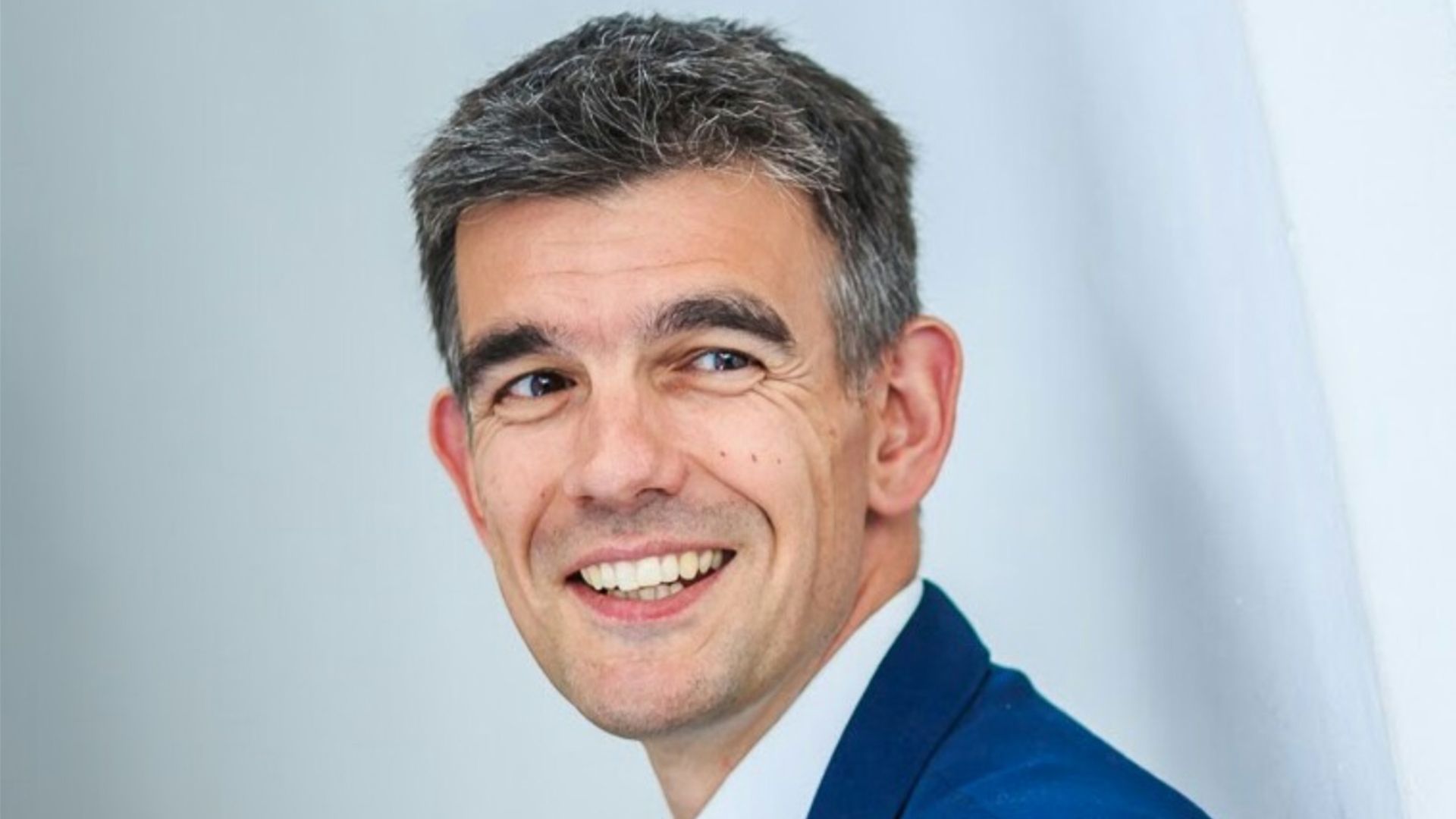
Money has a specific sound when it arrives in a boardroom. It isn’t the rustle of paper or the chime of a digital notification. It is the sound of a door locking. When a group of seasoned investors sits across from a teenager and slides a $300,000 offer across the table, they aren't just buying a product. They are buying his time, his autonomy, and the next decade of his life.
Rudrojas Kunvar was sixteen years old when he heard that door start to close.
Most people his age are negotiating a later curfew or the keys to the family sedan. Kunvar was negotiating the valuation of a vision. He is the founder of a startup that caught the eye of the Silicon Valley elite, a venture built on the backbone of specialized artificial intelligence. The offer was life-changing by any standard—a three-hundred-thousand-dollar injection that would have turned a high school student into a well-funded CEO overnight.
He said no.
To understand why a teenager would walk away from enough money to buy a house before he can legally vote, you have to understand the difference between a gold rush and a foundation.
The Weight of an Early Yes
Imagine, for a moment, a young architect named Leo. This is a hypothetical scenario, but it mirrors the pressure Kunvar faced. Leo builds a stunningly efficient birdhouse in his backyard. A massive construction firm sees it and offers him a fortune to stop what he’s doing and build birdhouses for them exclusively for five years.
Leo is thrilled. He takes the money. But two years in, Leo realizes he doesn't want to build birdhouses anymore. He has discovered a way to design skyscrapers that can withstand earthquakes. He has the blueprint in his head. But he can’t build them. He belongs to the birdhouse company. His brilliance is partitioned off, owned by a contract he signed before he knew who he actually was.
This is the "invisible stake" of early-stage venture capital.
Kunvar saw the birdhouse trap. He recognized that $300,000, while a staggering sum for a sixteenth birthday, was actually a ceiling. By accepting the money, he would be beholden to the expectations of investors who prioritize a Return on Investment (ROI) over the raw, messy process of true innovation.
The Architecture of a Refusal
The startup in question wasn't a fluke. Kunvar’s work centers on creating specialized AI models. While the rest of the world is busy asking ChatGPT to write poems about their cats, Kunvar is looking at the plumbing. He’s interested in how these models can be miniaturized, specialized, and made more efficient for specific industries.
His refusal wasn't an act of arrogance. It was a calculated assessment of his own trajectory.
He understood a fundamental truth that many veteran founders forget: capital is a tool, but it is also a weight. When you take someone’s money, you are no longer playing your own game. You are playing theirs. If an investor puts in $300,000, they want to see $3,000,000 or $30,000,000 in a few years. That pressure forces a founder to scale fast, often before the product is ready, often at the expense of the original "Why."
Kunvar wanted to keep his "Why" intact.
He chose to bootstrap. He chose the harder, slower path of self-funding and organic growth. In a world obsessed with "blitzscaling," his choice felt almost prehistoric. It was a move grounded in the belief that the value he was creating was worth more than the price tag someone else had slapped on it.
The Myth of the Overnight Prodigy
We love the narrative of the teenage genius. We wrap it in labels like "Indian-origin" or "Gen Z phenom" because it makes the story feel like a fairy tale. It allows us to distance ourselves from the achievement. Oh, he's just a prodigy, we think. He's different.
But when you strip away the labels, the story of Rudrojas Kunvar is actually about something much more relatable: the courage to be patient.
Patience is a rare currency in the 2020s. We are conditioned to want the exit before we’ve even finished the entrance. We want the "Series A" headline. We want the LinkedIn update that says "Exited Founder." Kunvar’s story disrupts this because he looked at the finish line and decided he wasn't done running the race.
Consider the technical reality of what he is building. Creating an AI startup today is like trying to build a boat while the ocean is being poured into the basin. The tech changes every six hours. If you take $300,000 today, you are locked into the tech of today. By staying independent, Kunvar kept his hands on the steering wheel. He can pivot. He can fail quietly and learn loudly. He can wait for the ocean to settle.
The Emotional Cost of the "No"
It is easy to write about the logic of the refusal. It is much harder to imagine the physical sensation of it.
Imagine being sixteen. You are sitting in a room with adults who have more zeros in their bank accounts than you have years on this planet. They are telling you that you’ve "made it." They are offering a validation that most people spend their entire lives chasing.
Saying "no" in that moment requires a level of internal structural integrity that most adults lack. It means trusting your future self more than you trust the person holding the checkbook. It requires a terrifying amount of self-reliance.
There is a specific kind of loneliness that comes with that kind of decision. Your friends are worrying about the SATs or who is going to the prom. You are worrying about whether you just turned down the only chance you’ll ever have to be a millionaire because you have a "hunch" that you can do it better on your own.
That isn't just business. That is a high-stakes psychological drama.
Why This Matters to You
You might not be a sixteen-year-old AI developer. You might be a mid-career manager, a freelance artist, or a student. But the "Kunvar Choice" appears in every life eventually.
It’s the choice between the "safe" promotion that kills your creativity and the risky project that keeps you awake with excitement. It’s the choice between selling your soul for a steady paycheck or betting on the version of yourself that hasn't been realized yet.
We are taught that the goal of life is to be "bought." We want to be recruited, headhunted, and acquired. We want to be "valued" by the market. Kunvar reminds us that the market is often wrong about the timing of value. The market wants to buy low and sell high. If someone is offering you $300,000 for your idea, they are betting that it’s actually worth $3,000,000.
Kunvar simply decided to be the one who keeps the difference.
The Invisible Stakes
If Kunvar had taken the money, he would be a success story in a press release. He would be the "16-year-old millionaire." But by refusing it, he became something much more interesting: a sovereign individual.
Success in the modern era is often measured by what you have. But true power is measured by what you can afford to walk away from. The ability to say "no" is the ultimate luxury. It is the only real proof of freedom.
The story isn't about the $300,000. It’s about the fact that for Rudrojas Kunvar, that wasn't enough to buy his silence or his schedule. He didn't see it as a windfall; he saw it as a cage.
He is still working. He is still coding. The "birdhouses" are being built, but they are being built on his terms, in his yard, under his sun. He isn't waiting for a gatekeeper to tell him he's ready. He is already there.
In the end, the most valuable thing he owns isn't his code or his company. It’s the fact that when he wakes up in the morning, he doesn't owe anyone a single minute of his genius. He has kept the one thing that venture capital can never truly provide: the right to be wrong, the right to change his mind, and the right to build something that belongs entirely to him.
The check is still out there. It always will be. But the door is wide open.
Would you like me to analyze the specific AI models Kunvar is developing or explore the broader economic impact of teenage-led startups?