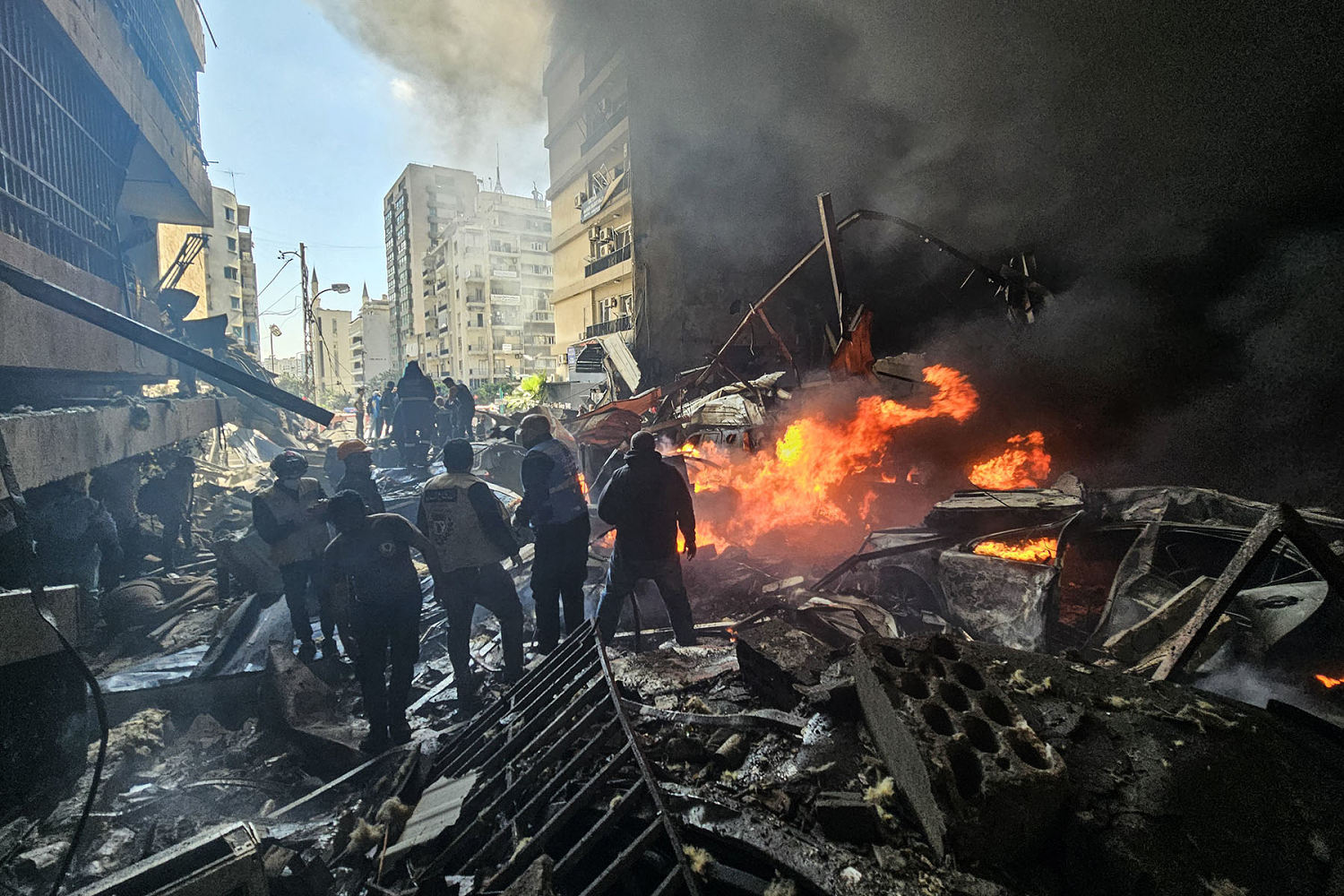
The timing of the Israeli military surge into Lebanon—immediately following the announcement of a ceasefire with Iran—functions not as a paradox, but as a calculated execution of strategic decoupling. Conventional geopolitical analysis often views regional conflicts as a singular, tangled knot. This view fails to account for the operational logic of kinetic force application. By neutralizing the immediate threat of a direct state-to-state confrontation with Iran, Israel isolated the Lebanese theater, effectively removing the Iranian "escalation tax" from its tactical calculus. This shift allowed for a concentrated application of force against non-state actors without the immediate friction of a broader regional conflagration.
The Decoupling Framework
The cessation of hostilities with Iran created a temporary vacuum in the deterrent landscape. To understand the subsequent intensity of the Lebanese operation, one must evaluate the Three Pillars of Operational Decoupling:
- Resource Reallocation: Military assets previously reserved for high-altitude interception and long-range ballistic defense against Iranian territory were pivoted toward localized, high-frequency sorties.
- Risk Isolation: Without the immediate threat of a multi-front missile exchange involving Iranian soil, the threshold for "acceptable escalation" in Southern Lebanon shifted upward. The cost of a heavy strike decreased because the probability of an immediate Iranian counter-strike on Tel Aviv or Haifa was lowered by the diplomatic pause.
- Intelligence Consolidation: Electronic warfare and signal intelligence (SIGINT) bandwidth, once split between monitoring the Persian Gulf and the Levant, focused entirely on the tactical movements of Hezbollah units.
This decoupling allowed Israel to engage in what game theorists call "asymmetric escalation dominance." By choosing a moment when the primary patron (Iran) was diplomatically sidelined, Israel forced the proxy (Hezbollah) to operate in a strategic silo.
The Logistics of High-Intensity Attrition
The sheer scale of the Lebanon strikes suggests an objective beyond mere deterrence; it points toward the systematic degradation of infrastructure. The logic of these strikes follows a specific hierarchy of target acquisition:
Tier 1: Command and Control (C2) Nodes
The initial wave of strikes targeted hardened bunkers and encrypted communication relays. By disrupting the ability of field commanders to receive orders from central leadership, the IDF creates a "fog of war" that is internal rather than external. Units on the ground remain armed but become strategically blind.
Tier 2: Logistical Arteries and Supply Chains
The operation transitioned from targeting individuals to targeting the physics of the battlefield. This involves the destruction of bridges, tunnel entrance points, and specialized storage facilities. The goal is to increase the latency of resupply. If it takes four hours instead of forty minutes to move a rocket battery, the battery's utility drops by an order of magnitude.
Tier 3: Rocket Launch Platforms and Point-of-Origin Denial
The final layer involves the preemptive destruction of launch sites. This is a data-heavy process, utilizing real-time satellite imagery and drone-based thermal sensing to identify heat signatures associated with the preparation of solid-fuel rockets.
The Mechanism of Deterrence Breakdown
Critics often argue that massive force application is counterproductive, yet this ignores the Cost Function of Insurgency. For a non-state actor to maintain control, it must provide a baseline of security or at least the illusion of a functioning defense. When a state actor applies force at a rate that outpaces the non-state actor’s ability to repair or respond, the social contract of the insurgency begins to fray.
The bottleneck here is not just ammunition, but specialized personnel. Precision strikes that eliminate middle-management within a militant organization create a "competency gap." New recruits lack the technical training to operate sophisticated anti-tank guided missiles (ATGMs) or navigate complex electronic countermeasures.
Technological Variables in the Levant Theater
The intensity of this specific campaign is driven by two technological factors that did not exist in previous Lebanese conflicts:
- AI-Driven Target Generation: The speed at which targets are identified and approved has moved from hours to seconds. Algorithmic processing of SIGINT and IMINT (Imagery Intelligence) allows the air force to maintain a high-tempo sortie rate that manual planning could never sustain.
- Active Defense Saturation: The success of the Iron Dome and David’s Sling systems has changed the psychology of the attacker. If an actor knows they can intercept 90% of incoming fire, they are more likely to engage in high-risk offensive maneuvers. The defense system acts as an "offensive enabler," providing the domestic stability required to sustain a long-term campaign abroad.
Economic and Structural Constraints
No military operation exists in a vacuum of infinite resources. The Israeli strategy faces three primary structural limitations:
- The Munitions Burn Rate: High-intensity air campaigns consume precision-guided munitions (PGMs) faster than global supply chains can currently replenish them. This creates a hard ceiling on the duration of "huge" attacks.
- Economic Mobilization Fatigue: The call-up of reservists pulls the most productive members of the high-tech workforce out of the economy. The GDP contraction associated with a prolonged mobilization is a self-inflicted wound that must be balanced against the perceived security gains.
- Diplomatic Capital Erosion: While the Iranian ceasefire provided a window of opportunity, the visual impact of high-intensity urban warfare creates a countdown. The strategic objective must be achieved before international pressure mandates a cessation of kinetic activity.
Strategic Forecast: The Shift to Buffer Zone Management
The current kinetic surge is the precursor to a structural change in the border dynamic. We are likely moving toward a "Static-Active Defense" model. In this phase, the heavy bombardment ceases, but is replaced by a permanent, high-tech buffer zone. This zone will utilize autonomous sensors, persistent drone surveillance, and remote-operated weapon stations to ensure that the infrastructure destroyed during this "huge attack" is never rebuilt.
The strategic play is not the total annihilation of the adversary—an impossible task—but the permanent increase of the "cost of entry" for any hostile force near the border. Investors and analysts should watch for the transition from air-to-ground strikes to the installation of permanent surveillance architecture as the signal that the primary kinetic phase has concluded and the long-term containment phase has begun. This shift will stabilize domestic markets but solidify a semi-permanent state of low-intensity friction that requires a different risk-assessment model for the Levant region.



