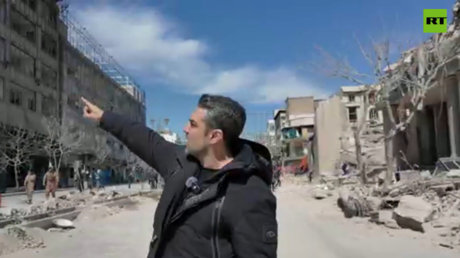
The recent escalation of kinetic operations within the Tehran metropolitan area represents more than a localized exchange of fire; it is a high-fidelity demonstration of modern deep-strike doctrine meeting a dense, layered urban defense network. When analyzing "death and destruction" in this context, the primary error is to view it through a purely humanitarian or journalistic lens. To understand the strategic outcome, one must evaluate the strike package through the lens of functional defeat—the point at which an adversary’s infrastructure can no longer support its intended operational output.
The Architecture of Urban Kinetic Impact
The efficacy of the US-Israeli strikes on Tehran is measured by the delta between intended target neutralization and collateral dissipation. Unlike historical carpet-bombing campaigns, modern precision-guided munitions (PGMs) utilize a specific cost function: $C(e) = \frac{k}{r^2}$, where the impact is concentrated to minimize the radius of unintended structural failure while maximizing the internal overpressure of the target.
The Triad of Target Selection
The strikes documented in recent reports indicate a prioritized targeting hierarchy designed to decapitate Iranian response capabilities:
- Command and Control (C2) Nodes: Hardened facilities within the city limits that serve as the central nervous system for the Islamic Revolutionary Guard Corps (IRGC). Neutralizing these does not just destroy a building; it introduces latency into the entire national defense network.
- Logistical Bottlenecks: High-value transit points and storage facilities that facilitate the movement of ballistic missile components.
- Air Defense Interceptors: The suppression of enemy air defenses (SEAD) is the prerequisite for any sustained aerial campaign. By targeting S-300 and local Khordad-15 batteries, the strike package ensures a lower "attrition per sortie" ratio for subsequent waves.
Mechanics of Structural Collapse and Blast Dynamics
The destruction of physical assets in Tehran follows a predictable physical sequence. When a PGM strikes a reinforced concrete structure, the primary damage mechanism is not the initial explosion, but the reflected shockwaves within the confined space.
The Overpressure Variable
In an urban environment like Tehran, the "canyon effect" of narrow streets amplifies the peak overpressure of explosions. While the strike may be surgical, the atmospheric displacement creates a secondary wave that shatters glass and compromises non-load-bearing walls for several blocks. This explains the visual "destruction" often cited in media reports that exceeds the actual footprint of the target.
Structural Resonances
High-yield explosives tuned for bunker-busting (such as the GBU series) rely on kinetic energy to penetrate several meters of earth or concrete before detonation. This creates a seismic event. The surrounding civilian infrastructure, often built with varying degrees of seismic compliance, suffers "sympathetic failure." We categorize these failures into three distinct zones:
- The Zero-Radius: Total molecular disintegration of the target.
- The Primary Plastic Zone: Irreversible structural deformation where the building's skeleton is compromised.
- The Elastic/Fragile Zone: Superficial damage, including facade collapse and utility rupture (gas, water, electricity).
Disrupting the Iranian Defense Industrial Base
The broader strategic objective of these strikes is the degradation of the Defense Industrial Base (DIB). Tehran is not merely a political capital; it is a manufacturing hub for the "Axis of Resistance." The destruction of facilities like the Parchin military complex or localized assembly plants for the Shahed-series UAVs serves to increase the "Replacement Lead Time."
If a factory is destroyed, the bottleneck is not the loss of current inventory, but the loss of specialized tooling. In the current global supply chain, high-precision CNC machines and carbon-fiber curing ovens have lead times exceeding 12 to 18 months. By striking these specific nodes, the US-Israeli coalition isn't just winning a battle; they are effectively pausing the adversary’s ability to replenish their arsenal for the next fiscal year.
The Psychological Operations (PSYOP) Feedback Loop
Visual documentation of the strikes, such as the footage disseminated by various outlets, serves a dual purpose. For the Iranian leadership, it is a demonstration of intelligence penetration—the realization that their "hidden" assets are tracked with meter-level accuracy. For the populace, it creates a "Security Vacuum."
The vacuum is formed when the state can no longer guarantee the safety of its most protected zones. This erosion of perceived invulnerability leads to:
- Capital Flight: Rapid movement of liquid assets out of the domestic economy.
- Internal Friction: Blame-shifting between regular military forces and the IRGC regarding the failure of integrated air defense systems.
- Logistical Paralysis: Civilian contractors and technicians refusing to report to sites deemed "high-risk," further slowing the recovery effort.
Limitations of Aerial Kinetic Solutions
Despite the precision of the strikes, there are inherent limitations to what can be achieved through airpower alone. The "Law of Diminishing Tactical Returns" states that as more targets are destroyed, the value of the remaining targets decreases while the risk to the attacking platform remains constant or increases due to heightened alert levels.
Hardened and Deeply Buried Targets (HDBTs)
Tehran’s defense strategy relies heavily on subterranean facilities. While thermobaric and tandem-charge munitions can reach significant depths, they cannot guarantee the total destruction of deep-seated command bunkers. This creates a "Survival Bias" where the most critical leadership elements remain operational despite the surface-level destruction.
Information Asymmetry
In the aftermath of a strike, the attacker relies on Battle Damage Assessment (BDA) via satellite imagery (IMINT) and signals intelligence (SIGINT). However, the "fog of war" is often thicker in dense urban centers. Smoke, debris, and intentional "spoofing" (such as setting fires in non-critical areas to simulate success) can lead to a miscalculation of the strike's effectiveness.
Quantifying the Strategic Shift
To assess the success of the Tehran strikes, we must move beyond the body count or the number of buildings leveled. We must quantify the Mean Time Between Failure (MTBF) of the Iranian defense posture.
Before the strikes, the Iranian IADS (Integrated Air Defense System) was considered a "High-Availability" system, capable of contested airspace management 95% of the time. Post-strike, that availability has likely dropped to sub-60% in specific sectors. This creates "Corridors of Opportunity" for electronic warfare (EW) platforms to further degrade the remaining sensors without the need for additional kinetic expenditure.
The geopolitical cost-benefit analysis also shifts. For Israel, the strike represents a "Pre-emptive Defang" strategy—removing the threat of a multi-front missile barrage before it can be coordinated. For the United States, it is a "Signal-to-Noise" operation, demonstrating to regional proxies that the "red lines" regarding drone and missile proliferation are backed by a high-velocity response capability.
The immediate tactical priority for the coalition forces must be the maintenance of the "Information High Ground." This involves the rapid deployment of micro-satellite constellations to monitor repair efforts in real-time. If the adversary begins to rebuild a C2 node, a secondary "re-strike" must occur within the 48-hour window of peak vulnerability—the period before new mobile air defense units can be repositioned. Strategic victory in Tehran will not be defined by the initial explosion, but by the systematic denial of the adversary's ability to reconstruct their shattered infrastructure.
The objective is not just destruction; it is the enforcement of a permanent state of structural and operational decay.