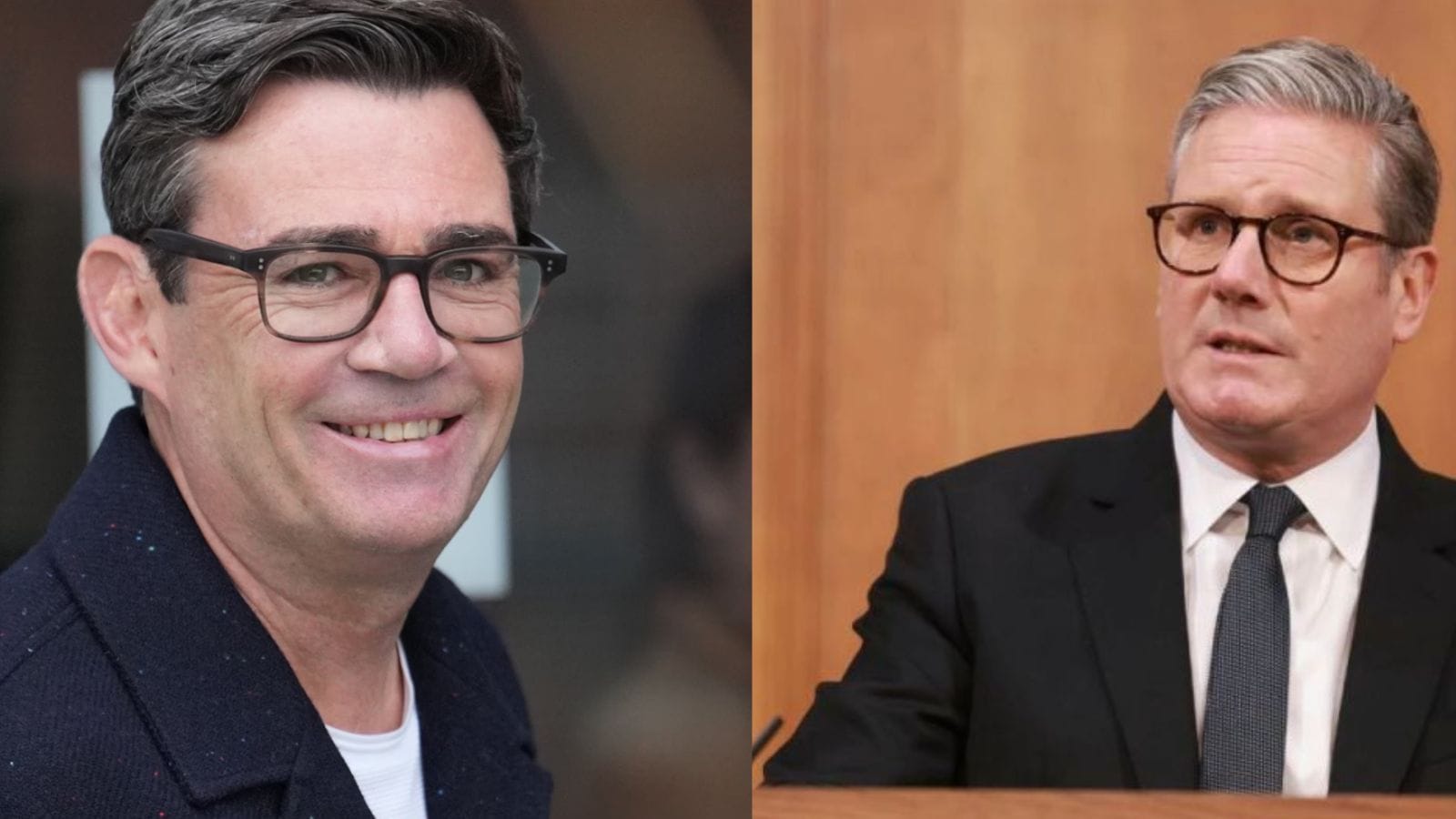
The political truce that held the Labour Party together through the 2024 election has finally shattered, leaving Prime Minister Keir Starmer facing a calculated insurgency from the one man he couldn't co-opt: Andy Burnham. For years, the Mayor of Greater Manchester has been a convenient outlier for the central leadership, a "King in the North" who could be safely ignored as long as he stayed within the M60 ring road. That era of containment ended this week.
With the sudden resignation of Josh Simons in Makerfield and the explosive departure of Health Secretary Wes Streeting, the geographical and ideological barriers between Manchester and Westminster have evaporated. Burnham isn't just eyeing a return to Parliament; he is positioning himself as the populist antidote to a Prime Minister whose technocratic stability has begun to look like terminal stagnation. While Starmer fights to maintain his grip on a fractured Cabinet, Burnham is betting that the country is ready for a leader who values regional defiance over London-centric caution.
The Makerfield Gambit
Politics at this level is rarely about coincidence. The timing of Josh Simons’ exit from his Makerfield seat is a masterclass in tactical coordination. Simons, once a loyalist, didn't just step down; he explicitly vacated the seat to facilitate Burnham’s return. This move bypasses the usual bureaucratic hurdles the Labour National Executive Committee (NEC) uses to gatekeep candidates.
Burnham’s entry into the Makerfield by-election is a high-stakes gamble. If he wins, he secures the parliamentary mandate required to mount a formal leadership challenge. If he loses—particularly to a surging Reform UK presence in the north—his national ambitions are effectively dead. However, Burnham has spent the last decade building a brand that is remarkably resilient to the "Westminster bubble" criticisms that haunt Starmer. In Greater Manchester, he has successfully nationalized local issues, from the Bee Network bus franchise to his high-profile stand-offs with the Treasury over pandemic funding.
Why Starmer is Losing the Room
The internal rebellion isn't merely a clash of personalities; it is a fundamental disagreement over the speed of reform. Starmer’s administration has been defined by a "steady as she goes" mantra that aimed to reassure markets and the business elite. But that caution has come at a cost. Following a bruising set of local elections where Labour bled votes to both the Green Party and Reform UK, the party's rank-and-file are beginning to view Starmer’s pragmatism as a lack of conviction.
- The Approval Deficit: Recent polling places Starmer’s net favourability at a dismal -46.
- The Burnham Contrast: In contrast, Andy Burnham maintains a +4 net rating, making him the only major Labour figure with a positive score among the general public.
- Economic Tension: While Chancellor Rachel Reeves preaches fiscal discipline, Burnham has been vocal about mass nationalization and wealth taxes—policies that resonate with a base tired of austerity-lite.
Business leaders are already voicing their anxiety. The FTSE 100 hasn't reacted kindly to the prospect of a Burnham-led government, fearing a pivot toward heavy borrowing and increased corporate regulation. Yet, for many voters in the post-industrial north, that "destructive" economic vision looks a lot like the investment they were promised but never received.
The Shadow of the 2026 Devolution Act
The conflict is also being fought over the very structure of British power. The English Devolution and Community Empowerment Act 2026 was supposed to be Starmer’s signature achievement, a way to decentralize power without losing control. Instead, Burnham has used the new powers granted under the act to prove that Manchester can run its own affairs better than Whitehall can.
By integrating health, transport, and policing under a single regional mandate, Burnham has created a "Manchester Model" that he now wants to export to the rest of the UK. This is the core of his pitch: he isn't just another MP; he is an executive leader with a proven track record of delivery. Starmer, who has spent his career in law and the civil service, struggles to counter this narrative of "real-world" experience.
The Streeting Resignation
Wes Streeting’s exit as Health Secretary cannot be overlooked. By stating he "lost confidence" in the Prime Minister, Streeting has provided the intellectual cover for other moderates to defect. While Streeting himself is a leadership contender, his departure creates a vacuum that Burnham is uniquely positioned to fill. If the "soft left" and the "regional populists" unite behind a Burnham candidacy, Starmer’s path to the next general election becomes nearly impossible to navigate.
The Risks of Regionalism
Despite the momentum, Burnham’s path is paved with pitfalls. He has been blocked by the NEC before—most notably in his attempt to run for Gorton and Denton—and the party machinery remains largely in the hands of Starmer allies. There is also the "political chameleon" charge. Critics argue that Burnham shifts his ideology whenever the wind changes, moving from a New Labour minister to a Corbyn-adjacent regionalist when it suited his career.
Furthermore, the Makerfield by-election is not a guaranteed victory. Reform UK has been targeting exactly the kind of working-class northern voters that Burnham claims to represent. A defeat there would not just stop Burnham; it would signal that the Labour "Red Wall" is still crumbling, regardless of who is in charge.
A Collision Course
The next six weeks will determine the future of the Labour movement. Starmer is attempting to hold the line, banking on the hope that the NEC can stall Burnham’s candidacy long enough for the current storm to pass. But the pressure from the parliamentary party is reaching a boiling point.
We are no longer looking at a minor disagreement over policy. This is a battle for the soul of the party—a choice between a centralized, cautious London government and a radical, decentralized regionalism. Burnham has made his move. He has traded his mayoral safety for a chance at the ultimate prize, and in doing so, he has ensured that Keir Starmer’s greatest threat isn't the opposition across the aisle, but the man coming down the M6.
The King in the North has crossed the Rubicon. Now we see if he can take the capital.