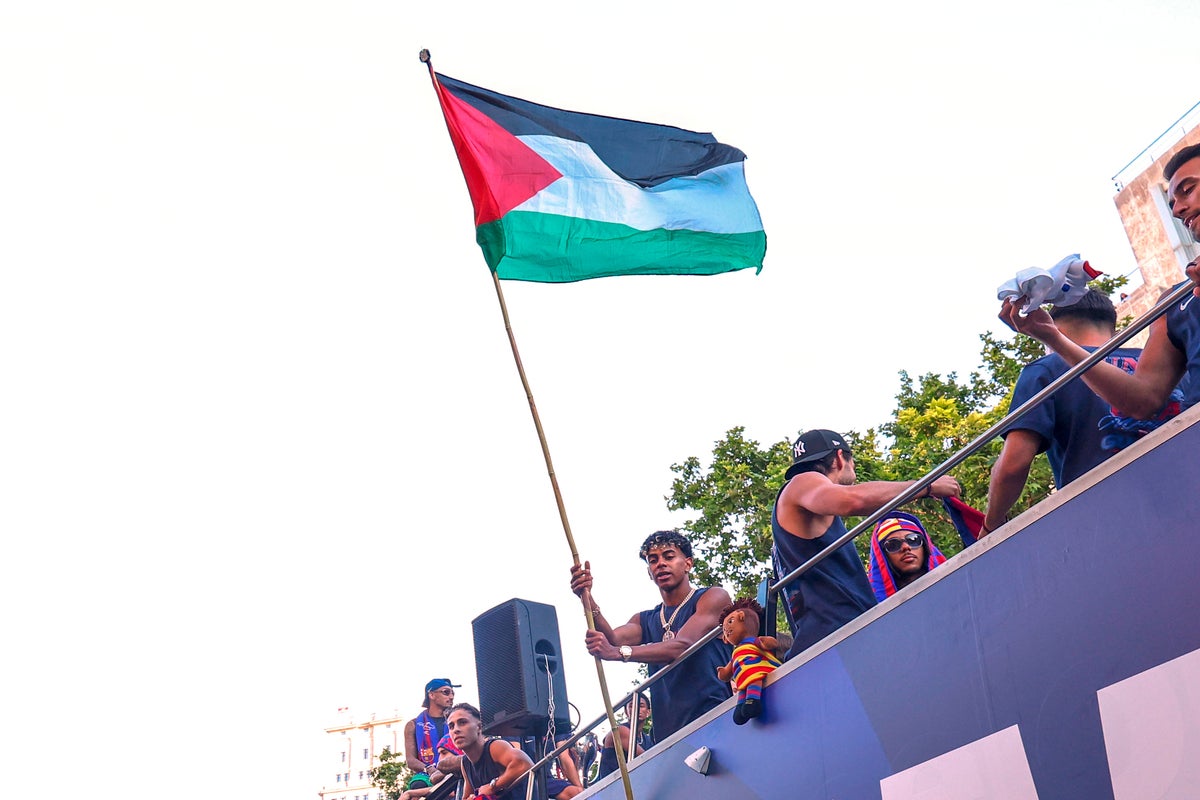
Lamine Yamal doesn't just play football; he moves the needle of global culture. At just 18, the Barcelona star found himself at the center of a massive political firestorm after a Palestinian flag gesture sparked a wave of debate that hasn't slowed down. It's not just about a kid kicking a ball anymore. It's about how the modern athlete navigates a world where every single movement is scrutinized by millions of people with deeply entrenched views.
People want to know why a teenager from Rocafonda would risk his soaring career to make a political statement. The reality is that for players like Yamal, the personal and the political aren't separate. They're woven together. You can't ask a player to represent a global brand on Saturday and then expect them to be a silent statue on Sunday. Fans are divided, and that's exactly what happens when sport stops being an escape and starts being a mirror. In related news, take a look at: The Vancouver Canucks Experience is a Performance Art Piece About Nepotism.
The gesture that started a global conversation
Social media didn't just notice the gesture; it exploded. When images surfaced of Lamine Yamal interacting with or displaying symbols associated with the Palestinian cause, the reaction was immediate. One side saw a young man with a conscience using his massive platform to highlight human suffering. They saw a hero. The other side saw a distraction, a breach of neutrality, or even an endorsement of a specific political agenda that has no place on a pitch.
This isn't the first time we've seen this. Remember when Pep Guardiola wore the yellow ribbon? Or when players take the knee? The difference here is the age and the sheer momentum of Yamal’s career. He’s the face of the new generation. When he does something, it carries the weight of the future. You don't get to be the most exciting talent in the world and expect your off-pitch actions to stay quiet. Sky Sports has provided coverage on this critical topic in extensive detail.
Why the neutrality argument is failing
For decades, the "stick to sports" crowd has argued that athletes should remain neutral. They want the spectacle without the substance. But that's a dying perspective. Honestly, it's pretty naive to think that a player who comes from a diverse, immigrant-heavy neighborhood like Rocafonda wouldn't have strong feelings about global justice. He grew up in a world where identity is everything.
FIFA and UEFA have strict rules about political symbols. We've seen fines handed out for less. But the governing bodies are in a tough spot. If they punish Yamal, they risk alienating a massive portion of their global audience who view the Palestinian situation through a humanitarian lens rather than a purely political one. If they do nothing, they open the door for every player to turn the pitch into a protest ground. It’s a lose-lose for the suits in Zurich.
The power of the Rocafonda 304
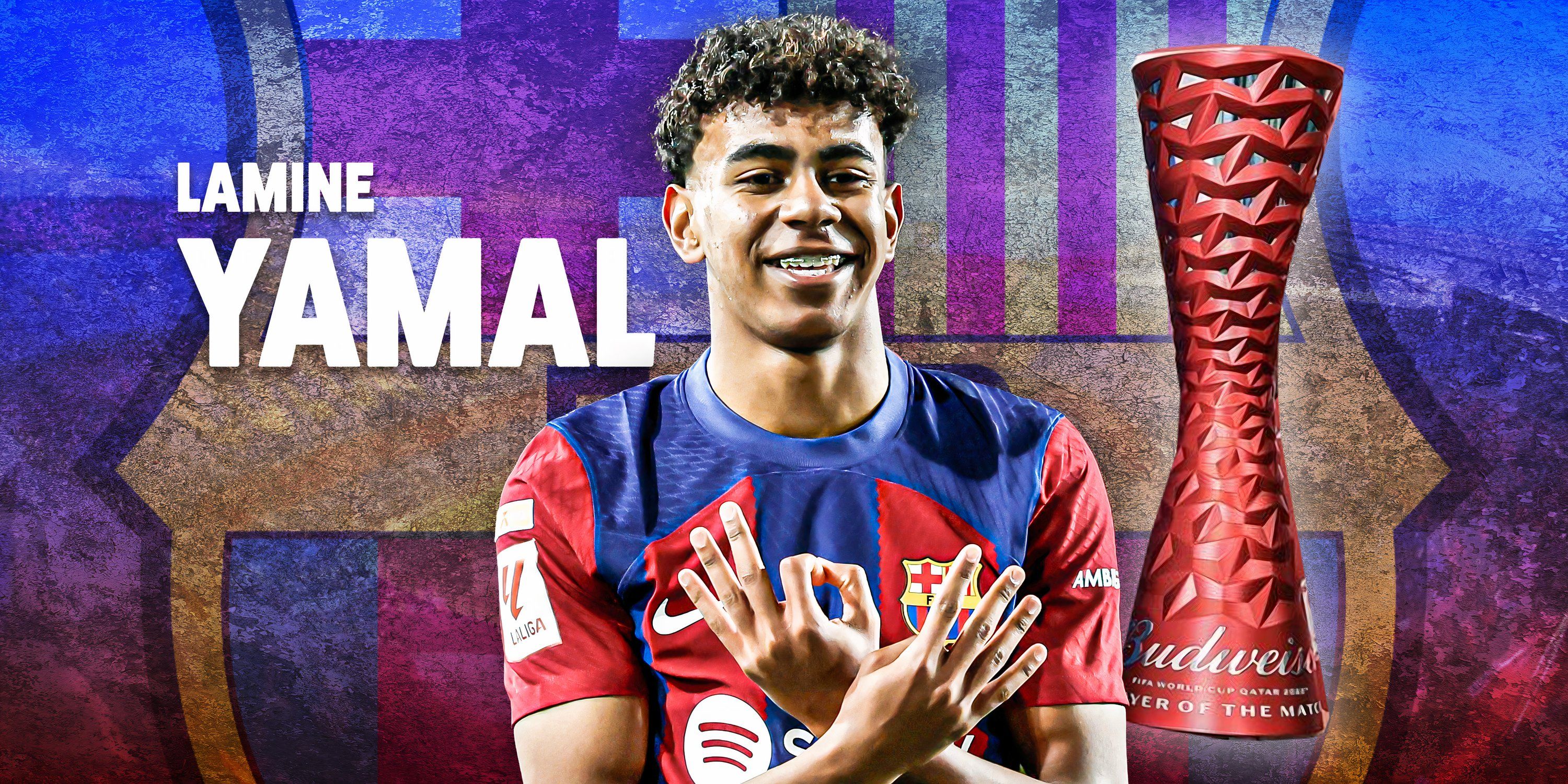
Yamal frequently celebrates goals by forming the numbers 3-0-4 with his fingers. That’s the postal code for his neighborhood. This matters because it shows his loyalty lies with his roots, not just the corporate entities that pay his salary. His connection to the marginalized and the underdog is baked into his identity. When you understand that, his gesture regarding Palestine feels less like a calculated PR move and more like an extension of who he is.
Critics argue that a football pitch should be a "safe space" from the world's horrors. I don't buy that. Football is the world's game because it reflects the world's problems. If the world is hurting, the game is going to feel it. Yamal isn't the first to bring this up, and he definitely won't be the last. He’s just the most visible right now.
How Barcelona handles the heat
Barcelona is "Més que un club"—more than a club. They've built their entire brand on being a symbol of Catalan identity and resistance. It's awkward for them to tell a player to stop making political statements when the club's history is defined by them. Still, they have sponsors to think about. Nike, Spotify, and various global partners don't always love controversy.
The club has been walking a tightrope. They want to protect their golden boy while keeping the commercial side of things stable. So far, the support for Yamal within the locker room seems solid. His teammates know his character. They know he’s not trying to cause trouble; he’s trying to be real. In the modern locker room, authenticity usually beats corporate policy every time.
The double standard in football politics
We have to talk about the hypocrisy. Football was quick to show support for Ukraine. The flags were everywhere. The messages were on the big screens. It was unified and celebrated. Why is it that when the topic shifts to Palestine, the "keep politics out of sports" defense suddenly becomes the default setting?
That’s the core of why people are so divided over Yamal. One group sees a blatant double standard. They see one conflict being treated as a humanitarian cause and another being treated as a "complicated political issue" that’s too risky to mention. This inconsistency is what fuels the fire. Fans aren't just arguing about a flag; they're arguing about whose lives we decide are worth acknowledging on the global stage.
What this means for the future of athlete activism
Lamine Yamal is a sign of things to come. The next generation of players isn't going to be silent. They have their own media channels. They have direct access to their fans. They don't need a press officer to tell them what to think. They’ve grown up seeing the world through their phones, and they aren't afraid to speak up.
If you're a brand or a club, you have to get used to this. You can't sign a player for their "edginess" and "cultural relevance" and then be shocked when they actually have opinions. Yamal is a package deal. You get the incredible dribbling, the record-breaking goals, and the social conscience. You don't get to pick and choose.
Navigating the fallout
If you're following this story, stop looking for a "right" or "wrong" answer in the comment sections. You won't find one. Instead, look at the data of how fans are reacting. The engagement on posts regarding Yamal’s gesture is higher than almost any match report this season. That tells you everything. People care more about what athletes stand for than what they score.
Don't expect Yamal to back down or issue a filtered apology. That’s not his style. He’s already shown he’s comfortable being the center of attention. Whether you agree with him or not, you have to respect the guts it takes to stand your ground when the entire world is watching.
For fans and observers, the next step is simple. Watch how the leagues respond. If they crack down, they create a martyr. If they stay silent, they concede that the era of the "neutral athlete" is officially over. Either way, Lamine Yamal has already won the most important game: he made everyone pay attention. Keep an eye on the upcoming matches and the official club statements. The ripple effects of this single gesture will likely change how contracts are written and how players are managed for the next decade.