The boy stands at the edge of the concrete, his toes pressing against the rusted chain-link fence. Inside, the grass is a vibrant, impossible green, manicured and marked with crisp white lines that look like a map to another life. He can hear the rhythmic thud-crack of a ball meeting a leather boot. He can hear the shouts of boys his own age, voices cracking with adrenaline, calling for the pass.
But he stays on the concrete.
He stays there because his shoes are the same pair he wears to school, the soles worn thin enough to feel every pebble, the toes held together by a prayer and a bit of scuffed rubber. He stays there because a club kit costs fifty pounds, and the monthly subs are another thirty, and his mother is currently in the kitchen three streets away, moving a stack of unpaid bills from the toaster to the microwave just to feel like she’s doing something about them.
This isn't a scene from a Dickens novel. It is Tuesday afternoon in modern Britain.
The Invisible Barrier
We like to talk about sport as the great equalizer. We tell ourselves that the pitch is a meritocracy where the only things that matter are heart, hustle, and talent. It’s a beautiful lie. In reality, the "beautiful game" has developed a very expensive cover charge.
Gareth Southgate, a man whose life has been defined by the national shirt, recently sounded an alarm that should have shattered windows across the country. He pointed out a staggering, uncomfortable truth: thousands of families are being priced out of the very activities we claim are essential for a child’s development. We are witnessing the birth of a "kit gap," a widening chasm where the children who arguably need the community and discipline of sport the most are the ones least likely to access it.
Consider a hypothetical family: the Millers. They have two children, both football-mad. To get them started in a local league, the upfront cost isn't just a ball. It’s the boots. It’s the shin pads. It’s the official club tracksuit. It’s the registration fee. Before a single whistle has blown, the Millers are looking at a bill of three hundred pounds.
For a family living on the edge, that isn't just a "stretch" goal. It is an impossibility. It is the difference between a fridge that stays full through Thursday and one that sits empty by Tuesday.
The Architecture of Exclusion
When we price children out of sports, we aren't just taking away a game. We are dismantling a support system. For a kid in an underserved neighborhood, a football club is often the only place where they are seen as more than a statistic or a nuisance. It is where they find mentors who aren't teachers or police officers. It is where they learn that failing—missing the penalty, losing the match—isn't the end of the world, provided you get back up.
But the cost of entry has become a gatekeeper.
The industry has shifted. Local "kick-about" culture has been replaced by structured academies and "pay-to-play" models. Even the boots themselves have changed. The cheap, sturdy black leather cleats of twenty years ago have been replaced by neon-colored, synthetic "performance" footwear endorsed by superstars and priced at three figures. A child showing up in hand-me-downs or generic brands doesn't just feel the physical difference; they feel the social weight of not belonging.
Shame is a powerful deterrent. A child would often rather say they "don't like football anymore" than admit their parents can't afford the kit. They retreat. They stay on the concrete side of the fence.
The Cost of Doing Nothing
The data tells a grim story. Statistics from organizations like BBC Children in Need and various sports charities suggest that nearly one in three families has struggled to afford the cost of sports for their children in the last year. This isn't a niche problem. It’s a systemic failure.
When kids are priced out, the long-term "invoice" is sent to the taxpayer. We pay for it in the strain on the NHS as physical fitness levels plummet. We pay for it in the justice system as the "boredom-to-trouble" pipeline accelerates. We pay for it in a loss of national talent. How many potential England captains are currently sitting on a park bench because their parents couldn't afford the petrol to get them to a trial, let alone the boots to play in?
Southgate’s intervention is vital because he understands the optics of the elite level versus the reality of the grassroots. He knows that the gleaming stadiums and multi-million-pound contracts are built on a foundation of muddy Sunday morning pitches. If that foundation rots, the whole structure eventually topples.
A New Playbook
The solution isn't just "more funding"—though that’s a start. It requires a fundamental shift in how we view the right to play.
Imagine a system where kit recycling isn't a charity project, but a standard operating procedure for every professional club in the country. Imagine local councils being incentivized to keep floodlights on and pitches open for free use, rather than locking them behind digital paywalls and booking apps.
But more than that, it requires us to stop seeing sport as a luxury.
If we believe that exercise is health, then equipment is a medical necessity. If we believe that team sports build better citizens, then the kit is a civic tool. We provide textbooks in schools because we recognize that a child can't learn to read without them. Why do we expect a child to learn the values of teamwork and resilience without the "textbooks" of the pitch?
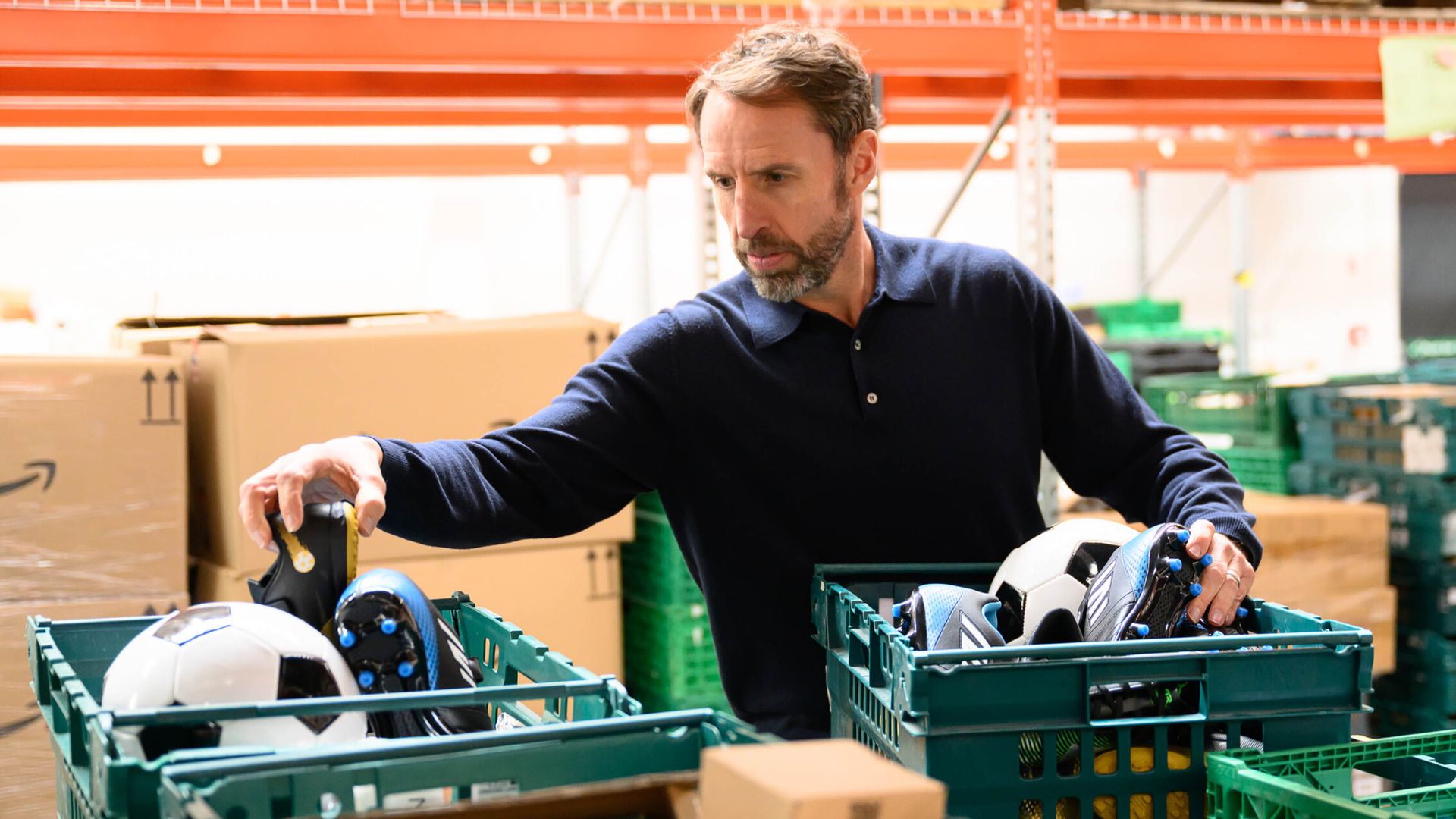
There are small flickers of hope. "Boot banks" are popping up in community centers, where outgrown cleats are cleaned and passed on to the next generation. Some grassroots clubs are moving toward a "sliding scale" for fees, ensuring that those with more contribute to the participation of those with less. These are noble efforts, but they are Band-Aids on a gaping wound.
The Last Connection
The boy at the fence is still there. He’s watching a kid in a brand-new, lime-green jersey take a shot. The ball hits the top corner of the net with a satisfying snap. The players celebrate. The boy on the concrete smiles, just for a second, caught up in the magic of the movement.
Then he looks down at his worn-out school shoes. He turns away.
He walks back toward the estate, bouncing an imaginary ball with his feet, his shadow long against the pavement. He has the talent. He has the passion. He has the heart. What he doesn't have is the entrance fee.
We are a nation that prides itself on its sporting heritage, on the "spirit of the underdog," and the "level playing field." But until we address the fact that the field is only level for those who can afford the shoes to walk onto it, those phrases are just marketing copy.
The most expensive thing in sport isn't a stadium or a star striker. It is the talent we allow to wither because we couldn't find a way to bridge the gap between the concrete and the grass. The gate is locked, and we are the ones holding the keys.
We just have to decide if we’re brave enough to turn them.