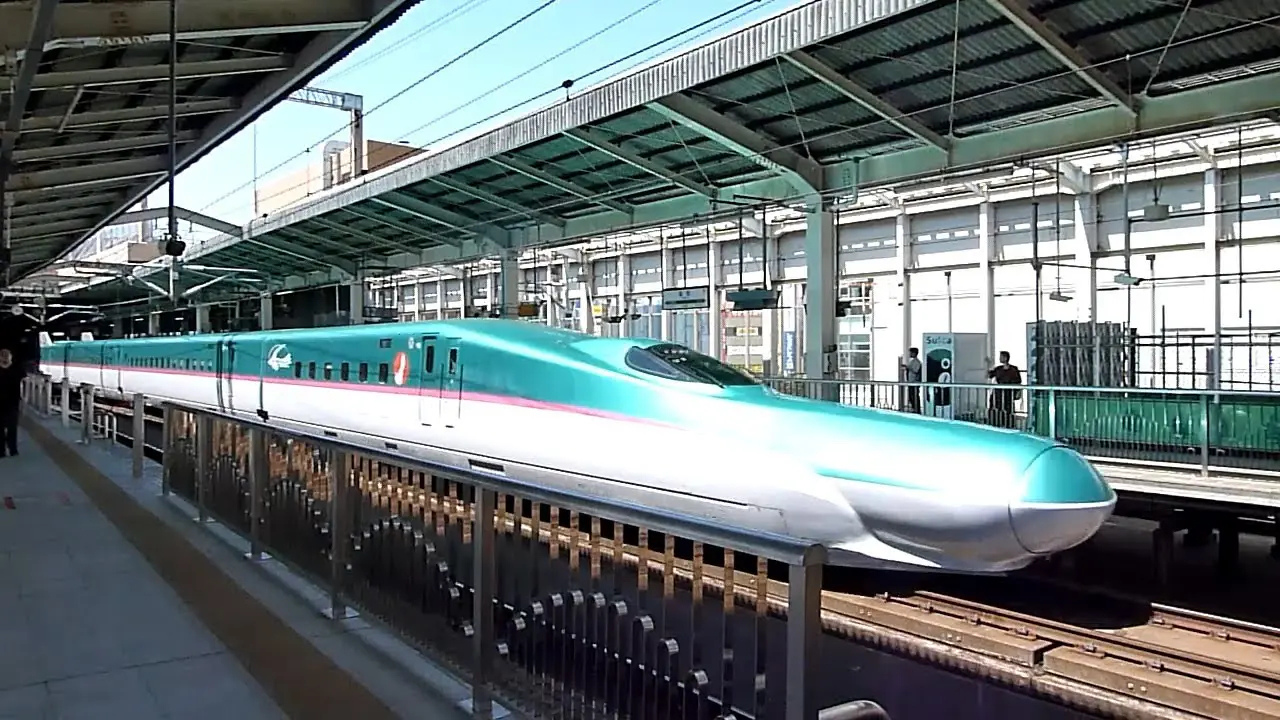
Japan is fundamentally rewriting the mechanics of the Shinkansen to solve a national crisis. By repurposing the world’s most famous high-speed passenger rail into a dedicated cargo network, the country is attempting to bypass a crippled trucking industry and a shrinking workforce. These freight-only trains, capable of maintaining speeds of 275 kmph, are not a luxury experiment. They are an act of survival. For decades, the Shinkansen has been a symbol of punctuality for people; now, it is being forced to become the spine of a logistics system that can no longer rely on roads.
The transition involves more than just pulling out seats. It requires a complete overhaul of station architecture and the invention of specialized automated loading systems to ensure that a cargo train doesn’t disrupt the obsessive precision of passenger schedules. If a freight train stalls or fumbles a loading window, it risks a domino effect that could paralyze the entire rail artery of the nation.
The Driver Shortage Forcing a Radical Pivot
The primary catalyst for this shift is the "2024 Problem," a regulatory cap on overtime for truck drivers that has effectively slashed the nation's delivery capacity overnight. Japan faces a projected 34% shortfall in transport capacity by 2030. The math is simple and brutal. There are not enough humans to drive the trucks, and those who remain are aging out of the workforce.
Rail has always been the obvious alternative, but traditional freight rail in Japan is slow and often shares tracks with local commuter lines. The Shinkansen, however, operates on a dedicated standard-gauge network. It is isolated, fast, and remarkably reliable. By moving high-value, time-sensitive goods—like fresh produce, medical supplies, and electronic components—onto the bullet train, Japan is trying to decouple its economy from the failing life support of the long-haul trucking industry.
This is not merely a technical upgrade. It is a desperate play to maintain the "just-in-time" delivery culture that Japanese consumers and businesses take for granted. Without this shift, the cost of logistics would skyrocket, potentially strangling the thin margins of the country’s retail sector.
Engineering the Cargo Shinkansen
Converting a sleek, aerodynamic passenger shell into a heavy-duty hauler presents physics challenges that the original designers never had to consider. Passenger weight is predictable and relatively static. Cargo is not.
Weight Distribution and High-Speed Stability
At 275 kmph, even a slight imbalance in weight can lead to catastrophic vibration or wear on the rails. The new freight-only trains utilize a "roll-box" pallet system. These are specialized containers designed to fit the unique interior dimensions of the Shinkansen carriages.
Unlike standard shipping containers, these must be secured with military precision to prevent shifting during rapid acceleration and braking. Engineers have had to recalibrate the active suspension systems of the trains to account for the varying densities of freight, ensuring that a car full of heavy machinery components handles the same way as a car full of luxury strawberries from Hokkaido.
The Automated Loading Bottleneck
The real hurdle isn't the transit time; it's the dwell time at stations. A Shinkansen station is designed for people who walk themselves off the train in ninety seconds. Cargo cannot walk.
To solve this, JR East and JR Central are developing automated platforms. These systems use floor-mounted conveyors and robotic arms to swap out the roll-boxes in under five minutes. If the loading process takes ten minutes, the entire schedule for the passenger trains behind it collapses. The precision required is measured in centimeters and seconds. This is where the project will either succeed or become a massive, expensive bottleneck.
The Economic Friction of High Speed Freight
While the speed is impressive, the cost is staggering. Moving goods at 275 kmph consumes significantly more electricity than traditional rail or sea freight. There is a reason the world generally moves cargo slowly. Drag increases with the square of speed, meaning the energy required to push a train through the air at bullet-train speeds is immense.
Who Pays the Premium
The market for this service is narrow. It is geared toward "high-yield" cargo.
- Perishables: Ultra-fresh seafood from northern ports that can reach Tokyo markets in hours rather than days.
- E-commerce: Premium delivery services that promise same-day arrival across the country.
- Precision Parts: Critical components for the semiconductor and automotive industries where a delay of four hours can cost millions in lost production.
For bulk commodities like coal, timber, or grain, the cargo Shinkansen makes zero sense. The cost per ton-kilometer is too high. This creates a tiered logistics economy where the wealthy and the urgent use the bullet train, while the rest of the supply chain continues to struggle with the labor-starved trucking routes.
Overlooked Infrastructure Realities
Critics often point out that the Shinkansen network was never built for heavy loads. The viaducts and bridges that crisscross Japan were engineered for the relatively light axle-loads of passenger cars.
Continuous heavy freight usage could accelerate the fatigue of the concrete and steel infrastructure. To mitigate this, the freight trains are being limited in total weight, often carrying less than their physical volume would suggest. This creates a "volume-limited" rather than "weight-limited" transport model, which is frustrating for logistics planners who want to maximize every square inch of the train.
There is also the issue of "maintenance windows." The Shinkansen stops running at midnight every night to allow crews to inspect every inch of the track. If freight trains start eating into these windows to meet overnight demand, the safety margin of the entire system could be compromised. The operators are currently walking a tightrope between maximizing utility and maintaining the gold standard of rail safety.
A Competitive Threat to Domestic Aviation
The cargo Shinkansen isn't just taking on trucks; it is aiming directly at domestic air freight. Flying goods from Kyushu to Tokyo involves significant ground handling time at both ends. By utilizing city-center rail hubs, the Shinkansen can often beat a plane’s "door-to-door" time despite being slower in the air.
Rail is also significantly greener than aviation. As Japanese corporations face increasing pressure to meet ESG (Environmental, Social, and Governance) targets, switching from air to high-speed rail becomes an easy win for their carbon balance sheets. This shift in corporate sentiment is providing the necessary capital and political will to keep the project moving despite the technical hurdles.
The Social Cost of Efficiency
We must acknowledge that this automation-first approach sidelines the human element of transport. While it solves the driver shortage, it also centralizes control into the hands of a few massive rail corporations. Smaller, independent trucking companies—once the backbone of the Japanese interior—are being squeezed out.
There is a risk of creating "logistics deserts" in areas not served by the Shinkansen lines. If the national strategy focuses entirely on high-speed rail corridors, rural towns that depend on traditional road networks may find their costs rising even faster as resources are diverted to the bullet train infrastructure.
Tracking the Global Ripple Effect
Other nations are watching this experiment with intense interest. France and China have toyed with high-speed freight, but neither has integrated it into a system as dense or as precise as Japan's. If Japan proves that freight can coexist with the world's busiest passenger lines, it will set a new global standard for rail utility.
The success of the 275 kmph freight-only Shinkansen will depend on the integration of the "last mile." A train that moves across the country in three hours is useless if the goods sit in a warehouse for six hours waiting for a local delivery van. Japan is currently experimenting with smaller, electric autonomous carts to handle this final leg, attempting to create a human-free supply chain from the sorting center to the doorstep.
This isn't just about a faster train. It is about an aging superpower trying to automate its way out of an existential labor crisis. The bullet train is no longer a luxury for travelers; it is the new vascular system for a nation that cannot afford to slow down.
Monitor the integration of the automated loading docks at the Omiya and Sendai hubs over the next fiscal year to see if the projected throughput targets are actually being met.