The headlines are breathless. The gossip is thick. Another historic London institution has been snapped up by a sovereign wealth fund or a private equity titan with more dry powder than sense. The city’s media is obsessed with the "takeover that’s the talk of London," treating these multi-billion-pound acquisitions like a high-stakes polo match. They frame it as a sign of London’s enduring prestige. They call it a vote of confidence in the post-Brexit economy.
They are dead wrong.
What we are witnessing isn't a revival. It’s an autopsy. The obsession with who owns the keys to the door misses the point entirely: when every "independent" luxury asset becomes a line item on a Gulf state’s balance sheet, the very thing that made the asset valuable—its idiosyncratic, lived-in charm—evaporates. We aren't building a better hospitality sector; we are building a museum of dead brands.
The Myth of the "Strategic Acquisition"
Every time a storied hotel changes hands, the press release is a carbon copy of the last one. They promise to "respect the heritage" while "modernizing the guest experience." I’ve sat in the boardrooms where these deals are inked. "Modernizing the guest experience" is corporate-speak for stripping out the expensive, high-touch quirks that made the place famous and replacing them with standardized, high-margin fluff that looks great on Instagram but feels like a hollow shell.
These buyers aren't hoteliers. They are asset managers. They don't care about the perfect dry martini or the concierge who knows which tailor in Savile Row can fix a ripped lining in two hours. They care about Revenue Per Available Room (RevPAR) and exit multiples.
- Consensus View: These takeovers bring much-needed capital to aging icons.
- The Reality: Capital is cheap. Character is expensive. The influx of cash usually funds a "refresh" that renders the property indistinguishable from a luxury suite in Dubai or Singapore.
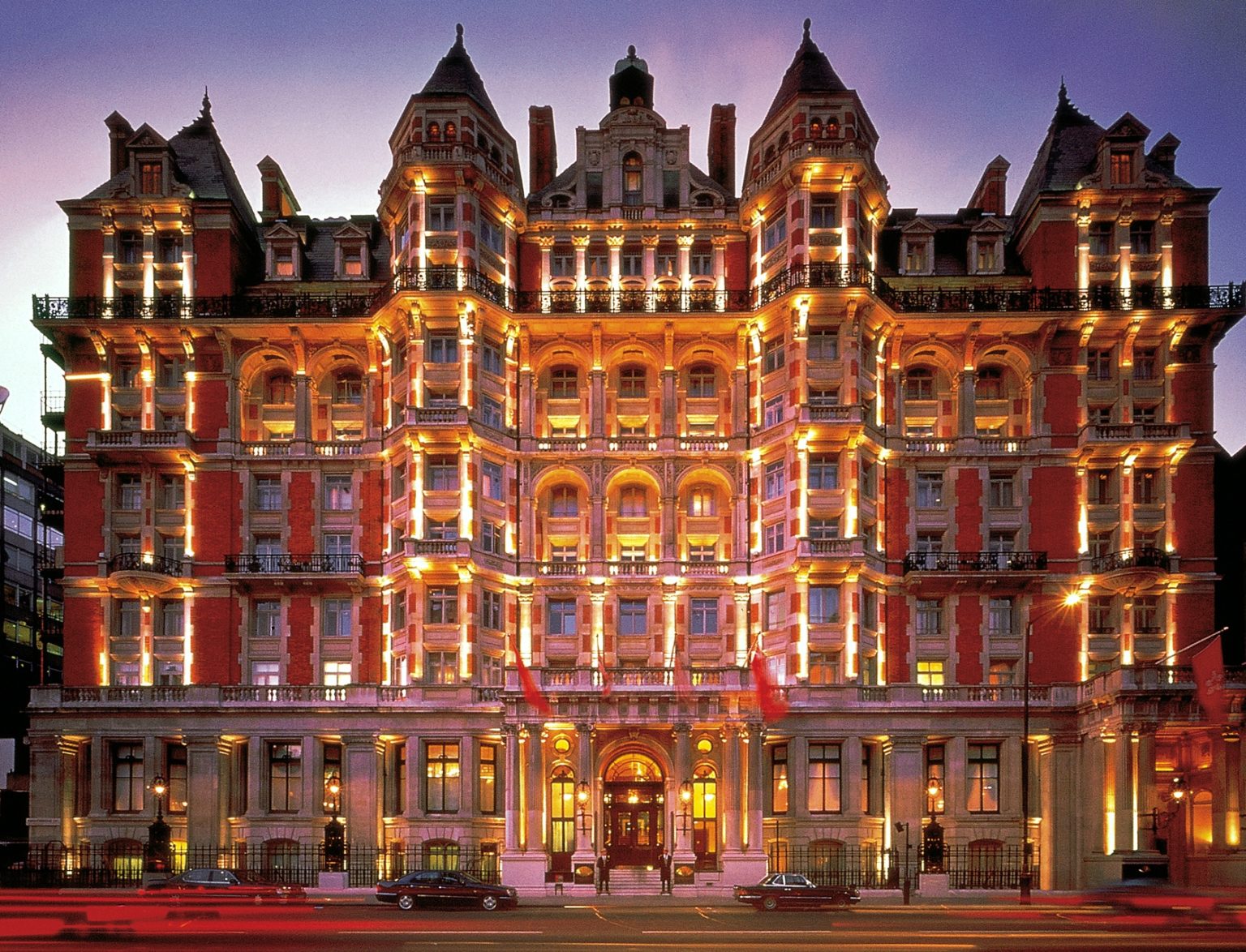
I watched a private equity firm "optimize" a legendary Mayfair property five years ago. They fired the staff who had been there for twenty years—the ones who actually knew the regulars—and replaced them with a revolving door of agency workers who couldn't find the coat check without a tablet. They saved 15% on payroll. They lost 40% of their legacy clientele within eighteen months.
The Sovereignty Trap
Let’s talk about the money. When a sovereign wealth fund buys a London landmark, it’s rarely about the hotel business. It’s a hedge against regional instability or a branding exercise for a nation-state. This creates a distorted market.
Real businesses have to turn a profit. They have to respond to market signals. But when you are backed by an endless supply of oil revenue, you can overpay by 300%. This drives up real estate prices across the city, pricing out the smaller, creative operators who actually give a neighborhood its heartbeat.
If you want to know why your favorite local bistro in W1 closed down, don't blame the economy. Blame the fact that the building next door was sold for a price that defies the laws of physics, forcing every landlord on the block to hike rents to match the new, imaginary valuation of the street.
Stop Asking "Who Bought It?" and Start Asking "Who’s Running It?"
The "talk of London" is always about the buyer. The buyer is irrelevant. The buyer is a bank account.
The real question is whether the new management has the guts to leave things alone. In the luxury world, the most radical thing you can do is avoid change. The Dorchester, The Ritz, Claridge’s—these places didn't become icons because they followed trends. They became icons because they were the anchor in a changing world.
The moment a new owner starts talking about "lifestyle brands" or "curated experiences," sell your stock. Or better yet, find a new place to stay. True luxury is not "curated." It is evolved. It is the result of decades of friction between a building, its staff, and its guests. You cannot buy that with a wire transfer from Doha.
The Luxury Default
We are entering an era of "The Luxury Default." It’s a specific kind of beige excellence.
- The Marble Minimum: Every bathroom must be floor-to-ceiling Calacatta marble, regardless of whether it fits the building’s architecture.
- The Tech Overload: You shouldn't need a PhD to turn off the lights in your bedroom, yet every takeover installs "smart" systems that glitch at 3:00 AM.
- The Michelin-by-Numbers: A celebrity chef is flown in to design a menu they will never cook, for a restaurant they will never visit more than twice a year.
This is the "nuance" the business pages miss. They see a £1 billion price tag and assume it means the product is getting better. In reality, the higher the price tag, the more risk-averse the management becomes. Risk-aversion is the enemy of soul.
Why the "People Also Ask" Sections Are Lying to You
If you search for the impact of these takeovers, you’ll find sanitized answers about "Foreign Direct Investment" and "Job Creation."
Let's dismantle those.
Does foreign investment help the London hospitality sector?
Only if you define "help" as "making it impossible for anyone but a billionaire to afford a room." It creates a top-heavy market that is extremely vulnerable to global shocks. When the ultra-wealthy stop traveling, these hotels don't just struggle; they collapse, because they’ve abandoned the local and mid-tier markets that provide stability.
Are these takeovers good for the UK economy?
Marginally. The taxes paid are often minimized through complex offshore holding structures. The profits don't stay in London; they are repatriated to the home country of the fund. We get the crumbs—the service charges and the business rates—while the real wealth generated by our heritage is exported.
The Actionable Truth for the Discerning Guest
Stop chasing the "talk of town." If a hotel takeover is the lead story in the Financial Times, it’s already too late. The vultures are circling the buffet.
If you want the experience the competitor's article claims to celebrate, you have to look for the "under-capitalized." Look for the hotels owned by families who are too stubborn to sell. Look for the places that still have slightly creaky floorboards and a head porter who remembers your father’s name.
These places are the true luxury. They are also an endangered species.
Every time we celebrate a "record-breaking acquisition," we are cheering for the homogenization of our culture. We are applauding the turning of London into a high-end duty-free lounge.
The Valuation Delusion
Investors use a formula to justify these astronomical prices. It’s usually a variation of:
$$Value = \frac{Net Operating Income}{Cap Rate}$$
The problem is that in the world of trophy assets, the "Cap Rate" is adjusted based on ego. Buyers accept a 2% or 3% return because they want the prestige of owning a piece of London. This "Ego Premium" creates a bubble. When the bubble pops—and it always does—the first thing to go is the quality of service. The second thing to go is the maintenance. The third thing to go is the reputation.
Imagine a scenario where we valued hotels not by their real estate footprint, but by their cultural contribution. Under that metric, most of these billion-pound acquisitions would be considered bankrupt.
The Death of the General Manager
In the old world, the General Manager (GM) was the king of the castle. They had the autonomy to make decisions. If a regular guest wanted a specific type of pillow or a brand of sparkling water not on the menu, the GM made it happen.
Under the new regime of "Big Data" and "Centralized Procurement," the GM is a middle manager. They have to check with a regional office before they spend £50 on a floral arrangement. They are measured on spreadsheets, not smiles. You can feel this the moment you walk into a recently "taken over" lobby. The staff are smiling because it’s in the handbook, not because they are happy to see you.
The Final Blow
London doesn't need more "luxury takeovers." It doesn't need more "reimagined icons." It needs owners who are willing to be curators rather than conquerors.
The next time you hear about a deal that’s the "talk of London," don't reach for your champagne. Reach for your mourning black. Another piece of the city’s identity has just been traded for a stake in a diversified portfolio.
The buildings remain. The names on the door remain. But the London we knew is being sold off, one "strategic acquisition" at a time.
Stop celebrating the sale. Start mourning the loss.