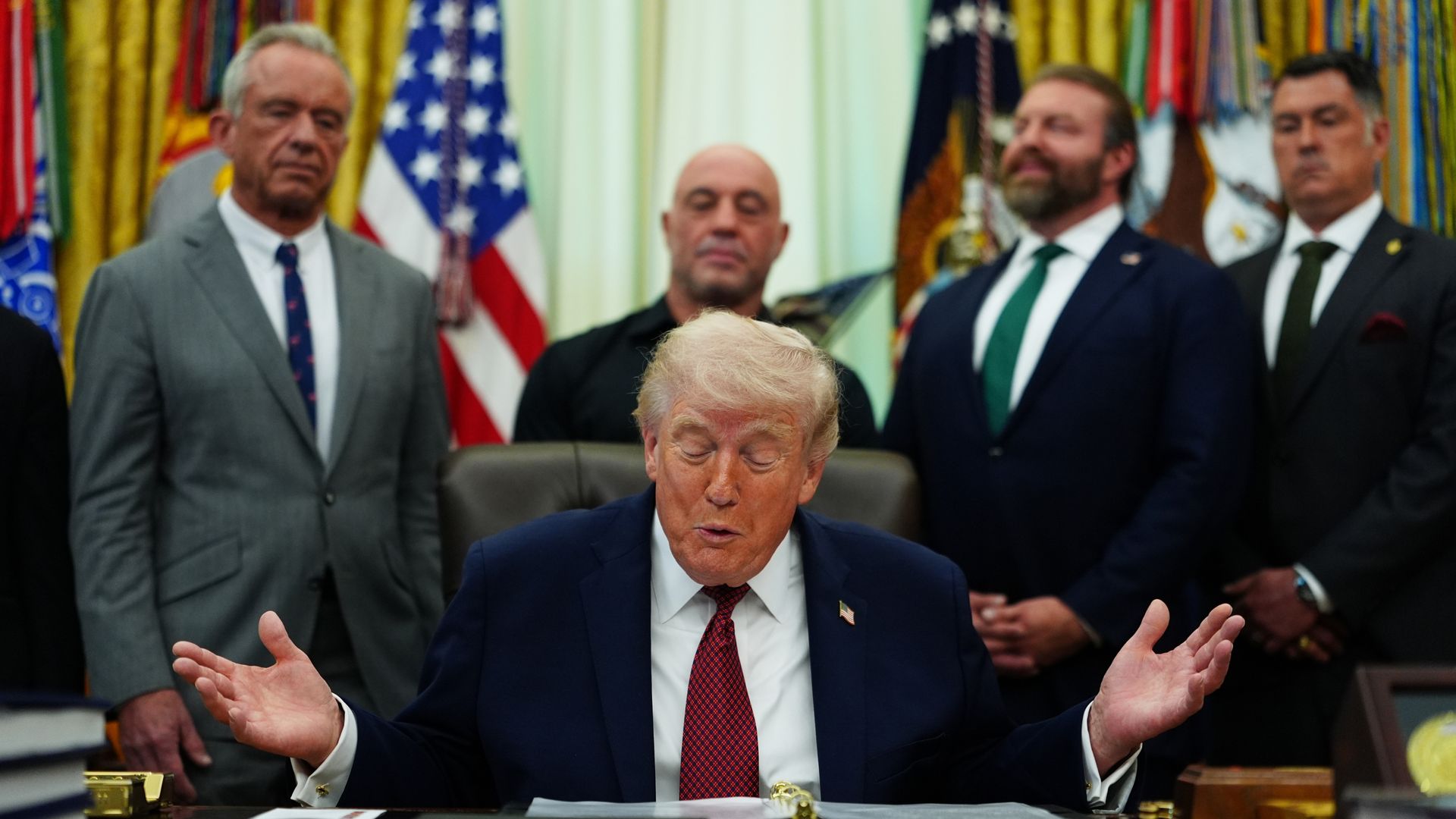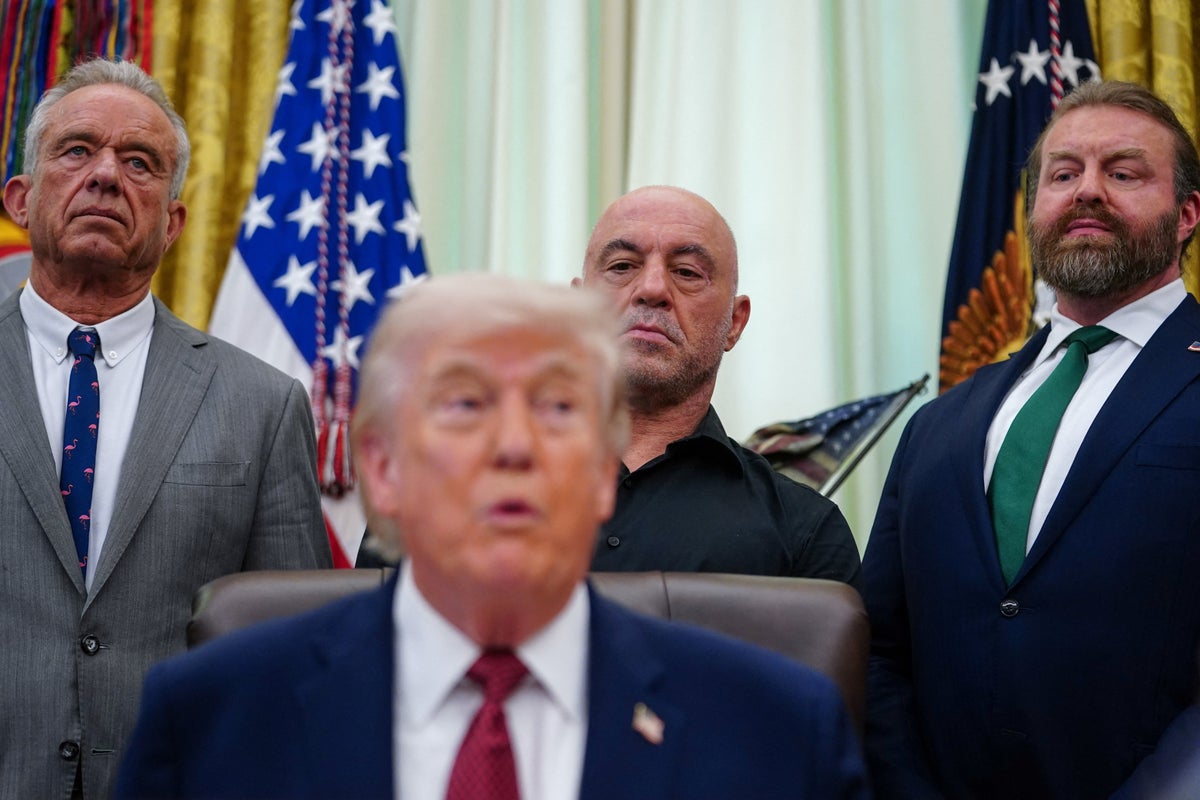
The air in the room didn’t feel like the usual political theater. Usually, these moments are scrubbed clean by staffers, polished until they reflect nothing but a curated image. But there was a strange, vibrating energy in the East Room as Donald Trump stood beside Joe Rogan. It wasn’t just about the policy. It was about a shift in the American consciousness that has been bubbling under the surface for a decade, finally breaking through the marble floors of the White House.
We have spent fifty years treating the human mind like a broken machine that just needs the right oil. If you were sad, we gave you a pill to numb the edges. If you were traumatized, we told you to talk about it until the words lost their meaning. But for the veteran sitting in a darkened living room in Ohio, or the mother paralyzed by an anxiety she can’t name, those solutions have felt like putting a Band-Aid on a canyon.
The announcement was formal: a new federal push to integrate psychedelic-assisted therapies into the national healthcare framework. But the subtext was visceral. It was an admission that the old ways have failed too many people.
The Invisible Ghost in the Room
Consider a man we will call Elias. He isn't real, but he represents the thousands of service members who return from overseas with their bodies intact and their spirits shattered. Elias doesn't have "symptoms." He has a nervous system that is stuck in a loop. When a car backfires, his brain tells him he is back in a dusty corridor in Kandahar. His heart races. His palms sweat. He pulls away from his wife because his brain has categorized intimacy as a secondary concern to survival.
For decades, the medical establishment told Elias to take an SSRI and wait six weeks. When that didn't work, they added another. Soon, he was a ghost in his own house, neither hurting nor feeling anything at all.
This is the "invisible stake" that Rogan has spent years discussing on his massive platform. He has become a megaphone for the desperate. By bringing him into the fold, the administration signaled that it is finally listening to the fringe, because the fringe is where the healing actually started happening.
Psychedelics like psilocybin and MDMA don't work like traditional antidepressants. They don't just dampen the pain. Instead, they appear to create a window of neuroplasticity—a literal softening of the brain’s rigid pathways. It is like fresh snow falling on a hill that has been rutted with the same deep sled tracks for years. Suddenly, you can choose a new path.
The Humor of the High Stakes
Trump, ever the performer, couldn't help but lean into the surreal nature of the moment. He joked about wanting some of the "meds" himself for his own anxiety, a line that earned a ripple of laughter. On the surface, it’s a classic Trumpism—deflecting gravity with a quip. But underneath the joke lies a profound truth: everyone is white-knuckling it.
Even the most powerful man in the world, or the most successful podcaster on the planet, is susceptible to the fraying of the modern mind. We live in a world designed to keep us in a state of high-alert. Our phones are slot machines of cortisol. Our politics are a blood sport. The "anxiety" Trump joked about is the baseline frequency of the 21st century.
When the President cracks a joke about needing a sedative, he is inadvertently humanizing a struggle that millions of Americans feel every morning before they even get out of bed. The difference is that now, the conversation has moved from the back-alleys and underground "journeys" to the most powerful office on earth.
Breaking the Stigma of the Sixties
For half a century, these substances were locked away in a box labeled "counter-culture." They were associated with tie-dye, rebellion, and the perceived unraveling of social order. That stigma was a wall. It prevented researchers from looking at the data. It prevented doctors from offering a lifeline to people like Elias.
But the data became impossible to ignore. Clinical trials at Johns Hopkins and NYU started showing results that were, frankly, staggering. We aren't talking about a 10% improvement in mood. We are talking about veterans with treatment-resistant PTSD walking out of a session and saying they feel like they’ve finally come home.
The White House announcement represents the final collapse of that wall. It is the moment the "War on Drugs" blinked.
The logic is simple. If a substance can help a soldier stop contemplating suicide, or help a terminal cancer patient find peace with their own mortality, the politics of the 1960s no longer matter. The human cost of waiting is too high.
The Rogan Factor
Joe Rogan’s presence wasn't just a celebrity cameo. It was a bridge. Rogan represents a specific brand of American curiosity—one that is skeptical of big institutions but obsessed with "what works." He has spent hundreds of hours talking to neuroscientists, special forces operators, and psychonauts.
His audience doesn't trust a press release from the FDA. They trust the guy who tries things, asks the "dumb" questions, and isn't afraid to look like a fool. By standing there, Rogan validated the policy for a demographic that usually tunes out government mandates. He made it "bro-scientific" in the best way possible: focusing on the mechanics of the brain and the results in the mirror.
This isn't about getting high. It's about getting well. In a clinical setting, these experiences are guided, measured, and integrated. There is a therapist present. There is a goal. It is hard work. It is often terrifying. To call it "recreational" is to fundamentally misunderstand the process of looking into the darkest corners of your own subconscious.
The Mirror of the Future
What happens when we stop punishing people for wanting to change their internal state and start helping them do it safely?
We are moving toward a reality where "mental health" isn't a separate category of life, but the foundation of it. The policy rollout suggests a future where your local VA clinic might offer a guided psilocybin session as readily as they offer a physical therapy appointment for a torn ACL.
There are risks, of course. There are the "bad trips" people fear, the potential for misuse, and the looming shadow of "Big Pharma" trying to patent molecules that have existed in nature for millennia. These are valid concerns. The transition will be messy. It will be debated in courtrooms and on cable news.
But the shift is irreversible.
The East Room was full of people who have seen the darkness. Some were politicians, some were donors, and some were people who had been pushed to the very edge of their endurance. When the ceremony ended, the gravity remained.
Healing is a slow, quiet process. It happens in the silence between heartbeats. It happens when a man like Elias can finally look at his wife and feel a spark of warmth instead of a wave of fear. It happens when we realize that our minds are not problems to be solved, but landscapes to be tended.
The jokes will fade. The headlines will be replaced by the next cycle of outrage. But for the person who hasn't felt "right" in twenty years, the door just creaked open.
A single ray of light hit the floor. And sometimes, that is enough to start the long walk back to yourself.