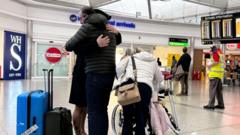
The air inside the terminal doesn't move. It is thick with the scent of recycled oxygen, unwashed travel clothes, and the sharp, metallic tang of collective anxiety. Thousands of miles away, in air-conditioned offices in Washington D.C., this is called a "logistical ramp-up." On the ground, it is a woman named Sarah clutching a blue passport until her knuckles turn the color of bone.
Sarah is a hypothetical composite of the thousands of Americans currently seeking a way out of a region where the horizon has begun to glow for all the wrong reasons. She is not a statistic. She is a person who packed her life into two suitcases in twenty minutes because a notification on her phone told her that the window of opportunity was shrinking.
The U.S. State Department recently announced that chartered flights for citizens are increasing in frequency. To a news anchor, that is a data point. To the person sitting on a linoleum floor in a crowded airport, it is a heartbeat. It is the difference between a night spent listening for sirens and a night spent watching the sun rise over the Atlantic.
The Invisible Architecture of an Exit
Getting a massive group of people out of a volatile area is not as simple as hailing a ride-share. It is a violent collision of diplomacy, physics, and sheer luck. We often think of our government as a monolith, but in these moments, it is a frantic web of human beings trying to lease planes from commercial carriers who are understandably hesitant to fly into a neighborhood that is currently on fire.
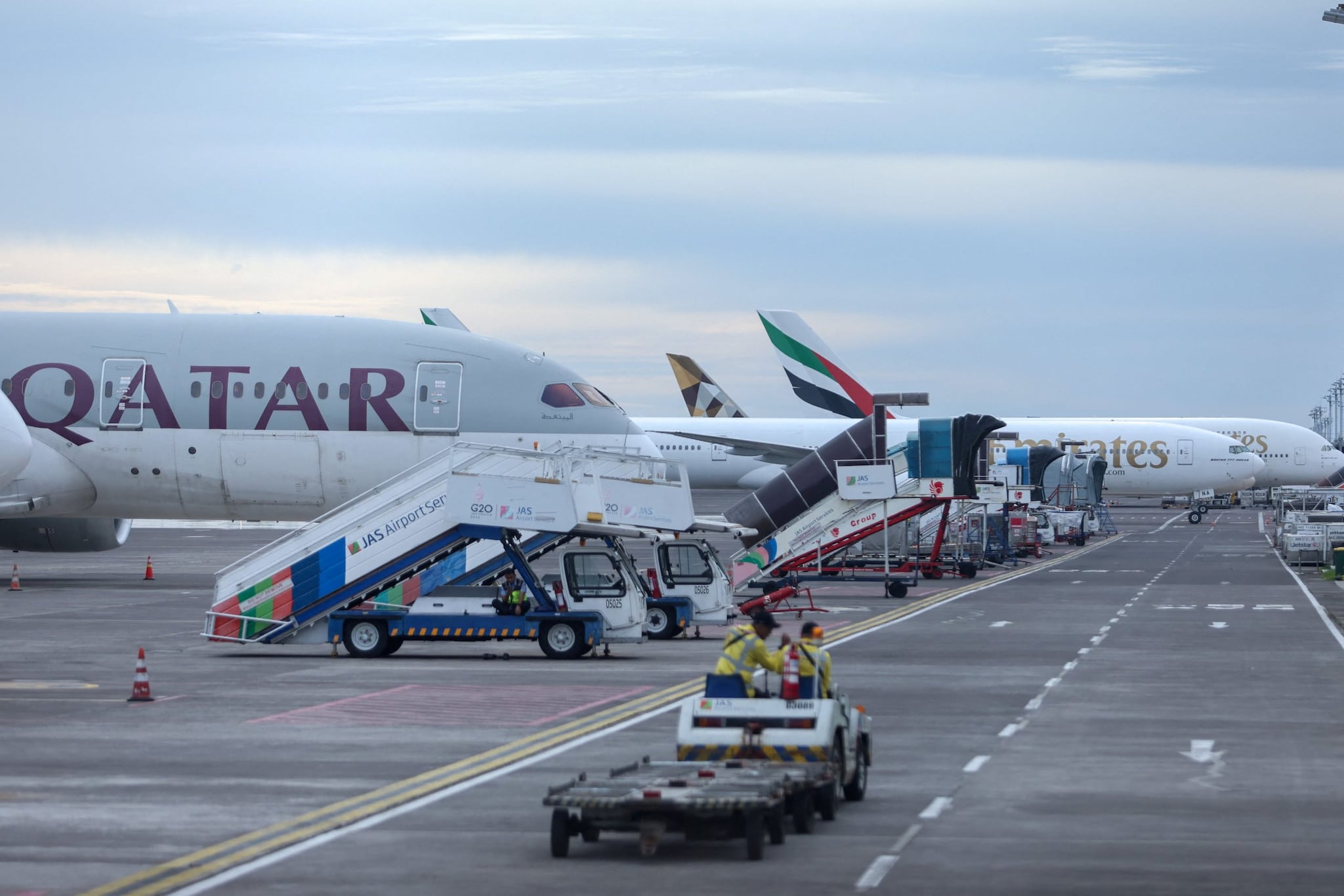
Consider the physics. A Boeing 777 requires a certain amount of runway, a certain amount of fuel, and a crew that hasn't exceeded its legal flying hours. When the State Department "ramps up" operations, they aren't just clicking a button. They are negotiating landing slots in neighboring countries that are already overwhelmed. They are vetting manifests in real-time. They are trying to find buses that can navigate checkpoints that didn't exist forty-eight hours ago.
Behind every "contracted charter flight" is a pilot who had to say yes to a high-risk route. Behind every seat is a consular officer who hasn't slept in three days, peering through a plexiglass window at a sea of desperate faces, trying to determine who goes on the 2:00 PM flight and who has to wait for the 10:00 PM.
The bureaucracy is the villain until it becomes the savior. We complain about the paperwork, the "e-forms," and the "STEP enrollment" (Smart Traveler Enrollment Program) until the moment those digital breadcrumbs become the only way the world knows we are still standing there.
The Weight of a Blue Booklet
There is a specific kind of silence that happens when a gate agent picks up a microphone in a crisis zone. It is a vacuum. All sound is sucked out of the room. When they call for U.S. citizens to line up, the physical weight of that small blue booklet changes.
In ordinary times, a passport is a ticket to a vacation or a tool for business. In a crisis, it is a shield. But shields can be heavy. Many of those standing in these lines are dual citizens. They are leaving behind cousins, grandparents, and childhood homes. They are stepping into the safety of an American charter flight while looking back at the people who cannot follow.
The "human element" isn't just the fear of what’s coming; it’s the guilt of leaving.
The State Department’s increase in flights is a response to a terrifying math problem. As commercial airlines cancel their routes—one by one, like lights flickering out in a hallway—the government becomes the only carrier left. This is the moment where the "free market" fails and the "social contract" takes over. You pay for your seat later, via a promissory note, because in the heat of an evacuation, your credit score matters less than your citizenship.
The Mechanics of the Scramble
Why does it take so long? Why isn't there a plane for everyone the second things go south?
Safety is a slow process. A "ramp-up" implies a curve. The first few days are spent testing the waters, securing the corridors, and ensuring that a plane full of civilians won't become a target. Then comes the surge.
- The Manifest: Every name must be checked against databases to ensure the integrity of the flight.
- The Payload: Weight and balance are critical. In evacuations, people try to bring everything. They are told they can bring one bag. They have to choose between their winter coat and a photo album.
- The Destination: Often, these flights don't go to the U.S. directly. They go to "safe havens"—Frankfurt, Athens, Doha.
The journey is a series of hops. It is a slow-motion escape where the primary emotion isn't relief, but exhaustion. You sit in a plastic chair in Cyprus, waiting for the next leg of a journey that will eventually dump you at JFK or Dulles, where the world looks exactly as it did two weeks ago, blissfully unaware of the adrenaline still vibrating in your marrow.
The Toll on the Ground
We must talk about the people who stay. For every flight that leaves, the density of those remaining feels higher. The State Department's messaging is often criticized for being "dry" or "robotic," but there is a reason for the clinical tone. Panic is contagious. If the government uses words like "catastrophic" or "terrifying," the stampede at the airport becomes a physical danger.
Instead, they use words like "ordered departure" and "augmented capacity." They are trying to build a bridge out of language that won't collapse under the weight of a million people trying to cross it at once.
But for Sarah, our hypothetical traveler, the language doesn't matter. What matters is the tactile reality of the boarding pass. It is the hum of the jet engines as they finally start to whine, a sound that usually signals the boredom of a long flight but today sounds like a choir.
She watches out the window as the city she called home shrinks into a collection of lights and shadows. The person in the seat next to her is a stranger, but they are holding hands. They don't know each other’s names. They only know that they are both on the manifest. They are both "cargo" in the Great American Ramp-Up.
The Aftermath of the Arrival
When the wheels finally touch down on American soil, there is no applause. There is usually just a profound, haunting quiet. People gather their single bags and shuffle toward Customs. They are met not by flashing lights, but by Red Cross volunteers with bottled water and granola bars.
The news cycle will move on. The headline about "ramping up flights" will be replaced by a headline about interest rates or a celebrity scandal. But for the people who were on those planes, the world has permanently shifted. They have seen the thinness of the ice we all walk on.
They know that a "flight" isn't just a plane. It’s a lifeline thrown into a storm. It’s a government saying, "We see you," even when the rest of the world is looking away.
The sun sets over the tarmac in Virginia or New Jersey. Sarah walks out of the sliding glass doors and feels the cool air of a place that isn't at war. She reaches into her pocket and touches the blue passport. It is just a book again. But she knows better now. She knows that sometimes, a few pages of paper and a chartered seat on a tired Boeing are the only things standing between the life you knew and a silence that never ends.
The planes will keep flying as long as the runway stays clear. The seats will fill. The manifests will grow. And somewhere in the middle of it all, a consular officer is still staring at a screen, trying to find one more plane for one more Sarah, before the lights go out for good.
The true cost of a ticket home isn't the price on the promissory note; it's the hollow feeling of looking out the window at a world you're lucky to be leaving, while wondering if you'll ever be able to call any place "home" with the same certainty again.
The engines roar. The wheels retract. The long wait ends, only for a different kind of waiting to begin in the safety of the suburbs.
Would you like me to analyze the specific travel advisories currently in place for these regions to help you understand the criteria for these evacuation tiers?