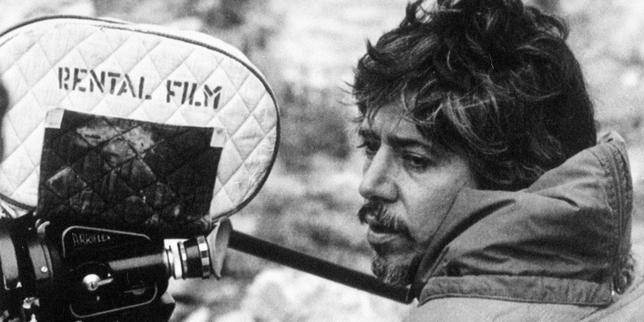
Luis Puenzo didn't just make movies. He forced an entire nation to look in the mirror when most people wanted to keep the lights off. The news of his death at 80 marks the end of an era for Latin American storytelling, but his influence on how we process historical trauma through film is permanent. If you’ve ever watched a political thriller that felt uncomfortably close to home, you probably owe a debt to Puenzo.
He’s best known for The Official Story (La historia oficial). It wasn't just a hit; it was a cultural explosion. In 1986, it became the first Argentine film to win an Oscar for Best Foreign Language Film. But the gold statue isn't why we're talking about him today. We're talking about him because he had the guts to film a story about the "disappeared" while the wounds of the military dictatorship were still bleeding.
The weight of The Official Story
Most directors wait for history to settle before they try to capture it. Puenzo didn't have that luxury. He started filming The Official Story just as the dictatorship was collapsing. It's a quiet, devastating movie. It follows a high-society history teacher who begins to suspect that her adopted daughter might be the child of a desaparecido—one of the thousands of people kidnapped and murdered by the state.
The brilliance of Puenzo’s approach was his focus on the accomplice's perspective. He didn't make a war movie. He made a domestic drama about denial. He showed how ordinary people "didn't know" because they chose not to look. That's a brave stance to take in a country trying to rebuild itself. He challenged the middle class. He told them their comfort was built on a foundation of stolen children and secret graves.
Critics often point to the performance of Norma Aleandro as the heart of the film, and they're right. But it was Puenzo’s direction that kept the tension from becoming melodrama. He understood that the horror of the situation didn't need flashy camera work. It just needed the truth.
Beyond the Oscar gold
While the Oscar defined his international reputation, Puenzo wasn't a one-hit wonder or a puppet for Hollywood. He went to the United States to direct Old Gringo in 1989, starring Jane Fonda and Gregory Peck. It’s a dense, ambitious adaptation of Carlos Fuentes’ novel. Working in the American studio system is a different beast, and many international directors lose their soul there. Puenzo didn't.
He stayed obsessed with the intersection of the personal and the political. In 1992, he directed The Plague (La Peste), based on the Albert Camus novel. He moved the setting to a modern South American city. It was a polarizing choice. Some people thought it was too bleak. I think it was ahead of its time. He saw how institutional failure and human desperation looked the same whether it was 1940s Algeria or 1990s Argentina.
A leader of the Argentine Film Institute
Puenzo wasn't just behind the camera. He was a powerhouse in the industry's infrastructure. He served as the president of the INCAA (National Institute of Cinema and Audiovisual Arts). This is where things get complicated. Being a bureaucrat is never as glamorous as being an artist.
During his tenure, he faced massive pressure. The Argentine film industry is constantly under fire from economic crises and political shifts. Puenzo fought for funding. He fought for the survival of independent voices. Not everyone agreed with his methods, and his exit from the INCAA in 2022 was messy. It was marked by protests and internal friction.
But here’s the thing. You don't get to his level without making enemies. He cared about the survival of Argentine cinema as a brand and as a cultural necessity. He knew that without state support, the stories of the Global South get drowned out by big-budget superhero flicks.
Why his death matters now
Argentina is currently going through another period of intense self-reflection and economic upheaval. The film industry there is again feeling the squeeze. Losing a figure like Puenzo feels like losing a lighthouse. He proved that you could make a movie in Spanish, about a very specific Argentine tragedy, and make the whole world weep.
He paved the way for directors like Lucrecia Martel and Pablo Trapero. They stand on his shoulders. He showed them that cinema is a tool for justice. It’s not just entertainment. It's a deposition.
If you want to understand why his work still resonates, go back and watch the final scene of The Official Story. Don't look at the plot. Look at the faces. The realization of guilt is more terrifying than any monster. That was Puenzo’s gift. He captured the moment the blindfold comes off.
Rewatching the classics
If you haven't seen his work, don't start with the biographies. Start with the films. They're widely available on streaming platforms that specialize in world cinema.
- The Official Story: It’s mandatory viewing. Honestly, it should be taught in every history class, not just film school.
- The Plague: Watch it through the lens of the last few years of global health crises. It hits differently now.
- La Puta y la Ballena: A later work that shows his evolving style, blending different timelines and themes of love and fate.
Luis Puenzo lived to see his country change, stumble, and rise again. He documented the darkest parts of that journey so we wouldn't forget them. His death is a loss, but the "Official Story" of Argentine cinema will always have his name on the first page. Go watch his movies. That's the only tribute that actually counts.