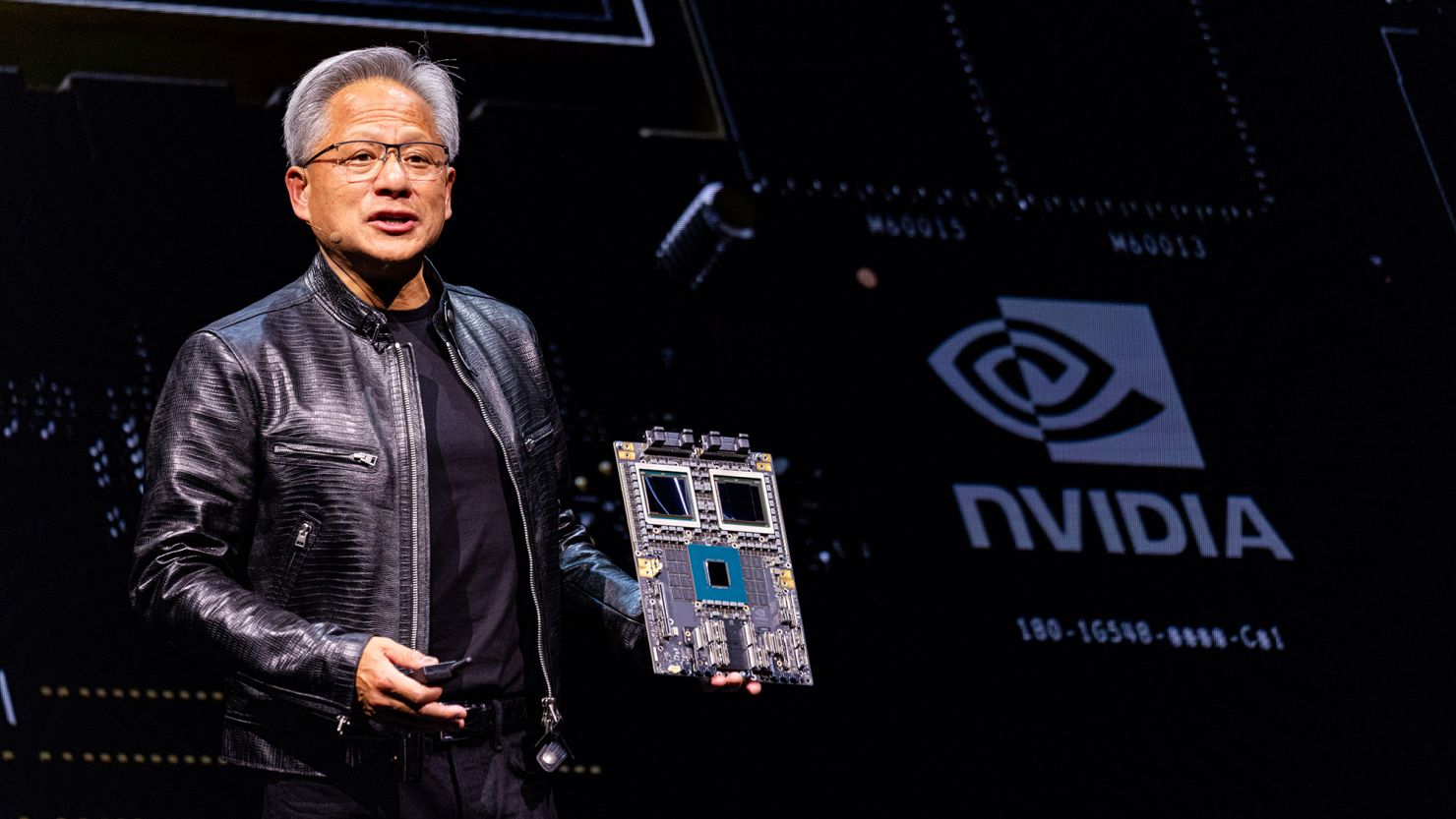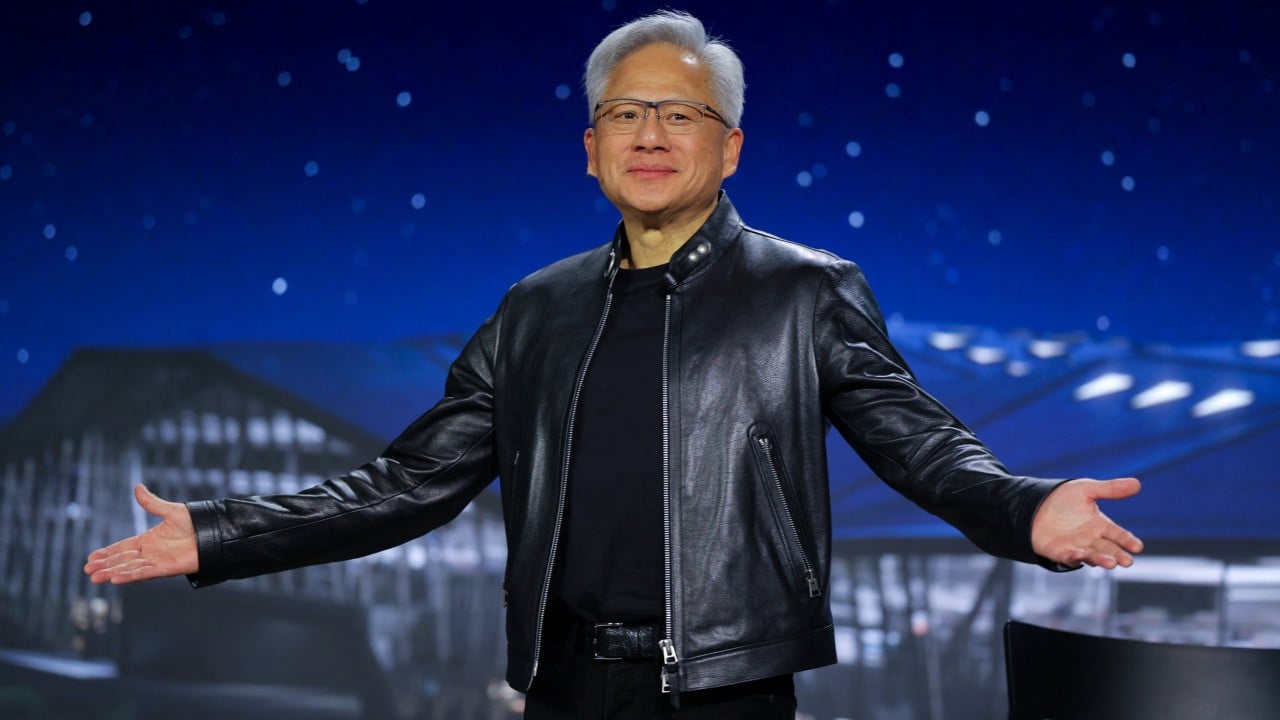
The air inside the cabin of a private Gulfstream G650 tastes different when the fate of a trillion-dollar industry hangs in the balance. It is sterile, pressurized, and silent, save for the low hum of engines pushing through the stratosphere at Mach 0.92. On this particular flight, headed toward the dense, neon-lit sprawl of Beijing, the silence was heavy. Jensen Huang, the man who turned silicon into gold, was not supposed to be on this trip.
Until he was.
Geography usually dictates the terms of diplomacy. You have the West, with its sprawling data centers and venture capital hubs, and you have the East, the manufacturing heartbeat of the planet. But in the modern era, geography is secondary to the "compute." If you control the chips, you control the speed of thought. Huang, known for his signature black leather jacket and an almost prophetic ability to see around the corners of time, found himself at the center of a geopolitical storm that no weather radar could have predicted.
The Last Seat on the Plane
Politics is often a game of optics, but business is a game of survival. When the news broke that the Nvidia CEO had joined the high-profile American delegation to China at the eleventh hour, the shockwaves traveled faster than an electrical pulse through an H100 GPU. This wasn't just another corporate executive looking for a photo opportunity. This was the architect of the AI revolution walking into the lion’s den during a period of unprecedented trade friction.
Imagine a chess player who realizes, mid-game, that the board has been tilted forty-five degrees. That is the reality of the semiconductor industry today. Washington wants to keep the most powerful chips out of Chinese hands to maintain a strategic edge in artificial intelligence. Beijing, meanwhile, is sprinting toward self-sufficiency, pouring billions into domestic alternatives. In the middle stands Huang. He is an American success story, an immigrant who built a titan, yet his company’s lifeblood—the global supply chain—requires a delicate, almost impossible dance between these two superpowers.
The decision to join the trip was a pivot. Sharp. Sudden. Necessary.
The Weight of a Grain of Sand
To understand why this matters, you have to look past the stock tickers and the quarterly earnings reports. You have to look at a single microchip. It is, essentially, a highly organized piece of sand. But when you etch billions of transistors onto that sand, it gains the power to simulate the birth of galaxies, discover new life-saving drugs, and drive cars without human intervention.
For years, the flow of these chips was like water: effortless and expected. Now, it is more like oil in the 1970s. It is a resource to be guarded, contested, and used as leverage.
Huang's presence in China was a physical manifestation of a bridge that many in the capital are trying to burn. Think of the stakes as a series of concentric circles. At the center is Nvidia’s bottom line—China has historically accounted for a massive chunk of its revenue. Move out a circle, and you find the thousands of Chinese startups and tech giants whose entire AI roadmaps are built on Nvidia’s architecture. Move out again, and you find the global economy, which currently runs on the assumption that these two giants will keep talking, even if they aren't smiling.
The tension is palpable. Every time a new export restriction is announced, engineers in Santa Clara have to scramble to redesign chips that are just "slow" enough to be legal, yet fast enough to be useful. It is a grueling, frustrating cycle of innovation met with regulation.
The Human in the Machine
We often talk about "market forces" as if they are weather patterns, devoid of human agency. They aren't. They are the result of specific people making specific calls in high-pressure rooms.
Huang is a storyteller. He doesn't just sell hardware; he sells a vision of a future where human intelligence is augmented by something vast and digital. But that vision requires a unified world. If the world splits into two distinct tech ecosystems—one Western, one Eastern—the dream of a universal AI becomes fragmented. It becomes a "splinternet," where your digital assistant in New York can't communicate with the autonomous factory in Shanghai because they speak different silicon languages.
Watching the footage of the delegation, you could see the gravity of the moment. There is a specific kind of exhaustion that comes with being the person who has to explain complex physics to politicians and hard-nosed trade realities to ideologues. Huang’s "last minute" inclusion suggests a realization that the technical cannot be divorced from the political. You cannot build the future if the present is blocked by a wall of tariffs and distrust.
The Invisible Borders
There is a metaphor often used in the valley: the "moat." Companies build moats around their businesses to keep competitors out. But what happens when the moat is an ocean, and the bridges are being lifted?
For a leader like Huang, the trip to China wasn't about selling more chips that afternoon. It was about maintaining a seat at the table where the rules of the next century are being written. If you aren't in the room, you are on the menu. By joining the trip, he signaled that Nvidia isn't just a component of the American economy—it is a pillar of global stability.
Consider the hypothetical engineer in a lab in Shenzhen. They have spent years learning to optimize code for Nvidia’s CUDA platform. Suddenly, because of a signature on a document 7,000 miles away, they might lose access to the tools they know. That isn't just a business problem. That is a human frustration. It’s a loss of potential. Huang knows this. He understands that loyalty is built on reliability, and right now, reliability is a scarce commodity.
The Cost of Silence
The trip was a gamble. To some in Washington, it might look like a CEO playing both sides. To some in Beijing, it might look like a desperate attempt to save a fading market share. But the reality is likely much simpler and much more profound.
Power.
Not just the power that flows through a motherboard, but the power of presence.
The semiconductor industry is often described as "high stakes," but that phrase has become a cliché. Let’s be more precise. If the flow of high-end chips stops, the progress of human civilization slows down. It’s that simple. We are currently in a race to solve climate change, cure cancers, and manage the logistics of a planet with eight billion people. AI is the engine we’ve built to do that work. If the engine is starved of fuel because of a trade war, we all lose time. And time is the only resource we can't manufacture more of.
Shadows on the Wall
As the delegation moved through the halls of power in Beijing, the ghost in the room was always the next generation of silicon. Every handshake was underscored by the knowledge that the chips being discussed today will be obsolete in eighteen months. The pace of change is so fast that the law cannot keep up.
Huang’s life has been defined by speed. He grew up in an environment where you either accelerated or you disappeared. Now, he is trying to teach that same lesson to the world’s most powerful governments. He is telling them that while they argue over the borders of the physical world, the digital world is being built at the speed of light, and it doesn't care about flags.
The leather jacket stayed on. The schedule stayed packed. The stakes stayed astronomical.
There was a moment, captured in a grainy photo, where Huang was seen walking slightly apart from the rest of the group. He was looking at his phone, perhaps checking the latest yields from a fabrication plant in Taiwan or reading a briefing on the newest regulatory hurdle. In that moment, he looked less like a billionaire and more like a man trying to hold a crumbling ceiling up with his bare hands.
We like to think that the big movements of history are inevitable. They aren't. They are steered by individuals who refuse to stay home when the flight is leaving. Jensen Huang took the last seat on that plane because he knew that a world without a bridge is a world that eventually stops moving forward.
The engines cooled on the tarmac in Beijing, but the heat in the semiconductor industry only intensified. The "last minute" addition to a guest list might seem like a footnote in a news cycle, but in the long arc of the silicon age, it may be remembered as the moment the architect tried to save the house.
The light in the data center never blinks. It just waits for the next command.