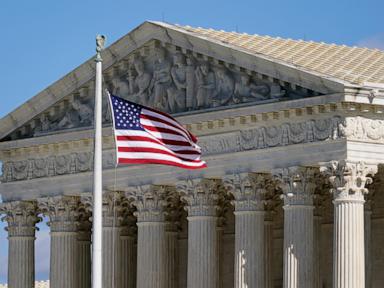
The humidity in Alabama doesn't just sit on your skin; it settles into your bones, a heavy, wet reminder of the earth beneath your feet. For someone like Evelyn—a hypothetical grandmother in Selma whose name could be any name, whose porch looks like a thousand other porches—the dirt beneath those feet has always been political. She remembers the sound of boots on the bridge. She remembers the taste of iron in the air. For Evelyn, the Voting Rights Act of 1965 wasn’t a dry stack of papers bound in a DC archive. It was a shield.
But shields can thin. They can be filed down by the steady, rhythmic friction of legal briefs and velvet-robed deliberations until they are more lace than iron.
The Supreme Court recently issued a ruling that didn't just change a rule; it altered the geometry of American power. By weakening Section 2 of the Voting Rights Act, the court effectively told the map makers that the lines they draw around neighborhoods, churches, and grocery stores don't have to account for the skin color of the people living there quite as strictly as they used to.
The Architecture of the Invisible
Imagine a neighborhood where the houses are painted blue and red. For decades, the law said that if you have a massive cluster of blue houses, you can't just slice them into tiny slivers and bury them inside a sea of red houses so that the blue voices never reach the city council. That was the "results test." It didn't matter if the person holding the pen intended to be mean. It only mattered if the result silenced the neighborhood.
The court's recent shift moves the goalposts. It suggests that if a state’s voting system is "long-standing" or mirrors what other states do, it might be acceptable, even if it makes it harder for certain groups to elect their chosen leaders.
Justice Samuel Alito, writing for the majority, pointed toward a set of "guideposts." These aren't rigid rules, but they lean heavily on the idea of tradition. If a voting rule was common in 1982, when Section 2 was last significantly amended, it gets a certain degree of protection.
The problem with looking backward to find fairness is that the past was rarely fair.
Consider the "size of the burden." The court now suggests that voters should be expected to endure the "usual burdens of voting." But what is usual for a partner at a law firm in Birmingham is not what is usual for Evelyn. For the lawyer, a thirty-minute wait in an air-conditioned lobby is a minor inconvenience. For Evelyn, who relies on a bus schedule that operates on hope and a prayer, and who works a job that doesn't offer "personal days," that same thirty minutes is a barrier. When the court says these burdens are just part of the "standard" American experience, they ignore the fact that the starting line is moved for millions of people.
The Ghost of Intent
For years, the legal standard was simple: Does this practice result in a denial of the right to vote?
Now, the focus is drifting back toward intent. This is a dangerous pivot. Proving what is in the heart of a legislator is nearly impossible. They rarely leave a paper trail that says, "We are doing this to stop Black voters." Instead, they use words like "integrity," "efficiency," and "uniformity." They talk about the "sanctity of the ballot box."
By shifting the focus away from the cold, hard data of who gets to vote and toward the "reasonableness" of the state’s goals, the court has handed a master key to those who wish to redraw the world in their own image.
The stakes are invisible until they are absolute. You don't feel a map being drawn. You don't feel the district line creeping three blocks to the west. You only feel it two years later, when the school board stops listening to your concerns about the local elementary school, or when the city decides that the new highway should run directly through your park because your neighborhood no longer has the collective political weight to push back.
The court’s decision targets "line-drawing" cases specifically. This is the art of the gerrymander. It is the practice of packing voters into one district so their influence is "wasted" or cracking them across multiple districts so their influence is diluted.
The Friction of the Everyday
The law is often discussed as a series of high-minded principles, but for the person on the ground, it is a series of frictions.
- The Friction of Distance: Closing polling places in specific ZIP codes.
- The Friction of Time: Shortening early voting windows that hourly workers rely on.
- The Friction of Identity: Implementing strict ID requirements that cost money and time to fulfill.
When the Supreme Court weakens the tools used to fight these frictions, it isn't just making a legal adjustment. It is declaring that some people’s time and some people’s access are less "paramount" than the state’s desire for a specific type of order.
The dissent, led by Justice Elena Kagan, was sharp. She argued that the majority was "whittling down" the law until it was a shadow of its former self. She pointed out that the Voting Rights Act was designed to be a "mighty engine" of democracy. If you take enough parts out of an engine, it might still look like a car, but it won't take you anywhere.
The Quiet Erosion
This isn't a sudden explosion. It is a slow, quiet erosion. It is the sound of a river wearing down a canyon wall.
The court argues that we are in a new era. They suggest that the "extraordinary" conditions that required the Voting Rights Act in the 1960s no longer exist. They look at the statistics of voter registration and see progress. And there has been progress. But that progress didn't happen by accident. It happened because there was a law that made it impossible to do otherwise.
Removing the protection because things have improved is like throwing away your umbrella in a rainstorm because you aren't getting wet.
The maps are being drawn right now. In windowless rooms with high-powered software, analysts are looking at census data and historical voting patterns. They are clicking and dragging lines across neighborhoods. They are measuring the "efficiency gap." They are calculating exactly how many people they can exclude while still maintaining a "reasonable" appearance.
Evelyn sits on her porch and watches the sun go down. She doesn't know the names of the "guideposts" Justice Alito wrote about. She hasn't read the 30-page dissent. But she knows that the distance between her house and the ballot box feels longer than it did ten years ago. She knows that the people who show up on her television asking for her vote don't seem to come from her side of the line anymore.
The line has moved. The shield has thinned. The map is being redrawn, and for the first time in generations, the people living inside the lines have fewer ways to fight back when the ink starts to dry.
Democracy is not a permanent state of being. It is a thin ribbon of light held against a very deep darkness. When the court decides that the light is "bright enough" and begins to dial back the power, the shadows don't wait for an invitation. They simply move back in, inch by inch, block by block, until the map no longer looks like a community, but a conquest.


