The fatal engagement between the Cuban Border Guard (TGF) and a U.S.-registered vessel resulting in four civilian deaths represents a critical failure of non-kinetic maritime enforcement protocols. This incident is not an isolated tactical error; it is the physical manifestation of a deteriorating security architecture in the Florida Straits. When state actors shift from interdiction to lethal force against civilian-class hulls, the operational risk shifts from legal friction to geopolitical instability.
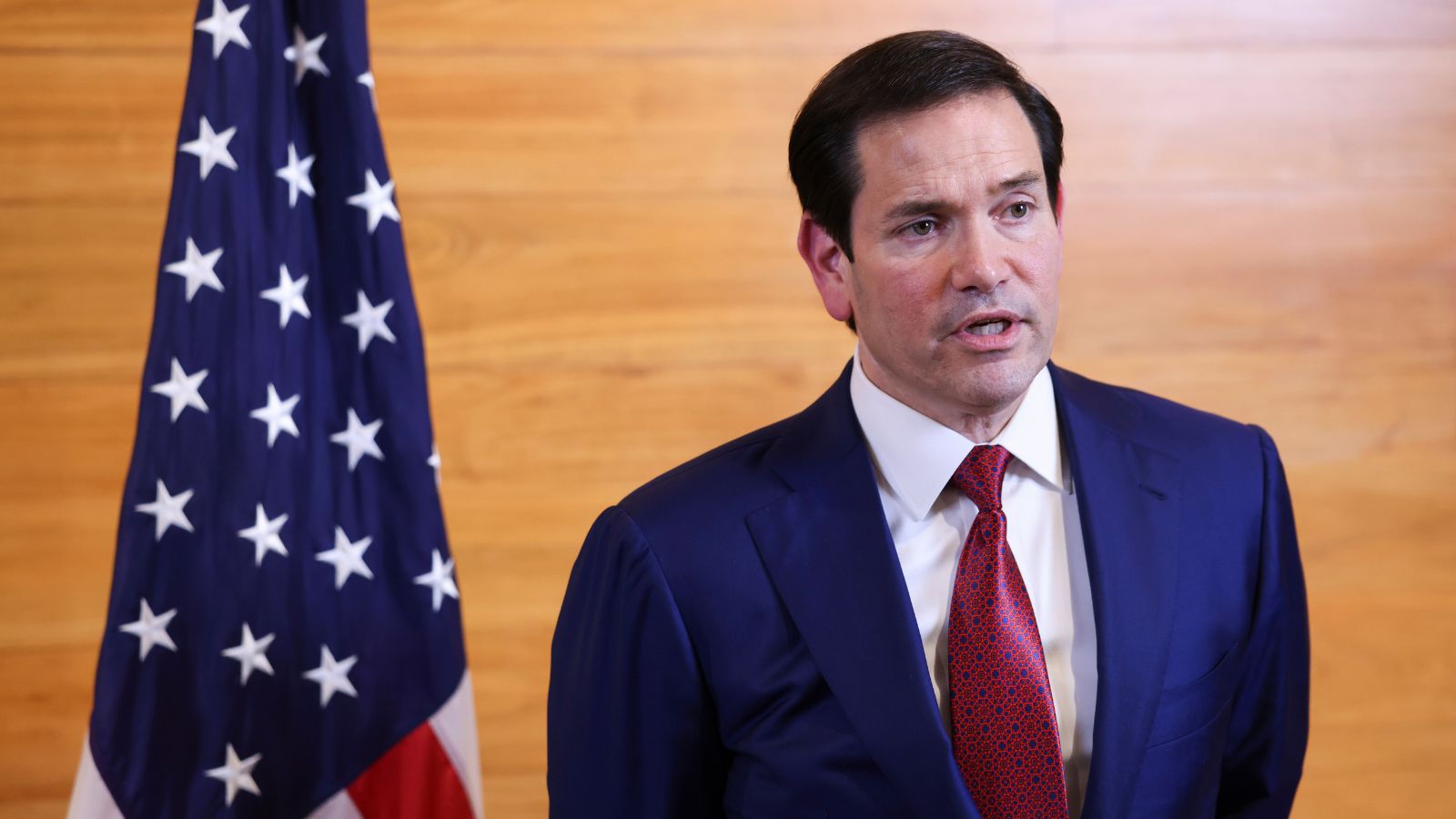
The event, currently under investigation by U.S. federal agencies as reported by Senator Marco Rubio, involves a high-speed transit profile typical of "go-fast" vessels utilized in human smuggling or narcotics trafficking. However, the use of lethal force by the Cuban military introduces a variable that standard maritime law—specifically the protocols governing the Right of Visit and the Use of Force—is designed to prevent.
The Triad of Maritime Engagement Failures
To understand why this incident occurred, we must examine the intersection of three specific operational drivers: jurisdictional ambiguity, vessel kinematics, and the rules of engagement (ROE) asymmetry between the U.S. and Cuba.
- Jurisdictional Ambiguity: While the vessel carried a U.S. registration, the location of the kinetic event—likely within Cuba’s 12-nautical-mile territorial sea—grants the TGF primary enforcement authority. The friction arises when the "Right of Innocent Passage" is stripped due to the suspicion of illegal activity.
- Vessel Kinematics: High-speed, multi-engine outboards create a specific tactical problem. They are difficult to disable without targeting the engine block or the pilot. In many Caribbean interdictions, "warning shots" are often ineffective due to the high ambient noise of the engines and the high-stress environment of a pursuit.
- ROE Asymmetry: The U.S. Coast Guard (USCG) operates under strict Use of Force (UOF) policies that prioritize life safety and "stopping the platform" rather than "neutralizing the occupants." The Cuban TGF operates under a paramilitary doctrine where the preservation of the maritime border is prioritized over the survival of the suspected transgressor.
The Mechanics of Kinetic Escalation
The transition from a pursuit to a lethal event follows a predictable, albeit tragic, cost-function logic. For the Cuban military, the "cost" of a successful escape by a smuggling vessel is seen as a breach of national sovereignty. The "cost" of firing on the vessel is international condemnation. In this instance, the TGF appears to have calculated that the sovereign breach outweighed the diplomatic fallout.
We can analyze this through the Tactical Decision Matrix used in high-speed interdictions:
- Detection Phase: Radar or visual spotting of a non-compliant target.
- Communication Phase: Attempted hailing on Channel 16 or visual signaling.
- Compliance Phase: The target vessel increases speed, initiating a pursuit.
- Disabling Phase: The point where non-lethal methods (entanglers, acoustic devices) are bypassed for kinetic options.
In the case of the four deceased individuals, the "Disabling Phase" was bypassed or executed with extreme prejudice. When a military unit fires into the cockpit of a vessel rather than the lower hull or engine cowlings, the intent shifts from "stopping" to "killing." This distinction is the primary point of contention for U.S. State Department officials.
The Economic Engine of Illicit Transit
The presence of a U.S.-registered speedboat in Cuban waters is rarely accidental. The economic incentives for maritime smuggling have reached a peak due to two convergent factors: the collapse of the Cuban domestic economy and the tightening of land-based U.S. border crossings.
The "Go-Fast" vessel serves as the primary capital asset in this trade. These boats are often registered in Florida to provide a veneer of legitimacy during transit in international waters. The business model relies on high-speed transit to minimize the "time-on-target" for aerial surveillance assets like the USCG’s HC-144 Ocean Sentry or MQ-9 Reaper drones.
The risk-reward ratio for these operators has shifted. As the Cuban government increases its domestic crackdowns, the desperation of those seeking exit rises, allowing smugglers to charge higher premiums. This increased capital allows for the purchase of faster, more sophisticated vessels, which in turn forces the Cuban TGF into more aggressive, kinetic responses to maintain their enforcement posture.
Geopolitical Friction and Information Warfare
The delay in information flow regarding the identities of the deceased and the specific coordinates of the incident creates a "data vacuum" that both governments fill with targeted narratives. Senator Rubio’s involvement signals that the U.S. legislative branch is treating this as a high-stakes provocation rather than a standard law enforcement matter.
The technical bottleneck in the investigation lies in the retrieval of onboard telemetry. Modern high-speed vessels often carry GPS plotters that record precise tracks, speeds, and timestamps. If the Cuban military seized the vessel, they controlled the primary source of truth regarding whether the boat was fleeing, stopped, or attempting to ram the TGF asset.
The secondary bottleneck is the lack of a formal "Hotline" for maritime incidents between the USCG District 7 (Miami) and the Cuban TGF. While some coordination exists for Search and Rescue (SAR), criminal interdiction lacks a unified command structure, leading to "blue-on-blue" risks or, as seen here, lethal misunderstandings.
Structural Limitations of Caribbean Interdiction
The current strategy for managing the Florida Straits is fundamentally reactive. It relies on a "Catch-and-Return" logic that assumes all parties play by the same humanitarian rules. The deaths of these four individuals expose the flaw in that assumption.
The first limitation is Detection Saturation. The Florida Straits are one of the busiest maritime corridors in the world. Distinguishing between a legitimate fishing vessel, a recreational cruiser, and a smuggling asset requires constant, high-fidelity intelligence that is often missing in real-time.
The second limitation is Platform Mismatch. Cuban TGF vessels are often smaller, older, or less maneuverable than the high-end U.S. speedboats they are chasing. This leads to a "Reach-Back" strategy where, unable to physically catch or board the vessel, the TGF resorts to long-range fire to end the pursuit.
Strategic Forecast: The Militarization of the Straits
The immediate fallout of this incident will likely be a surge in "Presence Operations" by the U.S. Coast Guard and potentially the U.S. Navy. This creates a crowded operational theater where the risk of a secondary kinetic event—potentially between state assets—is elevated.
The U.S. must now decide between two distinct paths:
- Direct De-escalation: Re-establishing the maritime migration talks to formalize ROE for civilian-class vessels in contested waters.
- Increased Deterrence: Expanding the "Air-to-Surface" interdiction capability, utilizing more non-lethal disabling technologies (like high-powered microwave systems) to stop vessels before they enter the Cuban TGF's "Kill Zone."
The most effective strategic play is the deployment of autonomous maritime surveillance pickets along the 24-mile line (contiguous zone). By creating a persistent, unblinking digital fence, the U.S. can identify and intercept "Go-Fast" vessels before they reach Cuban territorial waters, effectively removing the TGF's opportunity for kinetic engagement. This moves the friction point from the Cuban coast to the open sea, where U.S. assets can apply standard, non-lethal interdiction protocols. Failure to establish this buffer ensures that the Florida Straits will remain a theater of attrition where civilian hulls are treated as military targets.