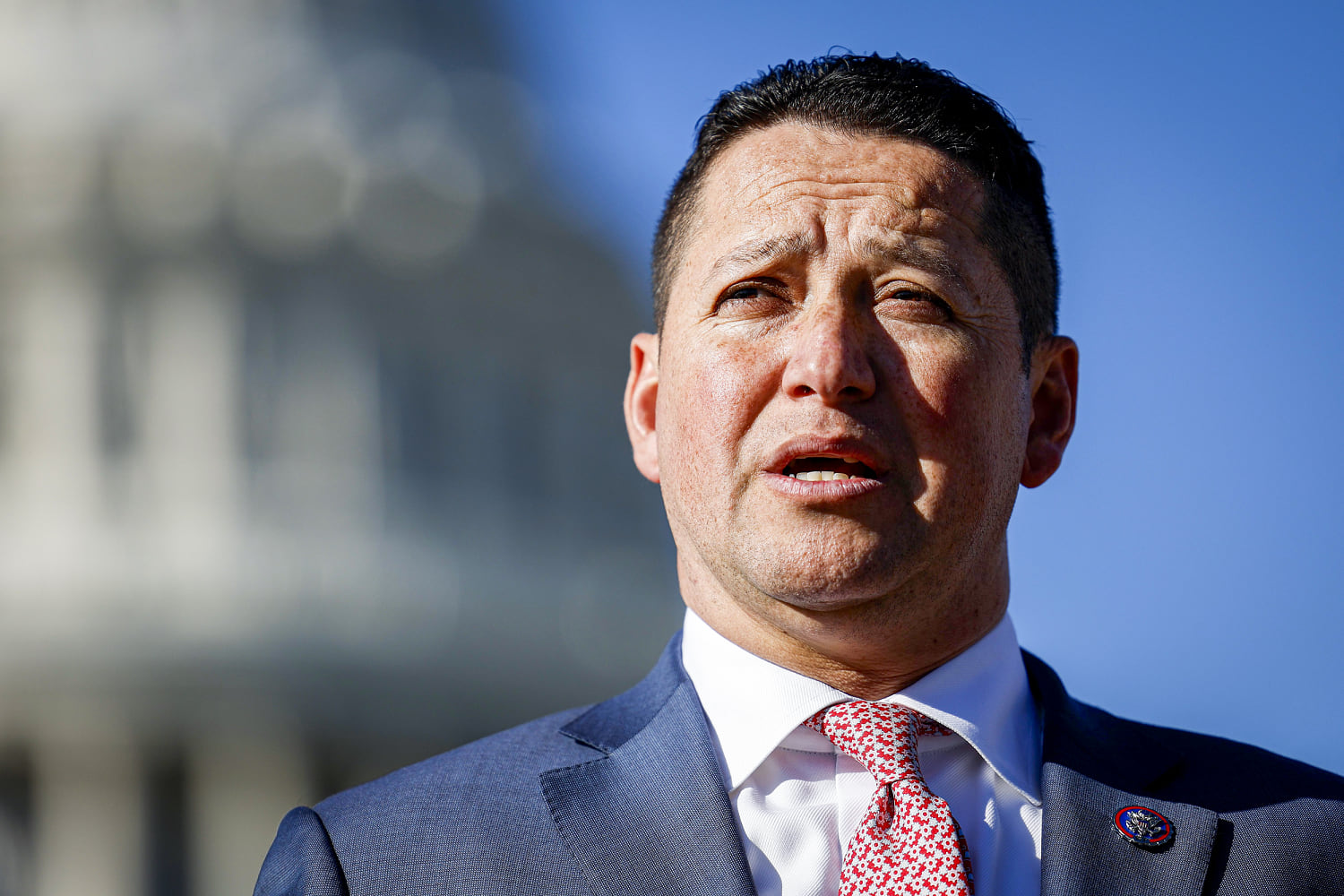
The House Ethics Committee’s decision to open an investigative subcommittee into Representative Tony Gonzales (R-TX) represents the formalization of a multi-stage political and legal friction point. This is not merely a headline regarding personal misconduct; it is a case study in the intersection of intra-party ideological shifts, federal campaign finance compliance, and the internal policing mechanisms of the United States House of Representatives. To understand the trajectory of this investigation, one must look past the optics of "trouble" and analyze the specific structural triggers that moved this from a preliminary review by the Office of Congressional Ethics (OCE) to a full-scale investigative subcommittee (ISC).
The Tri-Factor Trigger Framework
Congressional investigations rarely materialize from a single event. They are typically the result of three converging vectors that overcome the natural institutional inertia of the Ethics Committee.
- Regulatory Discrepancy (The OCE Referral): The OCE, an independent non-partisan entity, previously found "substantial reason to believe" that violations occurred. This acts as the technical foundation. Without this referral, the Committee rarely acts on its own volition against a sitting member unless the violation is public and egregious.
- Internal Party Friction: Gonzales has consistently positioned himself as a centrist outlier within the House GOP conference. His votes on firearm legislation, border policy, and same-sex marriage created a "political deficit." When a member loses the protective shield of their caucus, the institutional cost of an ethics investigation drops significantly.
- Financial and Procedural Transparency: The core of the inquiry focuses on whether Gonzales utilized campaign funds for personal purposes or failed to disclose required financial interests. In the ecosystem of federal oversight, "the cover-up" or the "clerical error" is often easier to prove than the initial intent of the spend.
The Investigative Subcommittee (ISC) Power Dynamics
The establishment of an ISC is a significant escalation from a "Preliminary Review." While the Committee often dismisses complaints or issues "letters of reproval" for minor infractions, an ISC possesses subpoena power. This shifts the burden of proof.
The ISC operates under a specific mandate to determine if Gonzales violated the Code of Official Conduct. The structural reality of these committees is their 50/50 partisan split. In an era of hyper-polarization, an ISC only moves forward with an investigation if members from both parties see a technical violation of the rules. This suggests that the evidence provided by the OCE regarding campaign fund usage is likely rooted in documented transactions rather than hearsay.
Categorizing the Potential Violations
The investigation into Gonzales can be categorized into three distinct risk areas, each with different levels of evidentiary requirements and consequences.
Campaign Fund Conversion Risks
Federal law and House rules strictly prohibit the "conversion of campaign funds to personal use." The mechanism here is a cost-benefit analysis of every expenditure. If an expense would exist regardless of the candidate’s campaign for office, it is generally considered personal.
- The Technical Threshold: Investigators will audit travel records, meal receipts, and lodging. If Gonzales used campaign funds for non-campaign events—even if those events were politically adjacent—he faces a violation.
- The Mitigation Factor: Members often claim "administrative error" and offer to reimburse the campaign. The success of this defense depends entirely on the frequency and scale of the transactions.
Disclosure Omissions
The Ethics in Government Act requires members to file Annual Financial Disclosures (FDs).
- The Visibility Gap: If Gonzales failed to report assets, liabilities, or positions held in outside organizations, the Committee views this as a transparency breach.
- The Enforcement Reality: Most FD violations result in a $200 fine and a requirement to amend the report. However, if the omission was intended to hide a conflict of interest, the ISC may recommend more severe sanctions.
Official Resource Overlap
The line between "Official Business" (funded by the MRA - Members’ Representational Allowance) and "Campaign Business" (funded by donors) is the most frequently blurred boundary in DC.
- The Bottleneck: Using congressional staff for campaign tasks or using the official office for fundraising activity is a violation of House Rule 23. The ISC will likely review communication logs and staff testimonies to identify if this boundary was breached.
The Cost of Institutional Alienation
Gonzales’s predicament is exacerbated by his standing within the Texas Republican delegation and the broader GOP. In 2023, the Republican Party of Texas voted to censure Gonzales. While a party censure has no legal weight in the House, it acts as a signal to the Ethics Committee.
In a standard environment, a member’s party leadership might provide informal "air cover" to slow-walk an investigation. For Gonzales, that cover is non-existent. The Committee is under no political pressure to protect him, making a rigorous and public investigation more likely. This creates a "pure" investigative environment where the findings will be dictated by the data rather than political expediency.
Quantitative Impact on Legislative Efficacy
An Ethics investigation creates an immediate "legislative tax" on a member’s office.
- Personnel Bandwidth: Senior staff are diverted from policy work to legal compliance and document production.
- Donor Attrition: Fundraising typically slows as corporate PACs and high-net-worth individuals pause contributions to avoid being linked to an active investigation.
- Committee Standing: While Gonzales remains on his committees (including the powerful Appropriations Committee) during the investigation, his ability to negotiate earmarks or lead subcommittees is functionally frozen. Colleagues are hesitant to attach their names to his priorities until the "Ethical Cloud" is cleared.
Probability of Outcomes
Based on historical House Ethics Committee data, investigations into campaign fund usage follow a predictable distribution of outcomes:
- Dismissal with Guidance (15%): Occurs if the violations were de minimis and corrected immediately upon discovery.
- Letter of Reproval (45%): A formal "slap on the wrist" for technical violations that do not involve "moral turpitude" or massive financial fraud. This allows the member to stay in office but creates a permanent record.
- Statement of Alleged Violations (SAV) and Sanction (35%): The ISC finds significant evidence of wrongdoing. Sanctions can range from a fine to a recommendation for a House-wide vote on "Censure" or "Reprimand."
- Expulsion Recommendation (<5%): Reserved for felony-level conduct or systemic fraud (e.g., George Santos). Currently, the known allegations against Gonzales do not meet this threshold.
Strategic Position of the Defense
The defense strategy for Gonzales will likely center on the "Compliance-Complexity Defense." The argument posits that the web of FEC regulations and House Ethics rules is so dense that errors are inevitable and lack "corrupt intent."
To succeed, Gonzales must demonstrate a proactive effort to rectify the issues before the OCE referral was made. If the investigation reveals he was warned by staff or counsel about these specific expenditures and chose to ignore them, the "intent" requirement is met, and the likelihood of a formal Censure increases.
Forensic Audit of the Next 120 Days
The ISC will now enter a non-public phase of evidence gathering. This includes:
- Interviews with current and former campaign treasurers.
- Cross-referencing FEC filings with personal bank statements.
- Evaluating the timing of specific expenditures against the legislative calendar to determine the "purpose" of travel and meals.
The primary risk for Gonzales is not necessarily the original complaint, but what investigators find when they "open the books." Congressional ethics probes frequently expand in scope as auditors find tangential irregularities in unrelated filings.
The strategic play for any member under this level of scrutiny is an immediate "Self-Correction and Disclosure" (SCD) maneuver. Gonzales should preemptively amend all past financial filings and reimburse his campaign for any contested expenses before the ISC issues its findings. This shifts the narrative from "evasion" to "clerical negligence." If he remains defiant or fails to produce requested documents, the Committee will interpret the resistance as a conscious admission of guilt, triggering the maximum sanction allowed under the House rules. The investigation is now a race between the committee's auditors and the congressman’s ability to clean his financial history.
Request an analysis of the specific FEC filings associated with the OCE referral to identify the exact dollar amounts and transaction types under scrutiny.