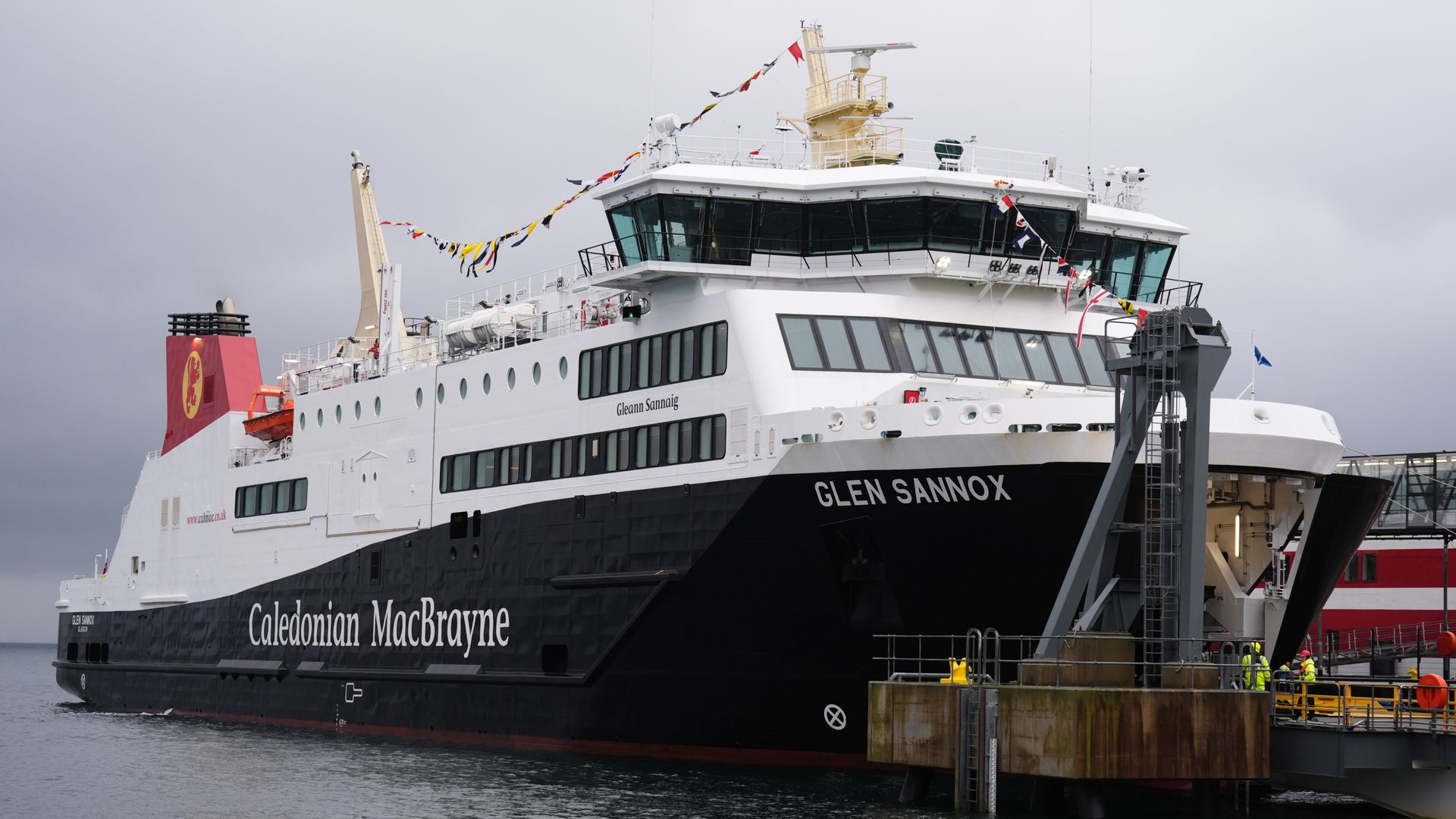
The failure of a state-owned shipyard to deliver critical infrastructure on time and within budget is rarely a localized operational lapse; it is a systemic breakdown of the tripartite relationship between procurement, construction, and government oversight. In the case of Ferguson Marine and the subsequent fallout involving Caledonian Maritime Assets Limited (CMAL), the crisis has transitioned from a localized "ferry scandal" into a high-stakes experiment in state-led industrial turnaround. Success in this context is not measured by the completion of a single vessel, but by the stabilization of the Total Cost of Ownership (TCO) for the national fleet and the preservation of sovereign manufacturing capability.
The Structural Breakdown of Procurement Friction
The core of the inefficiency stems from a misalignment between the design-build cycle and the funding mechanism. When CMAL (the procurement body) and Ferguson Marine (the shipyard) operate under a fixed-price contract in a high-inflation, low-productivity environment, the resulting friction creates a "death spiral" of variations and delays.
- Requirement Creep vs. Technical Debt: Every design modification requested by the procurement body after the keel-laying stage increases the technical debt of the vessel. In the current crisis, the inability to freeze designs early led to exponential increases in labor hours.
- The Information Asymmetry Gap: The government, acting as the ultimate financier, lacks the granular technical data to verify if cost overruns are due to genuine supply chain shocks or internal operational inefficiencies.
- Capital Deadweight: While vessels remain unfinished, the capital tied up in them yields a negative return. This is exacerbated by the need to lease substitute vessels at market rates to maintain lifeline ferry services, effectively paying for the same capacity twice.
The Harbour Buy-up as a Vertical Integration Strategy
The recent strategic move to acquire local harbor infrastructure serves a dual purpose: securing the physical footprint required for expanded operations and eliminating third-party rental or access costs that erode the shipyard's margins. In a clinical business sense, this is a move toward Vertical Integration.
By controlling the harbor, the state-owned entity reduces its exposure to Externalities of Logistics. In traditional shipbuilding, the yard is a point in a chain. By owning the harbor, the yard becomes the hub. This provides a buffer against berth congestion and allows for more aggressive scheduling of sea trials and post-launch fitting out. However, this strategy carries significant risks. The acquisition costs represent an upfront capital expenditure that must be depreciated over decades, requiring a guaranteed pipeline of future contracts to justify the investment. If the yard cannot secure orders beyond the current "beleaguered" contracts, the harbor assets become underutilized "stranded assets."
The Logic of the New Contracts: Risk Mitigation or Sunk Cost Fallacy?
The awarding of new contracts to a shipyard that has struggled with its current workload is often criticized as throwing "good money after bad." From a consultant’s perspective, however, this can be framed as a Strategic Continuity Play.
- Labor Retention: Shipbuilding requires a highly specialized workforce. If the yard remains idle between major projects, the "human capital" migrates to competitors or other sectors. The new contracts act as a retention mechanism to keep the workforce intact for the eventual completion of the most complex vessels.
- Operational Learning Curves: Industrial theory suggests that the "first-of-class" vessel is always the most expensive. The "second-of-class" should benefit from a 10% to 15% reduction in labor hours due to the learning curve. Awarding new contracts allows the yard to apply the painful lessons learned during the scandal to a fresh set of hulls, theoretically lowering the per-unit cost.
- Fixed Cost Absorption: A shipyard has massive fixed overheads. Spreading these costs across a larger number of hulls reduces the burden on any single project.
Quantifying the Opportunity Cost of State Intervention
While the state’s intervention prevents total collapse, it introduces a Market Distortion. Private shipyards must price their bids to include profit and risk margins. A state-supported yard, buffered by government bailouts, can theoretically underbid private competitors or survive despite gross inefficiency. This creates a moral hazard where the shipyard management may prioritize political objectives over operational lean-manufacturing principles.
The true cost of the ferry crisis is not merely the £200m+ overrun; it is the Opportunity Cost of that capital. Those funds, if deployed into green energy infrastructure or digital connectivity, might have yielded a higher Social Return on Investment (SROI). The decision to continue funding Ferguson Marine is therefore a political-economic choice to maintain a "Sovereign Capability" regardless of the immediate fiscal ROI.
The Three Pillars of Shipyard Recovery
For the shipyard to transition from "beleaguered" to "viable," the following structural shifts are mandatory:
- Standardization of Hull Design: The bespoke nature of the current ferry fleet is a primary driver of cost. Moving toward a "Common Platform" design—where multiple vessels share the same engine configurations, electronics, and hull geometries—would allow for bulk procurement of components and streamlined crew training.
- Digitization of the Bill of Materials (BOM): Real-time tracking of every bolt, plate, and cable is required to eliminate the "inventory drift" that has plagued recent projects. Without a digital twin of the construction process, the shipyard remains blind to its own waste.
- Governance Decoupling: The shipyard needs a management layer that is insulated from the 24-hour political news cycle. Decisions regarding technical specifications or labor management must be made on a 10-year horizon, not based on the next parliamentary inquiry.
The Bottleneck of Component Lead Times
A significant portion of the current delay is attributable to the global supply chain for marine propulsion systems and specialized steel. The shipyard's precarious financial position makes it a "High-Risk Customer" for Tier 1 suppliers. This leads to:
- Demanded Pre-payments: Suppliers may require 100% upfront payment, further straining the shipyard’s cash flow.
- De-prioritization: In a crowded global order book, suppliers will prioritize stable, high-volume yards over a single-project site with a history of payment uncertainty.
The "New Contracts" mentioned in recent reports must therefore include government-backed guarantees to suppliers to restore the shipyard’s creditworthiness. Without this, the physical work at the yard will continue to stall regardless of how many harbors the state buys.
Forecasting the Impact of the Harbour Acquisition
The acquisition of the harbor infrastructure will likely provide a short-term boost to the shipyard’s balance sheet through asset revaluation. However, the long-term viability depends on the Utilization Rate. If the harbor is only used for the current, delayed ferry projects, the ROI will be deeply negative. The yard must pivot toward a "Service and Maintenance" model for the wider North Sea fleet or the offshore wind sector to generate diversified revenue streams.
The shift toward offshore wind support is a logical pivot. The skills required for ferry construction—heavy steel fabrication, electrical systems integration, and marine engineering—are directly transferable to the fabrication of offshore wind foundations and substation platforms. This would decouple the shipyard's fate from the domestic ferry procurement cycle.
Strategic Recommendation: The Hard Pivot
The shipyard must move away from the "Crisis Management" phase and into a "Productive Specialization" phase. This requires an immediate halt to bespoke, one-off vessel designs. The Scottish government and CMAL should move to a Block Procurement Strategy, ordering a series of 5 to 10 identical, smaller vessels rather than two massive, overly complex ones.
This allows the shipyard to:
- Perfect a single production line.
- Negotiate volume discounts with propulsion suppliers.
- Create a predictable rhythm for the workforce.
The harbor acquisition should be utilized not just for berthing, but as a site for a dedicated Modular Construction Facility. By building ship sections in a controlled, indoor environment and transporting them to the harbor for final assembly, the yard can mitigate the impact of weather-related delays and improve the precision of the steelwork. The path forward is not found in more bailouts, but in the ruthless application of industrial engineering principles to a legacy manufacturing environment.


