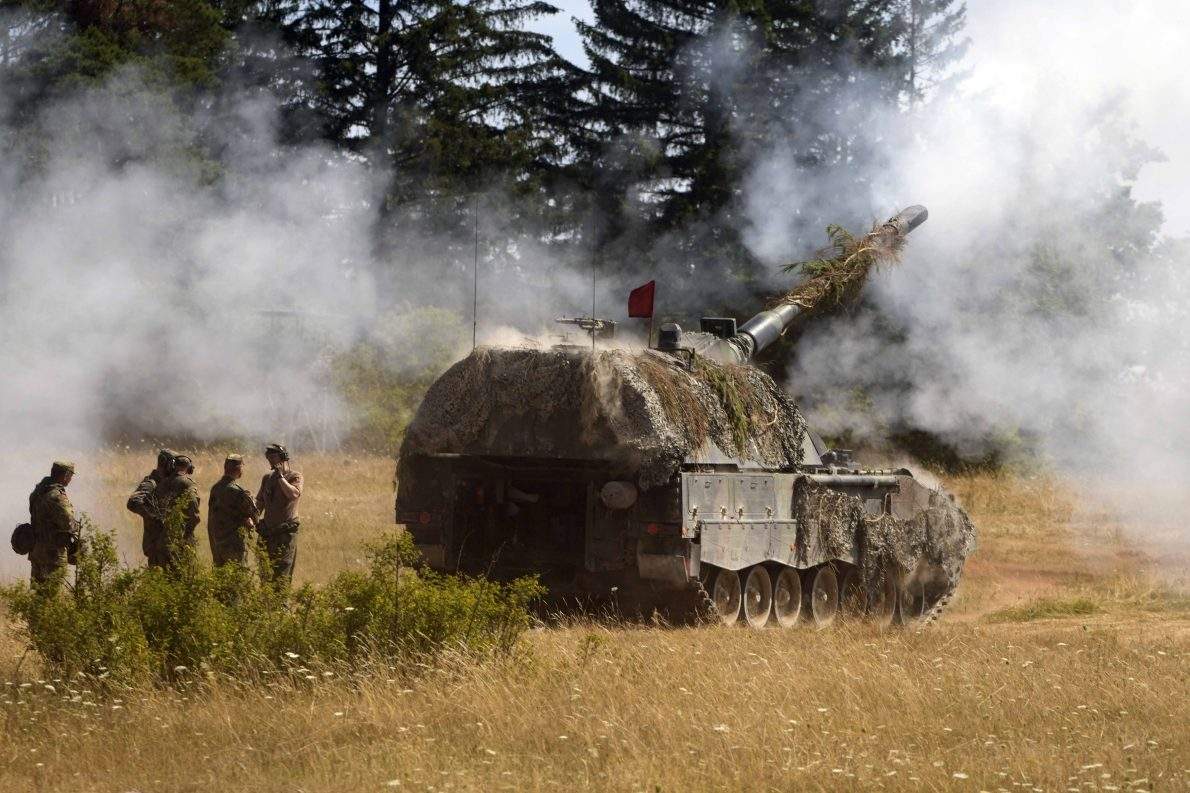
The announced withdrawal of 5,000 U.S. service members from German soil represents a shift from permanent stationing to a transactional posture model. While surface-level reporting focuses on the interpersonal friction between Chancellor Friedrich Merz and President Donald Trump, the move functions as a stress test for the North Atlantic treaty's operational viability. This reduction is not a random retraction of assets; it is a calculated reconfiguration of the European Defense Value Chain. To understand the implications, one must analyze the three structural pillars of this dislocation: the erosion of the permanent basing paradigm, the fiscal burden-sharing recalculation, and the logistical degradation of NATO’s eastern flank.
The Erosion of the Permanent Basing Paradigm
For decades, the presence of U.S. troops in Germany operated under the "Stability via Presence" framework. This logic dictated that fixed assets served as a psychological and physical deterrent. The current administration is replacing this with a "Dynamic Force Employment" model. This change signifies that the U.S. no longer views Germany as a fixed sanctuary for power projection, but rather as one of several competing nodes in a global network.
The Merz administration’s insistence on European strategic autonomy has collided with Washington’s demand for explicit alignment. When Merz advocates for a "German-led European pillar," he introduces a variable that the U.S. executive branch interprets as a reduction in American command-and-control primacy. The withdrawal of 5,000 troops is the physical manifestation of this diplomatic decoupling. It moves the relationship from a legacy of unconditional protection to a conditional service-level agreement.
The Fiscal Burden Sharing Recalculation
The Pentagon’s decision-making process is increasingly governed by a cost-benefit analysis that weighs the maintenance of aging infrastructure in Rhineland-Palatinate and Bavaria against the agility of rotational deployments in Poland or the Baltic states.
The Merz-Trump feud is effectively a negotiation over the "Security Premium." Washington’s logic follows a specific sequence:
- Infrastructure Sunk Costs: High-maintenance permanent bases (e.g., Ramstein, Grafenwöhr) require constant capital injection from the U.S. Treasury.
- Host Nation Support (HNS): The U.S. views German contributions to HNS as insufficient relative to the GDP of the eurozone’s largest economy.
- The Redistribution Factor: By removing 5,000 troops, the U.S. reduces its fixed overhead in a "low-threat" interior zone (Germany) to potentially fund high-readiness capabilities closer to the "high-threat" contact line.
Germany’s failure to meet the 2% NATO spending target consistently over the last decade created a deficit of trust that the Merz government is now struggling to bridge. While Merz has promised a more hawkish fiscal approach to defense, the U.S. executive branch is prioritizing immediate troop movements over long-term German budgetary projections.
Logistical Degradation and Operational Risk
The withdrawal of 5,000 personnel creates a specific bottleneck in the U.S. Army Europe and Africa (USAREUR-AF) command structure. These are not merely "infantry on the ground." They represent the "Tail" in the "Tooth-to-Tail" ratio—specialists in logistics, communications, and medical support.
Removing these assets from Germany impacts the following operational functions:
- Intra-Theater Mobility: Germany serves as the primary transit hub for equipment moving from Atlantic ports to eastern borders. A reduction in personnel slows the throughput of heavy armor and ammunition during a crisis.
- The "Hub-and-Spoke" Vulnerability: If the German "hub" is weakened, the "spokes" (bases in Poland, Romania, and the Baltics) lose their primary sustainment node.
- Medical Evacuation (MEDEVAC): Landstuhl Regional Medical Center relies on a specific density of nearby active-duty support. Reducing troop levels nearby degrades the secondary support layer for the military's most critical medical facility in the hemisphere.
The Merz Doctrine vs. The America First Strategy
Chancellor Friedrich Merz represents a more assertive, traditionally conservative German leadership that differs significantly from the previous administration's cautious approach. Merz seeks to reform the Bundeswehr into a force capable of independent action. However, this "German First" defense posture triggers a "U.S. Exit" response from an administration that views independent European military power as a competitor to American defense industry dominance.
The friction is not merely a personality clash; it is a fundamental disagreement on the architecture of the European security map. The U.S. administration views troop presence as a "product" for which the host nation must pay a premium. Merz views troop presence as a "treaty obligation" that should not be subject to annual renegotiation.
This creates a Deterrence Gap. As troops leave, the threshold for adversarial escalation lowers. The vacuum left by 5,000 U.S. troops cannot be immediately filled by the Bundeswehr, which currently faces equipment readiness rates that fall below 50% in key categories like armored transport and heavy lift helicopters.
Quantifying the Economic Impact on Host Communities
The withdrawal exerts a direct deflationary pressure on local German regional economies. The U.S. military’s economic footprint in Germany is measured in billions of euros annually, through:
- Direct Employment: Thousands of German "Local National" (LN) employees serve in maintenance, administration, and security roles.
- Retail and Housing Leakage: U.S. service members spend a significant portion of their disposable income in the local economy.
- Contractual Services: Local German firms provide construction, utilities, and supply chain services to the garrisons.
The 5,000-troop reduction acts as a localized economic shock. In towns like Kaiserslautern or Vilseck, the departure of even a single brigade-sized element can lead to a 10-15% contraction in the local service sector. This economic leverage is a tool Washington is using to force Merz into concessions on trade or energy policy.
The Strategic Relocation to the Eastern Flank
A critical hypothesis among defense analysts is that these 5,000 troops are not returning to the continental United States (CONUS), but are being earmarked for "Contested Zone" stationing. Poland has frequently expressed a willingness to provide billions in funding for a permanent U.S. presence ("Fort Trump").
This creates a regional imbalance:
- Germany loses the prestige and economic benefit of being the primary U.S. partner.
- Poland gains a direct security guarantee and deeper integration with U.S. command structures.
- The U.S. gains a more compliant host nation that is willing to subsidize the deployment costs.
This "Eastward Shift" isolates Berlin and forces Merz to choose between doubling down on a European-only defense solution or capitulating to Washington’s fiscal demands.
Risks of the Transactional Security Model
The primary risk of this withdrawal is the signaling effect. When troop movements are dictated by political feuds rather than threat assessments, the credibility of Article 5 (collective defense) is diluted. Adversaries do not see a "rebalancing of assets"; they see a "fracturing of resolve."
Furthermore, the logistical cost of moving 5,000 troops, their families, and their equipment often exceeds the annual savings of the withdrawal itself. The Pentagon must account for:
- PCS (Permanent Change of Station) Costs: Transporting households and vehicles across the Atlantic.
- Facility Decommissioning: Environmental remediation and handover of facilities to the German government.
- Redundant Infrastructure: Building new capacity in a different location to house the displaced units.
The Immediate Strategic Requirement for Berlin
The Merz government must move beyond rhetorical defense of the status quo and execute a three-stage response to prevent further attrition of the U.S. presence:
- Immediate Hard-Asset Investment: Accelerate the procurement of U.S.-made systems (e.g., F-35s) to signal economic alignment and interdependence.
- Structural Burden Sharing: Propose a "Joint Infrastructure Fund" where Germany assumes 100% of the maintenance costs for U.S. bases in exchange for a freeze on troop withdrawals.
- Bilateral Security Treaty (Non-NATO): Explore a supplemental agreement that codifies troop levels outside the broader NATO framework, making them less susceptible to the volatility of alliance-wide negotiations.
The withdrawal of 5,000 troops is a warning shot across the bow of the European security architecture. If the Merz administration fails to professionalize its response and continues to treat the U.S. presence as an entitlement, the 5,000 will be merely the first wave of a total tectonic shift. The focus must remain on the logistical reality: an army that cannot be sustained from its rear is an army that cannot fight at its front. Germany must decide if it will remain the "Rear" for the U.S., or if it is prepared to become the "Front" for itself.