The sun over Akrotiri does not set so much as it dissolves. It melts into a Mediterranean blue so deep it looks like ink, staining the limestone cliffs of Cyprus and the long, gray runways of the Royal Air Force. For the tourists sipping brandy sours in the tavernas of Limassol, just a few miles up the coast, the base is a distant silhouette. A fence. A series of antennas. A relic of empire that occasionally rumbles with the departure of a Typhoon fighter jet.
On a Tuesday that felt like every other Tuesday, that silence didn't break. It evaporated.
Imagine a young technician, let's call him Elias, stationed near the perimeter. He isn't thinking about geopolitics. He is thinking about the heat, the salt air corroding the equipment, and the football scores from the night before. Then comes the buzz. It isn't the screaming roar of a jet engine or the mechanical whir of a helicopter. It is a high-pitched, angry drone, like a hornet caught in a jar.
Then, the impact.
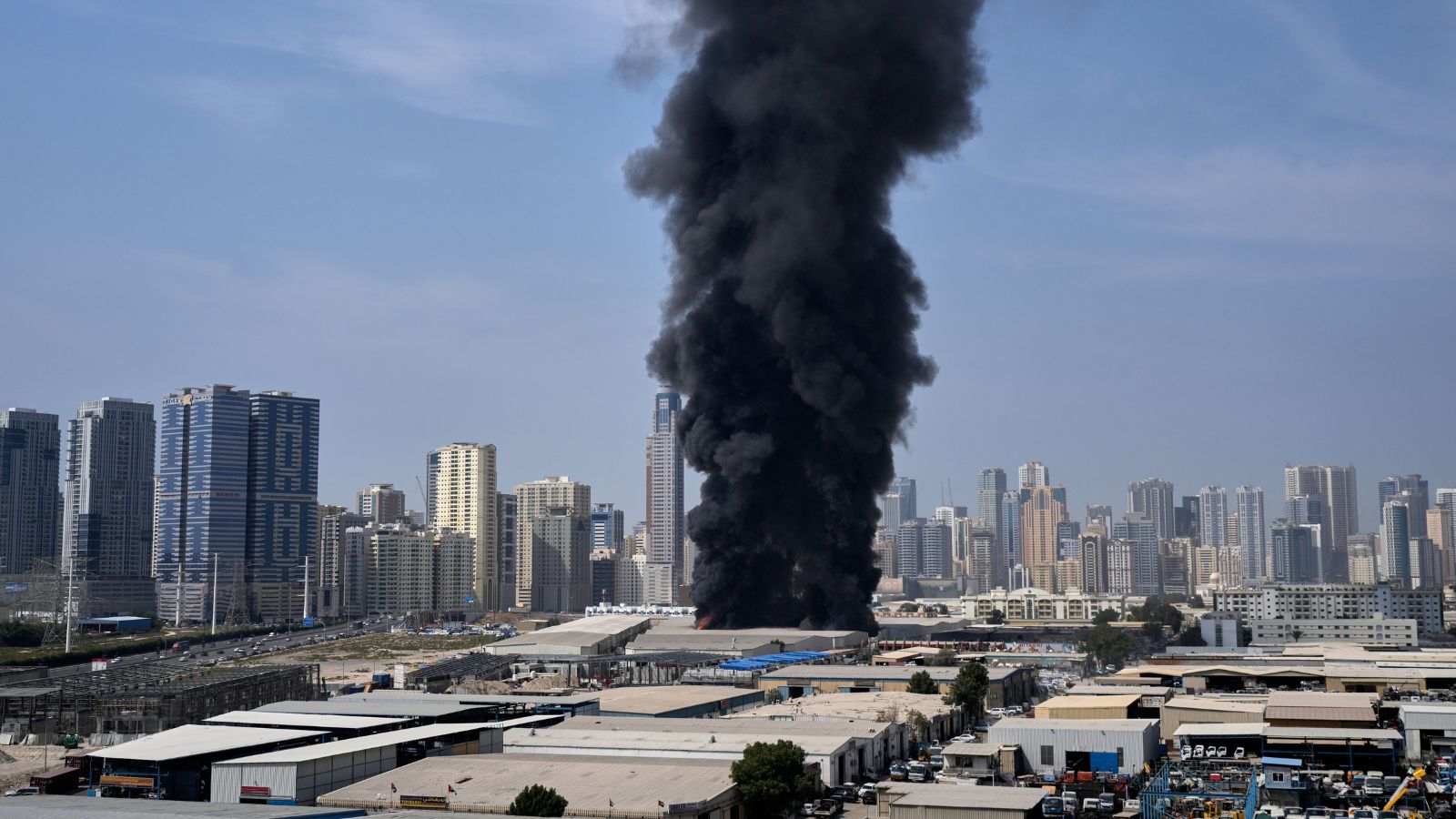
A flash of orange. A shockwave that rattles the teeth. A plume of black smoke rising against that perfect, postcard sky.
In the immediate aftermath, the wires went hot. The headlines in London and Nicosia screamed of escalation. A British sovereign base, struck by an unmanned aerial vehicle. In the binary logic of the twentieth century, this has a name. It is called an act of war. When a foreign entity drops explosives on a military installation, the machinery of state usually grinds toward retaliation. The flags go up. The rhetoric sharpens.
Yet, within hours, the British government did something far more modern, and far more unsettling. They leaned into the microphone and whispered a denial.
"We are not at war," the official statement suggested. The strike was an "incident." It was "under investigation." It was a footnote in a larger, messier regional tension.
This is the new anatomy of conflict. It is a world where you can be attacked, bleed, and lose hardware, all while the diplomats insist that the peace remains intact. We have entered the era of the "grey zone," a twilight of international relations where the lines between a terrorist act, a state-sponsored strike, and a tragic accident are blurred until they disappear.
The Geography of a Target
To understand why a drone over Cyprus matters to someone sitting in a coffee shop in Birmingham or a high-rise in New York, you have to look at the map. Akrotiri is not just a base. It is a giant ear and a long arm.
From these runways, the UK projects power into the Middle East. It is the staging ground for missions against ISIS and the monitoring station for half a dozen shifting frontlines. For an adversary, hitting Akrotiri is like poking a sleeping giant in the eye with a needle. It isn't enough to kill the giant, but it’s enough to prove the giant can be touched.
The drone used in the strike was likely a low-cost, off-the-shelf piece of technology modified in a garage or a hidden workshop. This is the terrifying democratization of violence. Thirty years ago, hitting a British military base required a cruise missile, a heavy bomber, or a sophisticated special forces team. Today, it requires a three-thousand-dollar kit and a basic understanding of GPS coordinates.
Consider the disparity. On one side, you have a multi-billion-pound defense infrastructure, complete with radar arrays, interceptor jets, and elite security details. On the other, a plastic frame with four rotors carrying a pound of high explosives. The drone doesn't need to win a dogfight. It only needs to land once.
The Language of Denial
Why would a government downplay an attack on its own soil? The answer lies in the trap of escalation.
If the UK acknowledges this as an act of war, the public demands a response. A response requires a target. But in the age of proxy shadows, who do you hit? The group that launched the drone? The nation that funded the group? The factory that built the engine?
By saying "we are not at war," the state buys itself the most precious commodity in modern politics: time.
But for the people living on the base, that time feels different. For the families in the married quarters, the "incident" isn't a strategic nuance. It is the reason they look at the sky every time they hear a hum. It is the reason the gates stay closed a little longer. The psychological toll of the grey zone is that it robs people of the certainty of safety without giving them the clarity of a front line.
Elias, our hypothetical technician, stands by the scorched earth where the drone hit. He sees the investigators in their white suits, bagging fragments of carbon fiber. He knows that if he had been standing five meters to the left, his name would be in a briefing he was never meant to read. He is told everything is under control. He is told the mission continues. But he also sees the new jammer towers being erected, their steel skeletons a silent admission that the sky is no longer empty.
The Invisible Stakes
We often treat these events as isolated blips on a news ticker. We see the headline, feel a momentary surge of anxiety, and then scroll to the next story. But the strike on Akrotiri is a symptom of a deeper fever.
The global order is being rewired. The old rules—the Westphalian system where states held a monopoly on organized violence—are fraying at the edges. When a drone strikes a base and the victim says "nothing to see here," the very concept of sovereignty begins to leak.
It creates a vacuum. If there is no consequence for a strike, there will be a second strike. Then a third. Each one will be slightly more daring, slightly more destructive, testing the threshold of what "not at war" actually means. We are watching a live experiment in how much a superpower can endure before it is forced to shatter its own narrative of peace.
The danger isn't just the explosion. It's the normalization.
We are becoming a society that accepts a baseline level of kinetic chaos. We accept that ships will be harassed in the Red Sea, that GPS signals will be jammed over the Baltic, and that drones will fall on Mediterranean bases. We label these as "disruptions" or "challenges." We use bloodless language to mask the fact that the world is getting louder, even as we try to keep our eyes closed.
The Hum in the Night
The sun has fully set now. The ink of the Mediterranean has turned to a void. At Akrotiri, the lights of the runway flicker on, a long string of amber pearls stretching into the darkness.
Somewhere in the distance, a jet takes off. The roar is comforting in its familiarity. It represents the old way of doing things—big, loud, and visible. But beneath the thunder of the Typhoon, there is still that other sound. The one you have to strain to hear.
It is the sound of a world where the battlefield is everywhere and nowhere. Where a base in Cyprus is both a fortress and a target. Where a government’s most powerful weapon isn’t a missile, but a press release that insists everything is fine.
As the night air cools, the smell of burnt plastic and cordite still lingers near the perimeter fence. It is a faint scent, easily ignored if you aren't looking for it. But for those who were there when the silence evaporated, it is a reminder that the war they are told isn't happening has already arrived at their doorstep.
The giant hasn't woken up yet. It is simply shifting in its sleep, pretending the sting was just a dream.