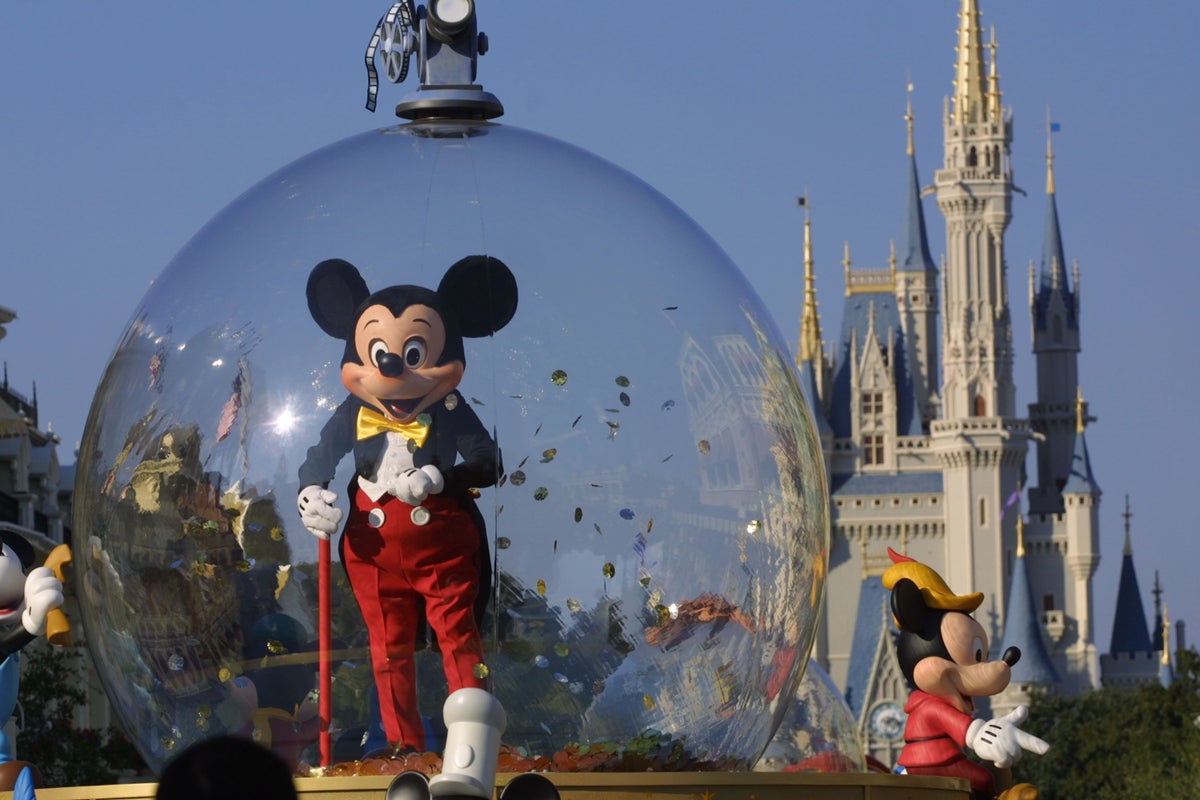
When a vacation at the "Most Magical Place on Earth" ends in a jail cell instead of a hotel room, the narrative usually follows a predictable script. A guest has too many overpriced margaritas at Epcot, a scuffle breaks out in a two-hour line for a roller coaster, or a parent loses their temper with a tired teenager. But a recent lawsuit filed against Walt Disney Parks and Resorts turns that script on its head, alleging that a woman experiencing a life-threatening medical emergency was met not with first aid, but with mockery and metal restraints.
The incident centers on a guest who claims she suffered a severe health crisis while on Disney property. According to the legal filing, instead of deploying the world-class emergency response teams Disney often boasts about, park staff allegedly laughed at her distress, dismissed her symptoms as intoxication or non-compliance, and coordinated with local law enforcement to have her arrested. This case isn't just about one bad day at a theme park. It exposes the widening gap between Disney’s polished public image and the increasingly militarized, high-pressure environment of its private security apparatus.
The Brutal Reality of Private Policing in the Magic Kingdom
Disney World is not just a theme park; it is a self-governing jurisdiction. For decades, the Reedy Creek Improvement District—now the Central Florida Tourism Oversight District—gave Disney unprecedented control over its infrastructure, including its security and its relationship with the Orange County Sheriff’s Office. This creates a unique ecosystem where the line between "guest service" and "law enforcement" becomes dangerously thin.
When a guest falls ill, the standard operating procedure should be an immediate medical pivot. However, veteran industry analysts have noted a shift in how front-line "Cast Members" are trained to handle anomalies. There is an institutional pressure to keep the crowds moving and the "show" running at all costs. In this high-stakes environment, a person collapsing or acting erratically can be viewed as a disruption to the guest experience rather than a human being in need of help.
The lawsuit alleges a total failure of empathy. If the claims are proven true, they suggest a culture where security personnel have become cynical, viewing guests through a lens of suspicion. This is the "security-first" mindset that has slowly replaced the "hospitality-first" model. When security guards—often underpaid and overstressed—are the first responders, they are trained to look for threats. A seizure can look like drug use. Diabetic ketoacidosis can smell like alcohol. Extreme dehydration can cause slurred speech and combativeness. Without rigorous medical training, a security guard sees a "problem guest" where a paramedic would see a patient.
The Arrest as a Liability Shield
There is a tactical reason why a corporation might prefer an arrest over a hospital transport. Once a guest is in the custody of the Orange County Sheriff’s Office, the liability shifts. If Disney staff admit a guest is having a medical emergency on their watch, they own the timeline of care and the potential negligence if that care is delayed. If they label that guest as "disorderly" and hand them over to the police, the narrative changes from a medical failure to a criminal disruption.
The Psychology of the Laughing Staffer
One of the most damaging allegations in the current lawsuit is that staff members laughed while the guest suffered. To a civilian, this sounds like pure malice. To an industry analyst, it sounds like "compassion fatigue."
Disney employees deal with tens of thousands of people every day. They see the best and worst of humanity, often in 95-degree heat. Over time, a psychological defense mechanism kicks in. Employees start to decenter the guest’s humanity to survive the shift. This "othering" of the guest is how you get a group of professionals standing around a suffering woman and treating her pain as a joke or a performance. It is a systemic failure of leadership and training that allows this kind of toxicity to take root in a brand built on "magic."
The Legal High Ground and the Buried Evidence
Disney’s legal team is legendary for its "scorched earth" tactics. They rarely settle early, and they use their vast resources to bury plaintiffs in motions and depositions. In this case, the defense will likely lean heavily on body camera footage from the arresting officers and Disney’s internal surveillance network.
However, Disney’s private surveillance is a black box. Unlike police body cameras, which are subject to public records requests, Disney’s internal footage is private property. They can choose what to share and what to "lose" due to technical glitches. This creates a massive power imbalance. A guest has their word; Disney has a multi-million dollar digital panopticon.
Why the Medical Emergency Defense is Hard to Prove
Proving a medical emergency in court after the fact is a grueling process. It requires:
- Contemporaneous Medical Records: Hospital logs from the hours immediately following the arrest.
- Expert Testimony: Neurologists or cardiologists explaining how the symptoms were misinterpreted.
- Witness Corroboration: Other guests who saw the incident and can testify to the staff’s demeanor.
The challenge for the plaintiff is that the arrest itself stains the record. Most people see "arrested at Disney" and immediately assume the guest was the aggressor. The stigma of a mugshot is a powerful tool for a corporation looking to discredit an accuser.
The Safety vs. Security Paradox
Disney has spent billions on security technology since 2015. Metal detectors, facial recognition, and plainclothes "behavioral detection" officers are everywhere. This has undeniably made the parks safer from external threats, but it has made the internal atmosphere more rigid.
When you treat a theme park like a high-security airport terminal, you lose the flexibility required to handle human crises. The "Security Cast Members" are often former law enforcement or military. They are trained for escalation and containment. But a grandmother having a stroke doesn't need containment; she needs a gentle hand and a gurney.
The shift toward hiring "hard" security over "soft" guest relations has created a gap where medical emergencies fall through the cracks. Disney’s own internal handbooks emphasize that safety is the first "Key" of their service model. But "safety" in a post-9/11 world has become synonymous with "security," and those two things are not the same. Security is about stopping bad people. Safety is about protecting all people.
The Economic Toll of a Reputation in Tatters
For a company like Disney, the brand is everything. They charge a premium—often thousands of dollars for a single week—based on the promise of a curated, safe, and joyful experience. If the public starts to believe that a trip to Orlando could end with a heart attack in a holding cell, that premium evaporates.
We are seeing a trend of "Disney Fatigue" among frequent travelers. It’s not just the prices; it’s the friction. The Genie+ system, the dining reservations, the lightning lanes—it’s all a high-stress logistical nightmare. When you add a hostile security force to that mix, the "magic" starts to feel like a facade.
What This Lawsuit Means for Future Travelers
If you are heading to a major theme park, the lesson here is grim but necessary. Do not rely on park staff to be your advocate in a crisis.
- Wear Medical Identification: If you have a condition, a physical medical alert bracelet is harder for security to ignore than a verbal claim.
- Record Everything: If you see a family member being treated unfairly, start filming. In many cases, the only reason these lawsuits gain any traction is because of third-party video that contradicts the official corporate report.
- Demand Paramedics, Not Security: If you are in distress, use the specific words: "I am having a medical emergency. I need a licensed paramedic, not a security guard."
The Corporate Silence
Disney’s standard response to these lawsuits is a brief statement about "safety being our top priority" and a refusal to comment on ongoing litigation. But silence is not a strategy. As more of these stories emerge—of guests being trespassed for minor infractions or ignored during health crises—the pressure on the company to reform its security culture will reach a breaking point.
The lawsuit alleges that the guest’s civil rights were violated, but the deeper violation is one of the "unwritten contract." We give Disney our money, our time, and our trust. In exchange, they are supposed to keep the world outside the gates. When they bring the worst parts of the outside world—the cynicism, the over-policing, the lack of empathy—inside the park, the contract is broken.
The Architecture of Exclusion
Disney’s physical environment is designed to funnel people. It is an architecture of control. When someone stops moving in that funnel, they are an obstruction. The "laughing" staff members mentioned in the lawsuit weren't just being cruel; they were reacting to a "clog" in the system. This is the dark side of efficiency-driven tourism. Every minute a guest spends being treated for a medical issue is a minute the "show" is interrupted for everyone else.
This creates a perverse incentive to remove the guest from the premises as quickly as possible. An ambulance ride to a local hospital is a quiet exit. An arrest is a loud, definitive removal that sends a message to other guests: "Behavioral deviations will not be tolerated." The problem arises when the "behavior" is actually a dying body’s cry for help.
A Broken System of Accountability
Who watches the watchers at Disney World? Because they operate on private property, they are not subject to the same oversight as a municipal police department. There is no civilian oversight board for Disney Security. There is no body of elected officials who can demand a change in their training protocols.
The only accountability comes through the court system. This lawsuit is a blunt instrument, but it is the only one the public has left. If a jury finds that Disney’s staff acted with "malice or reckless indifference," the resulting punitive damages could be the only thing that forces the Mouse to retrain its enforcers.
The "Magic Kingdom" is a carefully constructed illusion. It requires the total buy-in of the guests and the total discipline of the staff. But when that discipline turns into derision, the illusion doesn't just fade; it becomes a nightmare. For the woman in this lawsuit, the gates of the kingdom didn't lead to a castle, but to a cage. And as long as Disney prioritizes crowd flow and liability shifts over basic human triage, she won't be the last.
The path forward for Disney isn't more cameras or better AI-driven crowd analytics. It is a return to the "soft" skills that made the parks legendary in the first place. They need to empower their employees to be human beings first and corporate sentries second. Until then, the most dangerous thing you can do at a Disney park is get sick in front of the wrong person.
Document your health, keep your phone charged, and never mistake a "Cast Member" for a friend. They are employees of a multi-billion dollar entity whose primary goal is to keep the line moving. If you fall, make sure you have someone with you who can scream loud enough to break the "show," because the people in the costumes might just be waiting for the punchline.


:max_bytes(150000):strip_icc()/asturian-cider-sidra-asturiana-3083087-FINAL-a366e2fe9b294136901c0eb49a148f1a.jpg)