The Great Altruism Grift
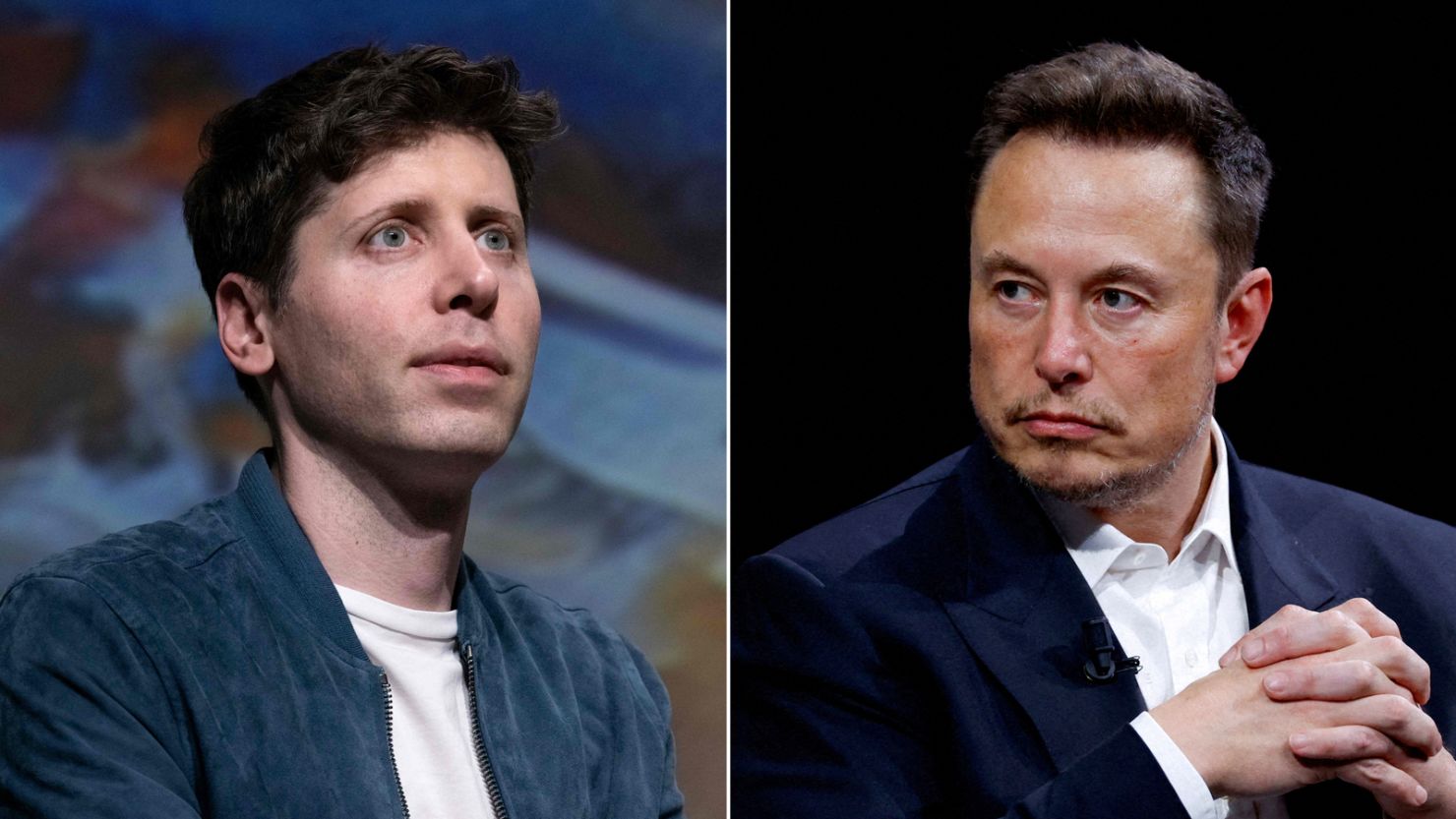
Silicon Valley loves a good Greek tragedy. The current narrative surrounding the legal cage match between Elon Musk and Sam Altman is being sold to the public as a high-stakes battle for the soul of humanity. The media frames it as a binary choice: Musk’s "safety-first" crusader vs. Altman’s "move fast and monetize" CEO.
It is a lie. Both of them.
The common consensus—the lazy take you’ll find in every mid-tier tech blog—is that this is a dispute over the "founding mission" of OpenAI. They argue about whether the 2015 non-profit agreement was a binding contract or a pinky swear. They debate if GPT-4 constitutes AGI (Artificial General Intelligence). This focus is a distraction.
This isn't a fight about saving the world. It is a fight about who gets to own the most valuable intellectual property in the history of the species. When billions of dollars are on the line, "humanity" is just the marketing department's word for "market share."
The Non-Profit Fiction
Let's address the elephant in the server room: the idea that OpenAI was ever going to remain a pure, academic non-profit was a fantasy from day one. I’ve watched enough seed rounds to know that nobody—not even Musk—drops $44 million into a black hole without expecting some form of leverage in return.
Musk is suing because he got outmaneuvered. Plain and simple. He realized too late that he funded the research and development for what would become Microsoft’s de facto AI department. His "concern for safety" is the perfect legal shield for a very human emotion: buyer's remorse.
The competitor articles will tell you that the legal core of the case is the "Founding Agreement." They are wrong. There is no formal, signed "Founding Agreement." There are emails. There are vibes. There are shared dreams over expensive dinners. In the world of high-stakes litigation, relying on "vibes" is a death sentence. Altman knew this. He structured the transition to a capped-profit model with surgical precision, ensuring that while the mission statement stayed fluffy, the equity stayed firm.
The AGI Goalpost Shift
The most intellectually dishonest part of this entire saga is the definition of AGI. OpenAI’s charter states that their mission is to ensure AGI benefits all of humanity and that AGI is exempt from IP licenses to Microsoft.
Now, we see a pathetic dance around what "General" actually means.
If you define AGI as "a system that can outperform humans at most economically valuable work," we are arguably already there in specific sectors. But the moment OpenAI admits they’ve hit that milestone, the Microsoft checks stop clearing. So, we witness the birth of "moving goalpost syndrome."
- Common Myth: AGI will be a sentient consciousness that wakes up and talks to us.
- The Reality: AGI is a suite of high-reasoning models that can autonomously execute complex chains of logic.
Musk argues GPT-4 is a de facto AGI. Altman says it’s just a tool. This isn’t a scientific debate; it’s a royalty dispute. If it’s AGI, it belongs to the public (theoretically). If it’s just a "Large Language Model," it belongs to the shareholders. Follow the money, not the philosophy.
Why "Open" Was Always a Marketing Tactic
The name "OpenAI" was the greatest bait-and-switch in corporate history. In 2015, being "open" was a way to recruit the best talent who were tired of the "walled gardens" at Google and Meta. It was a talent acquisition strategy, not a moral stance.
Once the talent was in the building and the weights were trained, the doors slammed shut. The excuse? "Safety."
This is the most brilliant move in the Altman playbook. By claiming that the models are "too dangerous" to be open-sourced, OpenAI effectively created a state-sanctioned monopoly. They are using the threat of "AI extinction" to lobby for regulations that only they can afford to comply with.
I’ve seen this play before in the tobacco and oil industries. You don’t fight regulation; you write the regulation to ensure no small competitor can ever clear the bar. Musk’s lawsuit correctly identifies this hypocrisy, but his solution—making everything open-source—is equally flawed. Open-sourcing the most powerful models in the world without a governance structure is like handing out the blueprints for a bioweapon and calling it "democratization."
The Compute Cartel
Stop asking about "values" and start asking about H100s.
The real war isn't happening in a courtroom in San Francisco. It’s happening in the supply chain. The Musk vs. Altman feud is actually a proxy war for compute dominance.
- OpenAI has the Microsoft Azure backbone.
- Musk has xAI and the massive data sets from X (formerly Twitter) and Tesla’s real-world driving data.
The legal battle is an attempt to slow down the opponent's access to the "recursive loop"—the moment when an AI begins to generate its own high-quality synthetic training data. Whoever hits that point first wins. Everything else—the tweets about "Base Reality," the concerns about "woke AI," the lawsuits—is just noise to distract the regulators while the data centers are being built.
The Tragedy of the Commons
The irony is that both sides are right about the other’s flaws.
Musk is right: OpenAI has become a closed-source, profit-seeking subsidiary of the world’s largest software company. They have abandoned the transparency that was promised to the early donors and the public.
Altman is right: Musk is a disgruntled founder who is using the legal system to handicap a competitor he couldn't beat in the open market. Musk's own AI company, xAI, is not a non-profit. It is not "open." It is a direct competitor for the same talent and the same chips.
Stop Asking if AI Will Kill Us
The "People Also Ask" sections are filled with questions like: "Is AI dangerous?" and "Should we pause AI development?"
These are the wrong questions. The danger isn't a rogue robot. The danger is the concentration of power. We are currently watching two of the most powerful men on Earth fight over who gets to be the high priest of the new digital god.
The real threat isn't that AI will "wake up" and decide it hates humans. The threat is that AI will be used to perfectly optimize the extraction of value from every human interaction, and the keys to that machine will be held by one of two men who are currently behaving like toddlers in a sandbox.
The Actionable Truth
If you are a developer, a founder, or an investor, stop waiting for the outcome of this lawsuit to decide your strategy.
- Bet on the Infrastructure, Not the Drama: The lawsuit won't stop the models from getting better. It will only change whose logo is on the login screen.
- Assume Closed-Source is the Standard: Regardless of the "OpenAI" name, the era of high-tier open-source weights is coming to an end. The costs of training are too high for anyone to give them away for free.
- Build for Agency, Not Just Chat: The next phase isn't about which LLM is better at writing poetry. It’s about which model can execute tasks in the real world.
The Musk vs. Altman saga is a performance. It’s a distraction designed to make us feel like there is a "moral" side to choose. There isn't. There are just two different visions of a monopoly. One is draped in the flag of "humanity," and the other is draped in the flag of "freedom." Both lead to the same place: a world where a few lines of proprietary code dictate the limits of human potential.
Pick your poison. Or better yet, stop drinking it.