For decades, Mohammed Deif was the ghost haunting Israel's intelligence apparatus. He survived seven assassination attempts, lost an eye, reportedly lost limbs, and spent his life moving between shadows. They called him the "Cat with Nine Lives." But his luck ran out in a cratered compound in Khan Younis.
When Israel initially announced they targeted the head of Hamas’s military wing in a massive July strike, the world waited for confirmation. Hamas denied it. They kept denying it for months, clinging to the myth of his invincibility. It took over half a year for the group to finally admit what Israeli intelligence already knew: the architect of the October 7 attacks was dead.
This wasn't just another targeted killing. It radically altered the landscape of the Gaza conflict. Understanding why his death took so long to confirm, how he was betrayed, and why his absence leaves a vacuum that Hamas cannot easily fill changes how we view the ongoing war.
How the Mastermind Was Finally Tracked Down
Deif spent thirty years avoiding electronic devices. He didn't use cell phones. He didn't look at computer screens. He communicated through a highly trusted, tightly controlled network of physical couriers. It was an old-school strategy that worked perfectly until it didn't.
According to intelligence leaks, the weak link was his own courier. Israeli intelligence managed to turn a key individual within Deif's inner circle. This courier provided the exact logistics of Deif's movements, including his arrival at a compound belonging to Rafa’a Salameh, the commander of Hamas’s Khan Younis Brigade.
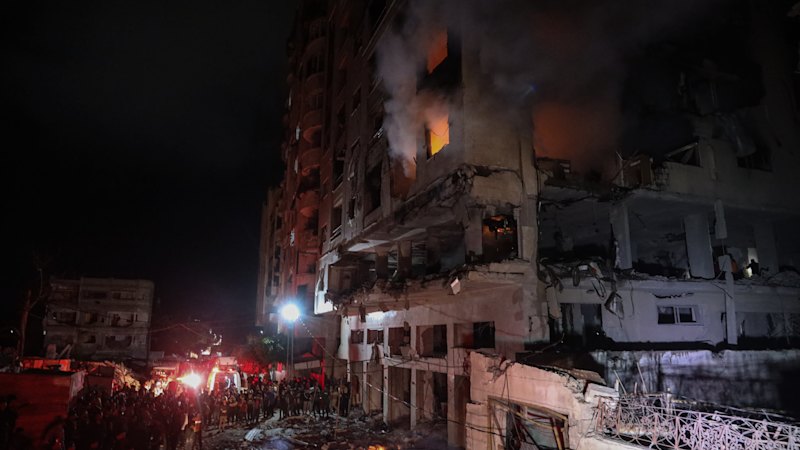
When Deif walked into that compound, Israeli fighter jets were already overhead. The strike was brutal and massive. Over 90 people were killed in the surrounding area, including displaced civilians living in nearby tents. The sheer force of the bombardment meant that confirming Deif’s death was a nightmare for both sides. His remains were so badly disfigured that Hamas’s internal leadership struggled to verify the DNA for months.
The Internal Chaos Behind the Silence
Why did Hamas wait over six months to admit he was gone? It wasn't just about morale. It was about sheer operational panic.
Deif wasn't just a commander; he was the co-founder of the Qassam Brigades. He was the man who shifted Hamas from a localized militant group into an army with a massive subterranean tunnel network and long-range rocket capabilities. Admitting his death meant admitting that Israel had successfully penetrated their deepest security layers.
While the group stayed quiet, Israel systematically chipped away at the rest of the leadership hierarchy. Look at the names that have dropped since the war escalated:
- Yahya Sinwar, the overall leader in Gaza, hunted down and killed.
- Marwan Issa, Deif's direct deputy, killed in an airstrike.
- Ismail Haniyeh, the political chief, assassinated in Tehran.
- Rafa’a Salameh, the Khan Younis chief who died right beside Deif.
By the time Hamas spokesman Abu Obeida finally released a video statement confirming Deif had been killed, it felt less like a strategic announcement and more like an admission of the obvious. The group had run out of lies to tell their own followers.
What This Means for the Future of Hamas
You don't just replace a guy who spent 30 years building a clandestine army. Deif's successor, Mohammed Sinwar (brother of the late Yahya Sinwar), inherits a completely broken command structure.
The International Criminal Court eventually canceled its arrest warrant for Deif in early 2025 because, well, you can't prosecute a corpse. But the legal and political shockwaves remain. The loss of Deif means Hamas has lost its institutional memory. The tactical expertise required to manage thousands of fighters across hundreds of miles of underground tunnels is gone.
If you are tracking the geopolitical fallout, the next steps don't involve a grand Hamas resurgence. They involve fragmentation. Without a centralized, mythic figure like Deif to hold the military wing together, local commanders are increasingly operating on their own. This makes a unified ceasefire negotiation incredibly difficult because there's no single authority left who can force every fighter to lay down their weapons. Watch the regional shifts closely over the coming weeks; the vacuum left in Gaza is already drawing in heavier involvement from external actors trying to micro-manage what remains of the Qassam Brigades.
Hamas Confirms The Killing Of Military Commander Mohammed Deif
This news broadcast provides critical context regarding Hamas's delayed official statement and breaks down the historical impact of Mohammed Deif's decades-long leadership within the militant organization.