Geopolitics isn't a science; it's a theater of distractions. When headlines scream about two Pakistani astronauts heading to a Chinese space station, the media treats it like a heartwarming milestone in international cooperation. It’s framed as a "leap" for South Asian technology and a "win" for diplomacy.
That narrative is a lie. If you found value in this piece, you should check out: this related article.
This isn't a story about space exploration. It's a story about a landlord letting a tenant sit in the driver’s seat of a parked car while they take photos for the neighbors. If you think this mission signifies Pakistan becoming a space power or China suddenly adopting a philosophy of egalitarian cosmic sharing, you haven't been paying attention to how Beijing builds its empire.
The Rent-A-Rocket Illusion
The consensus view suggests that by training and launching Pakistani pilots, China is helping a strategic ally bridge the technological divide. This is the "lazy consensus." In reality, this is a calculated move to secure a permanent terrestrial foothold under the guise of celestial glory. For another angle on this story, see the recent update from Ars Technica.
Pakistan’s space agency, SUPARCO, was founded in 1961—years before China’s CNSA. Yet, decades later, Pakistan remains entirely dependent on foreign hardware to get into orbit. Sending "foreign astronauts" to the Tiangong space station is a symbolic PR stunt designed to mask a fundamental lack of domestic infrastructure.
China isn't teaching Pakistan how to fish; they are selling them a very expensive, one-time ticket to a fish dinner. True space sovereignty isn't bought; it’s built through indigenous R&D, supply chain independence, and a massive, sustained budget that Pakistan’s economy currently cannot support. When these astronauts return, the technical knowledge stays in Chinese servers. The "partnership" ends the moment the hatch closes.
Debt Traps in Low Earth Orbit
We need to talk about the cost. Nothing in space is "free" or "mutual."
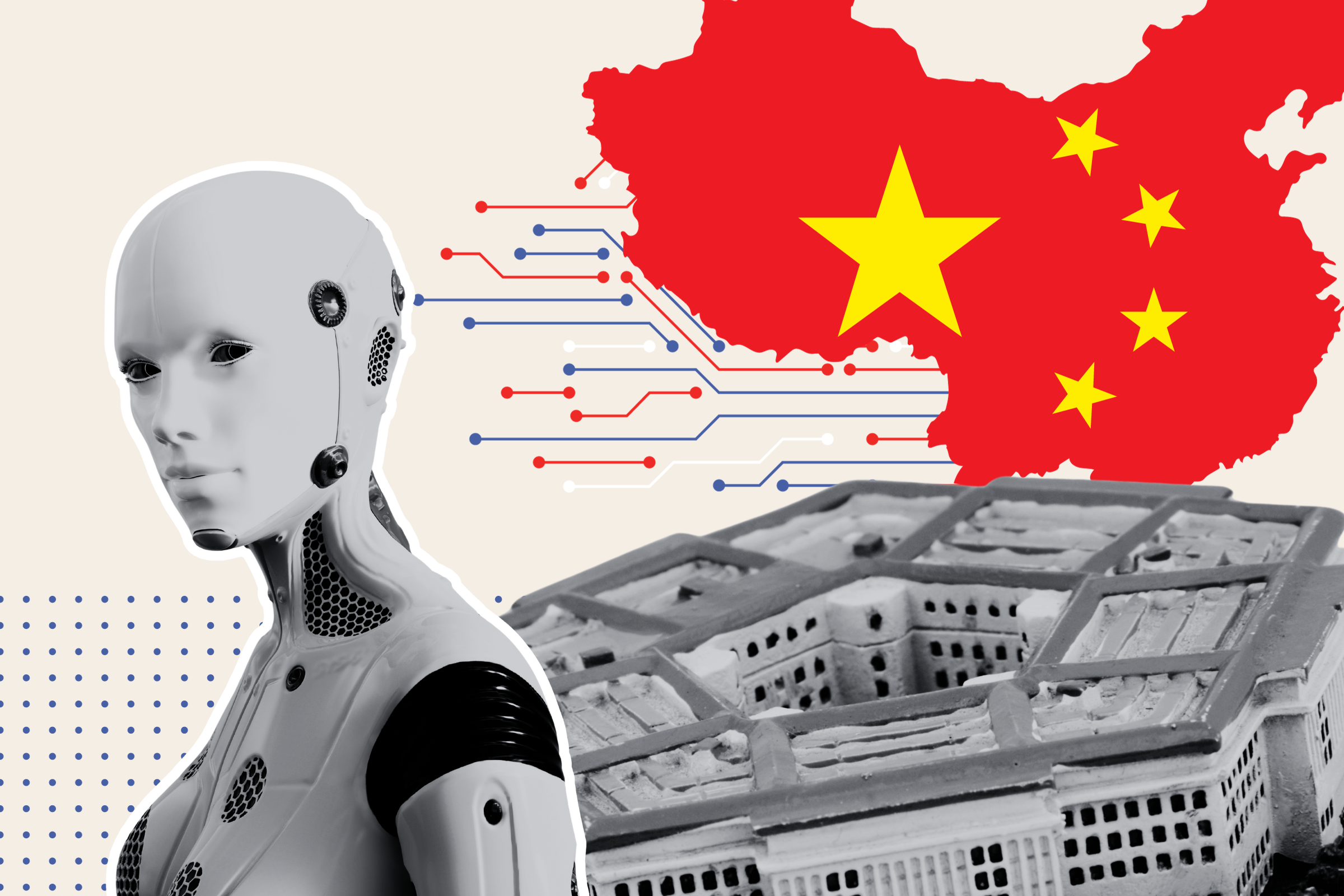
China’s Belt and Road Initiative (BRI) has already tethered Pakistan’s economy to Beijing through massive infrastructure loans. The China-Pakistan Economic Corridor (CPEC) is the terrestrial anchor. The space program is the high-altitude extension of that same leash.
By integrating Pakistan’s elite military pilots into the Chinese aerospace ecosystem, Beijing ensures that Pakistan’s future defense and surveillance architecture is permanently locked into Chinese proprietary systems.
- Proprietary Lock-in: Once you train on Chinese interfaces, use Chinese telemetry, and rely on Chinese Beidou satellites for positioning, you can never go back to Western or independent hardware without a total, multi-billion-dollar overhaul.
- Data Sovereignty: Every byte of data collected by a Pakistani astronaut on a Chinese station is routed through Chinese hardware. Who do you think owns the encryption keys?
This isn't a partnership. It's a high-tech vassalage. I’ve watched industries consolidate like this before—where a dominant player offers "subsidized" entry to a smaller player only to strip-mine their autonomy later. In the tech world, we call it "platform capture." In space, it’s just the new colonialism.
The Misconception of "First Foreign Astronauts"
The media loves the "First Foreigner" trope. It suggests a breaking of barriers. But look at the history of the Soviet Interkosmos program. In the late 1970s and 80s, the USSR sent pilots from Mongolia, Vietnam, and Cuba into space.
Did Mongolia become a space-faring powerhouse? Did it lead to a Vietnamese moon base? Of course not. It was "prestige diplomacy." It was a way for the Soviets to flex their dominance over their satellite states while pretending to be benevolent leaders of a socialist brotherhood.
China is running the Interkosmos playbook with a 21st-century coat of paint. By selecting Pakistan as the first "partner," they aren't looking for the best scientific minds in the world; they are rewarding their most loyal client state. If China were serious about "scientific cooperation," they’d be opening the station to a competitive, merit-based global pool. They aren't. They are picking allies who have nowhere else to turn.
Why Space Science is the Wrong Metric
The "People Also Ask" section of your brain is likely wondering: What will they actually do up there? The standard answer is "microgravity experiments" and "biological research." That’s a smokescreen. The scientific output of two guest astronauts on a short-duration mission is negligible. Any serious experiment could be handled by the permanent Chinese crew or an automated rack.
The real "experiment" is the integration of military command structures. Both Pakistan and China’s space programs are extensions of their respective militaries. This mission is a live-fire test of how well these two commands can sync.
Imagine a scenario where a conflict breaks out in the Indian Ocean. A Pakistan that is deeply integrated into the Chinese space station and the Beidou satellite network is a Pakistan that can provide real-time intelligence to Beijing—and vice-versa—with a level of fluidity that no treaty can match.
The India Factor: A Flawed Reaction
Western analysts often frame this as a direct response to India’s Gaganyaan mission. They claim China is "leveling the playing field" for Pakistan to counter India’s rise.
This is a fundamental misunderstanding of the scale. India’s space program is largely indigenous. When India sends an astronaut into space, they do it on an Indian rocket, launched from Indian soil, managed by Indian engineers.
China’s move to ferry Pakistani astronauts is actually a subtle insult to the region. It signals that while India is a competitor, Pakistan is a customer. It reinforces the hierarchy. By "helping" Pakistan, China ensures that Pakistan never actually develops the desperate, inward-looking drive required to build its own launch capability. Dependency is the enemy of innovation.
The Harsh Reality of the New Space Race
We are exiting the era of space for "all mankind" and entering the era of Space Feudalism.
In this new era, the Great Powers (US, China) are the Lords, and everyone else is a Serf or a Tenant. The US has the Artemis Accords; China has the International Lunar Research Station (ILRS).
- The US Approach: Highly regulated, bureaucratic, but offers a path to genuine technical contribution if you have the cash.
- The Chinese Approach: Fast, flashy, "all-inclusive," but you leave your keys at the front desk.
Pakistan’s "first foreign astronauts" are essentially brand ambassadors for the Chinese space station. Their presence is a marketing tool to convince other nations in the Global South that they, too, can be "space-faring" if they just sign on the dotted line of a Chinese cooperation agreement.
The Downside of Disruption
I’ll be the first to admit: for a Pakistani pilot, this is the opportunity of a lifetime. Individually, they are heroes. But we must distinguish between individual bravery and national strategy.
The downside of my contrarian view is that it paints a bleak picture of international cooperation. It suggests that there is no such thing as a "pure" scientific mission. And there isn't. Not when the rockets are painted with the flags of nuclear-armed rivals.
If Pakistan wants to be a space power, it needs to stop looking for a ride and start building its own engine. Borrowing someone else's glory only highlights your own shadow.
The Tiangong station is a marvel of engineering, but for the foreign astronauts visiting it, it’s a gilded cage. They are there to prove that China is the new center of the universe. Once the photo-op is over and the capsule splashes down, the power dynamic remains unchanged. One nation remains in the stars, and the other remains in debt.
Stop celebrating the ride. Start questioning the price of the ticket.