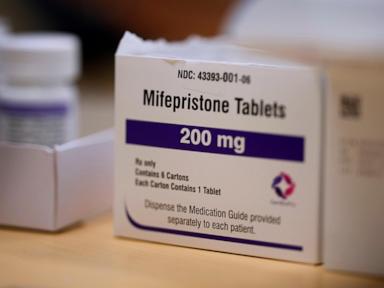
The legal firewall protecting remote access to mifepristone has shifted. Recent federal court rulings have targeted the specific regulatory shortcuts that allowed patients to receive abortion pills through the mail without an in-person doctor’s visit. While the Supreme Court eventually intervened to maintain the status quo for now, the underlying legal mechanism used to challenge the drug’s distribution remains a live wire in the American judicial system. This isn't just a debate about reproductive rights; it is a fundamental challenge to how the federal government regulates and distributes high-stakes medication in a post-telehealth world.
The core of the conflict centers on the Food and Drug Administration (FDA) and its 2021 decision to lift the in-person dispensing requirement. For years, mifepristone—part of a two-drug regimen used in more than half of all U.S. abortions—was tucked under a strict safety umbrella known as REMS (Risk Evaluation and Mitigation Strategies). When the FDA decided that the data supported mailing the drug directly to patients, it opened a digital highway for care. The current legal assault seeks to tear up that highway, claiming the agency overstepped its bounds and ignored safety signals. For an alternative perspective, check out: this related article.
The Paper Trail of Regulatory Deconstruction
To understand the weight of these court battles, one has to look at the timeline of clinical deregulation. Mifepristone was approved in 2000, but the real friction started in 2016 and 2021. During these windows, the FDA extended the gestational age for the drug's use and eventually removed the necessity for a physical clinical visit.
Critics and plaintiffs in these federal cases argue that by removing the doctor from the room, the FDA created a "safety vacuum." They point to the potential for undiagnosed ectopic pregnancies or heavy bleeding that might require emergency intervention. On the flip side, the medical establishment, including the American Medical Association, maintains that the complication rates for mifepristone are lower than those for common drugs like ibuprofen or penicillin. Further analysis on this trend has been shared by National Institutes of Health.
The legal strategy employed by challengers is distinct. They aren't just arguing that the drug is "bad." They are arguing that the FDA’s process was "arbitrary and capricious." This is a specific legal standard used to overturn federal agency actions. If a court decides the FDA didn't do its homework before allowing mail-order distribution, the agency’s entire framework for the drug could be rolled back to the standards of twenty years ago.
The Telehealth Infrastructure Under Fire
If the courts successfully reinstate the ban on mail-order distribution, the impact will hit the digital health sector like a physical blow. Over the last three years, a massive infrastructure of telehealth providers has emerged. These companies operate on a lean model: virtual consultation, digital prescription, and third-party pharmacy fulfillment.
A return to in-person mandates would effectively bankrupt this model for reproductive care. Patients in rural areas or states with restrictive laws would no longer be able to bypass local barriers by clicking a link. The logistics of healthcare would revert to a brick-and-mortar necessity, creating a "medical desert" effect for millions.
The Shield Laws Complication
While federal courts deliberate, several states have passed Shield Laws. These are designed to protect providers who mail pills into states where abortion is banned. This creates a volatile jurisdictional mess. A federal ruling blocking mail-order access applies nationwide, theoretically superseding state-level protections.
However, enforcement is the ghost in the machine. Even if a federal court says the mail is off-limits, the federal government—under certain administrations—may choose not to prioritize the prosecution of those shipping the pills. This creates a "gray market" scenario where the law says one thing, but the post office carries another.
Beyond the FDA Authority
The debate has resurrected a 19th-century relic: The Comstock Act. This 1873 law prohibits the mailing of "obscene" materials or items used for "immoral" purposes, including drugs used for abortion. For decades, it was considered a dead letter, ignored by prosecutors and the public alike.
The recent federal court movements have dusted off this statute. If interpreted broadly, the Comstock Act wouldn't just stop mifepristone; it could be used to stop the shipment of any medical equipment or supplies used in reproductive health. It is a dormant legal nuclear option. Legal analysts are watching closely to see if the judiciary will use this ancient law to bypass modern FDA regulations entirely.
The Supply Chain Vulnerability
Pharmaceutical distribution is more fragile than the public realizes. Most mifepristone is handled by a small number of specialized pharmacies. If a federal court order targets these specific nodes in the supply chain, the flow of the drug stops at the source, regardless of what a local doctor says.
We saw a version of this when major retail pharmacies like Walgreens and CVS were pressured regarding their plans to dispense the pill in certain states. The corporate appetite for legal risk is low. If the federal courts create a permanent cloud of litigation over mail-order drugs, many large-scale distributors will simply opt out to protect their bottom line.
Risk Assessment for Patients and Providers
For a provider, the risk of a federal injunction is professional and criminal. For a patient, the risk is more immediate: a loss of time. Medication abortion is time-sensitive. Every week spent litigating in a Fifth Circuit or Supreme Court chamber is a week where the window for a non-surgical option closes for thousands of individuals.
The "why" behind the intensity of this legal fight is simple. The mail-order pill made the physical borders of states irrelevant. By attacking the mailing mechanism, challengers are attempting to restore those borders, forcing the movement of bodies instead of the movement of data and packages.
The Precedent for Other Medications
The most overlooked factor in this investigative arc is the "contagion" effect. If a court can successfully second-guess the FDA’s clinical judgment on mifepristone, every other controversial or high-priced drug is fair game.
Imagine a world where a judge in one district can block an Alzheimer’s drug or a new vaccine because they disagree with the FDA’s "arbitrary" review of the clinical trials. This is the argument the pharmaceutical industry—usually a conservative-leaning group—made in their amicus briefs. They are terrified that the mifepristone rulings will destabilize the entire regulatory environment, making it impossible to predict if a drug that cost a billion dollars to develop will actually be allowed on the market.
The Physical Reality of a Mail Ban
If the mail stops, the burden shifts to the few remaining physical clinics. We are talking about an immediate, 50% increase in patient volume for facilities that are already at breaking point.
The logistical math doesn't add up. You cannot remove the primary method of delivery for a medical service and expect the secondary method to absorb the shock without a total system failure. The "how" of the next phase involves clinics essentially becoming high-volume dispatch centers, where the only way to get a pill is to stand in a line that might stretch across state lines.
The legal battle over mifepristone is not a static event; it is an evolving siege on the concept of federal expertise. The courts are no longer just interpreting the law; they are actively auditing clinical data and logistics. The result is a fractured medical landscape where your access to a standardized, FDA-approved drug depends entirely on the zip code of the judge presiding over the latest injunction.
The mail-order system was the last line of defense for a decentralized healthcare model. With that system under a federal magnifying glass, the future of American medicine looks increasingly like its past: localized, restricted, and entirely dependent on physical presence.