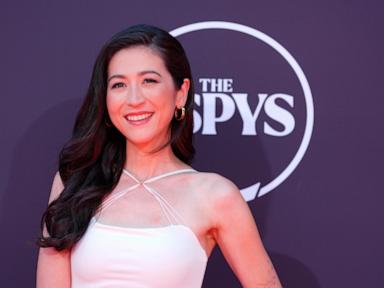
The Scripps National Spelling Bee is no longer just a competition about etymology and orthography. It has become a television product gasping for air in a fragmented media environment. By installing ESPN’s Mina Kimes as the new host for the 2026 broadcast, the E.W. Scripps Company is signaling a desperate, calculated shift away from the quiet, academic prestige of the past toward a high-octane sports presentation. This move is not about spelling. It is about survival.
Kimes takes the podium at a time when the Bee is struggling to justify its primetime existence. For decades, the event relied on the novelty of children performing high-wire intellectual acts. That novelty has worn off. Viewership numbers have shifted, and the move to Ion and Bounce networks in recent years moved the Bee away from the center of the cultural conversation. Bringing in Kimes—a person who built a career on analytical rigor and an unapologetic love for the mechanics of competition—is an attempt to treat spelling like the NFL.
The Professionalization of the Bee
Scripps is not just changing a face; they are changing a philosophy. The "reimagined broadcast" promised alongside Kimes’ hiring suggests a pivot toward the "Moneyball" era of spelling.
For years, the Bee functioned as a quaint piece of Americana. Today, the kids arriving at National Harbor are essentially professional athletes. They train for thousands of hours, utilize proprietary software to track word frequency, and often have private coaches. The gap between the casual viewer and the elite speller has become a canyon. Kimes is the bridge. Her expertise lies in breaking down complex systems for a mass audience without losing the nuance that die-hard fans crave.
Expect the broadcast to lean heavily into "win probability" metrics and deep-dive biographical packages. The goal is to manufacture the same emotional stakes found in a playoff game. Scripps needs you to care about the kid from San Antonio the same way you care about a backup quarterback forced into a fourth-quarter drive.
Why Mina Kimes is the Only Logical Choice
The selection of Kimes is a masterstroke of demographic targeting. She occupies a unique space in the media where she is respected by the "stat-heads" and beloved by a younger, digitally native audience.
Kimes represents the intellectual athlete. She is someone who can discuss the defensive schemes of the Baltimore Ravens in one breath and the Greek roots of an obscure botanical term in the next. This versatility is crucial because the Bee is currently suffering from an identity crisis. Is it a cute human-interest story? Or is it a ruthless competition where one misplaced vowel ends a decade of preparation?
By choosing Kimes, Scripps is siding with the latter. They are leaning into the intensity. They want the sweat on the brow of a 12-year-old to feel as significant as a missed free throw in the NBA Finals.
The Identity Crisis of Educational Television
The internal pressure at Scripps is immense. The company has spent years trying to figure out how to monetize a non-profit educational program without stripping away its soul. There is a inherent tension between the purity of the Bee and the demands of modern advertisers.
Advertisers want "moments." They want viral clips of kids reacting to wins or devastating losses. The traditional, slow-paced broadcast of the early 2000s—often characterized by long silences and the rhythmic ticking of the clock—does not generate those moments effectively. The reimagined format will likely feature faster pacing, more aggressive interviewing, and a studio set that looks more like a NASA control room than a ballroom.
However, there is a risk. If the Bee becomes too "slick," it loses the very charm that made it a cult hit in the first place. There is a fine line between a professional sports broadcast and a manufactured reality show. If Kimes is forced to play a character rather than being the analyst the public knows, the experiment will fail.
The Mechanics of the New Broadcast
To understand where this is going, look at how sports gambling has changed the way we watch games. While you won't see betting lines on the Spelling Bee—at least not officially—the influence of that data-driven, high-stakes presentation is undeniable.
- Real-time Analytics: We can expect on-screen graphics showing the difficulty level of a word based on historical "out" rates.
- The Sideline Reporter Evolution: The role of the host will likely expand to include post-round "film study," where Kimes breaks down exactly where a speller’s logic failed them.
- The Emotional Narrative: Scripps is betting that Kimes’ empathetic but analytical interviewing style will pull more personality out of contestants who are often coached to be robotic.
This isn't just about making the show faster. It’s about making it legible to a generation that consumes content in thirty-second bursts. If a speller spends two minutes asking for the definition, language of origin, and alternate pronunciations, the modern viewer is going to pick up their phone. Kimes is there to keep the energy high during those technical lulls.
Countering the Critics of Commercialization
Traditionalists will hate this. There is already a vocal minority in the linguistics community who believe the Bee has become too much of a spectacle. They argue that the focus should remain on the words, not the "storylines."
But the reality is that the words aren't enough to pay the bills anymore. The Scripps National Spelling Bee is an expensive operation. To fund the regional programs and maintain the infrastructure of the national finals, the televised portion of the event must be a financial success. The "reimagined" broadcast is a necessary evil for those who want the competition to exist at all.
Kimes is the shield against these criticisms. Because she is a legitimate intellectual with a background in investigative journalism at Fortune and Bloomberg, she brings a level of "nerd-cred" that a standard TV host lacks. She isn't a "talking head"; she is an enthusiast.
The Ghost of ESPN Past
It is impossible to discuss this without acknowledging the Bee’s long history on ESPN. For twenty-seven years, the sports network was the Bee's home. When that partnership ended, the event lost its "big game" feel.
Moving to Ion was a retreat to the suburbs. It was safe, but it was quiet. Hiring Kimes—the current face of ESPN’s NFL coverage—is an attempt to reclaim that "World Wide Leader in Sports" energy without actually being on the network. It’s a signal to the audience: This matters again.
The stakes for Kimes are also significant. This is a chance for her to prove she can carry a major non-sports franchise. If she can turn the Spelling Bee into a ratings winner, she becomes more than a sports analyst; she becomes a versatile media powerhouse.
The Reality of the Modern Speller
The kids competing today are different from the ones who competed twenty years ago. They are hyper-specialized. Many of them have been studying word lists since they were five years old. They are the products of an era where every hobby can be optimized and turned into a competitive pursuit.
Kimes understands this drive. She has spent her career profiling athletes who have sacrificed everything for a singular goal. Her ability to translate that obsession for a general audience is her greatest asset. She won't treat the spellers like "cute kids." She will treat them like the elite competitors they are.
This shift in tone is the most important part of the "reimagining." If the broadcast treats the contestants with the same gravity usually reserved for the Heisman Trophy ceremony, the audience will follow suit.
A Pivot Toward the Digital Front
The broadcast is only half the battle. The real "reimagining" will happen on social media.
Scripps knows that the majority of people who engage with the Bee in 2026 will do so through vertical video on their phones. Kimes is a digital native with a massive, engaged following. Her presence ensures that the Bee will have a footprint on platforms where it has previously been invisible.
We are likely to see "The Mina Kimes Show" version of the Bee: behind-the-scenes content, deep-dives into the weirdest words of the day, and interactive segments that allow viewers to test their own knowledge in real-time. This isn't just a TV show; it's a multi-platform content play.
The Risks of Radical Change
Every time a legacy institution tries to "modernize," it risks alienating its core base. The Spelling Bee has a very specific, very loyal audience of educators, parents, and language lovers. If the new broadcast feels too much like a frantic episode of American Ninja Warrior, that audience will check out.
The success of this move hinges on balance. Kimes must be allowed to be herself—witty, sharp, and genuinely curious—without being drowned out by over-produced graphics and loud music. The word must remain the star, even if the host is the one selling the tickets.
There is also the question of the "unscripted" nature of the Bee. Unlike a scripted show or even a structured sports game, the Bee can be unpredictable. Rounds can last ten minutes or four hours. A host needs incredible stamina and the ability to pivot on a dime. Kimes’ experience on live television is her safety net, but the Bee is a different beast entirely.
What Success Looks Like
For Scripps, success isn't just about a 10% bump in the Nielsens. It’s about re-establishing the Spelling Bee as a "must-watch" event. They want people talking about it the next morning at the water cooler—or more accurately, in the group chat.
They want the champion to be a household name, if only for a week. They want the drama of the final rounds to feel like a cultural moment. Most importantly, they want to prove that intellectual achievement can be as entertaining as physical prowess.
Mina Kimes is the tip of the spear in this effort. She represents the convergence of sports, culture, and intellect. Her hiring is an admission that the old way of doing things is dead. The Bee is no longer a school assembly on a national stage. It is a high-stakes, data-driven, emotional rollercoaster.
Scripps is betting that we want to watch these kids suffer and succeed under the bright lights. They are betting that we want to see the "why" behind every letter. And they are betting that Mina Kimes is the only person who can tell that story effectively.
The 2026 Scripps National Spelling Bee will be the loudest one in history. Whether it will be the most meaningful remains to be seen. But one thing is certain: you won't be able to look away.
Watch the clock. Watch the kid. Watch the word.