You’ve probably heard the pitch a thousand times. A politician stands at a podium and promises that a foreign country is going to pay for a new tax on imports. They claim the money will flood the Treasury, pay down the national debt, or maybe even result in a nice fat check in your mailbox to offset the rising cost of your morning coffee. It sounds great. It's a winning campaign slogan. It's also a total fantasy.
If you’re sitting by the window waiting for a tariff refund check or some kind of "trade dividend" to land on your porch, you should probably find a more productive way to spend your time. Those checks aren't coming. They never were.
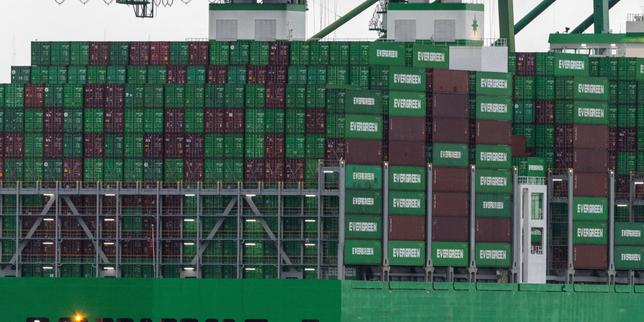
Tariffs are essentially a sales tax on people who live here. When the government puts a 20% or 60% levy on a piece of industrial machinery from Germany or a plastic toy from China, the foreign exporter doesn't write a check to the U.S. Treasury. The American company bringing that item across the border does. Those companies aren't charities. They don't just eat that cost because they want to be "team players." They pass it to you. Every single cent of it.
The Tax Collector In Your Grocery Cart
We need to stop pretending tariffs are some complex geopolitical chess move that only affects billionaires and shipping magnates. They hit your wallet every time you tap your credit card. Most people don't notice the "tariff tax" because it doesn't show up as a line item on a receipt. It’s baked into the price of the goods.
When a tariff goes up, a whole chain of events triggers. A domestic manufacturer that needs imported aluminum finds their overhead has spiked. They raise the price of the soda cans they sell to the beverage company. The beverage company raises the price they charge the grocery store. By the time you’re standing in the aisle looking at a twelve-pack, the price has jumped two dollars.
The government collects the money at the port, but you’re the one who funded the payment. Does the government then turn around and mail that money back to you? Of course not. That money goes into the general fund. It pays for road repairs, military hardware, or interest on the debt. It doesn't come back as a rebate.
History proves this. Look at the Smoot-Hawley Tariff Act of 1930. It was supposed to protect American farmers and industry. Instead, it triggered a global trade war that made the Great Depression significantly worse. Nobody got a refund check then. More recently, the trade restrictions initiated in 2018 and 2019 led to massive price hikes on everything from washing machines to construction timber. A study by the National Bureau of Economic Research found that the full cost of those tariffs fell almost entirely on U.S. consumers.
Farmers Get The Bailouts While You Get The Bill
There is one group that sometimes sees a "refund," though even that is a stretch of the term. When trade wars heat up, other countries retaliate by refusing to buy American products. This hits our agricultural sector hardest. To keep the farming industry from collapsing under the weight of these self-inflicted wounds, the government often issues "trade aid" packages.
During the peak of the 2018-2019 trade tensions, billions of dollars were funneled to farmers to compensate for lost sales to China. That wasn't a "refund" of tariff money. It was a taxpayer-funded bailout to fix a problem created by the tariffs in the first place. If you aren't running a multi-thousand-acre soybean farm in the Midwest, don't expect the government to offer you a similar cushion.
The average family spends thousands extra per year when aggressive trade barriers are in place. You’re paying more for your kids' shoes. You're paying more for the components in your laptop. You're even paying more for the car you drive. The idea that this money is being "collected from foreigners" is one of the most successful lies in modern economics.
Why the Math Never Works for Your Wallet
Let’s look at how the money actually flows. It’s a simple three-step process:
- The U.S. Customs and Border Protection (CBP) demands payment from the importer of record.
- The importer pays the duty to the government.
- The importer increases the wholesale price to maintain their profit margin.
If the government wanted to "give the money back," they would have to set up a massive administrative apparatus to track every purchase made by 330 million people and calculate how much of that purchase was due to a specific tariff. It’s an impossible task. It would cost more to run the refund program than the value of the refunds themselves.
The reality is that once the money hits the government's coffers, it's gone. It's already been spent on a thousand other things before the ink on the check is even dry.
The Manufacturing Myth
Another popular argument is that tariffs bring back jobs, which is a "refund" in the form of a paycheck. This sounds logical on paper. If we make foreign goods expensive, people will buy American goods, and factories will reopen.
But the world changed while we weren't looking. Modern manufacturing is a globalized, high-tech web. An American-made car often contains thousands of parts sourced from dozens of countries. If you slap a tariff on those parts, the "American-made" car becomes so expensive that nobody can afford to buy it.
Instead of creating jobs, high tariffs often kill them. When the cost of raw materials goes up, U.S. manufacturers become less competitive on the global stage. They can't export their products because their costs are too high. Then come the layoffs. You don't get a refund check when you're standing in the unemployment line.
We saw this play out with the steel and aluminum tariffs. While a few thousand jobs were protected in the primary steel industry, hundreds of thousands of jobs in steel-consuming industries—like auto manufacturing and construction—were put at risk. The "win" for one small group was a massive loss for everyone else.
What You Can Actually Do
Since a refund check isn't coming, you have to be smart about how you handle your own finances during a period of high trade volatility.
Stop waiting for a political savior to fix your budget. If you know that major new tariffs are about to be implemented, buy your big-ticket electronics or appliances now. Prices on things like televisions, laptops, and refrigerators are the first to jump when trade barriers go up.
Look for products sourced from countries that have stable free-trade agreements with the U.S. These items won't be subject to the same price spikes. You should also keep a close eye on your household's "hidden tax" burden. Every time you hear a politician talk about "making them pay," reach for your wallet. They're actually talking about you.
Don't buy into the "refund" rhetoric. It’s a ghost. It’s a carrot on a stick designed to make a regressive tax feel like a win for the little guy. The only way to protect yourself is to understand that the government is essentially using your daily shopping list to fund its operations.
If you want to see where that "tariff money" went, don't look in your mailbox. Look at the price of a gallon of milk or the cost of a new set of tires. That's where the money is. And it's never coming back.
Check your recent credit card statements and compare the prices of your recurring purchases to what you paid two years ago. That gap is your real-world tariff report. Focus on adjusting your savings rate and cutting costs on domestic services that aren't tied to global supply chains. That is the only "refund" you're ever going to get.