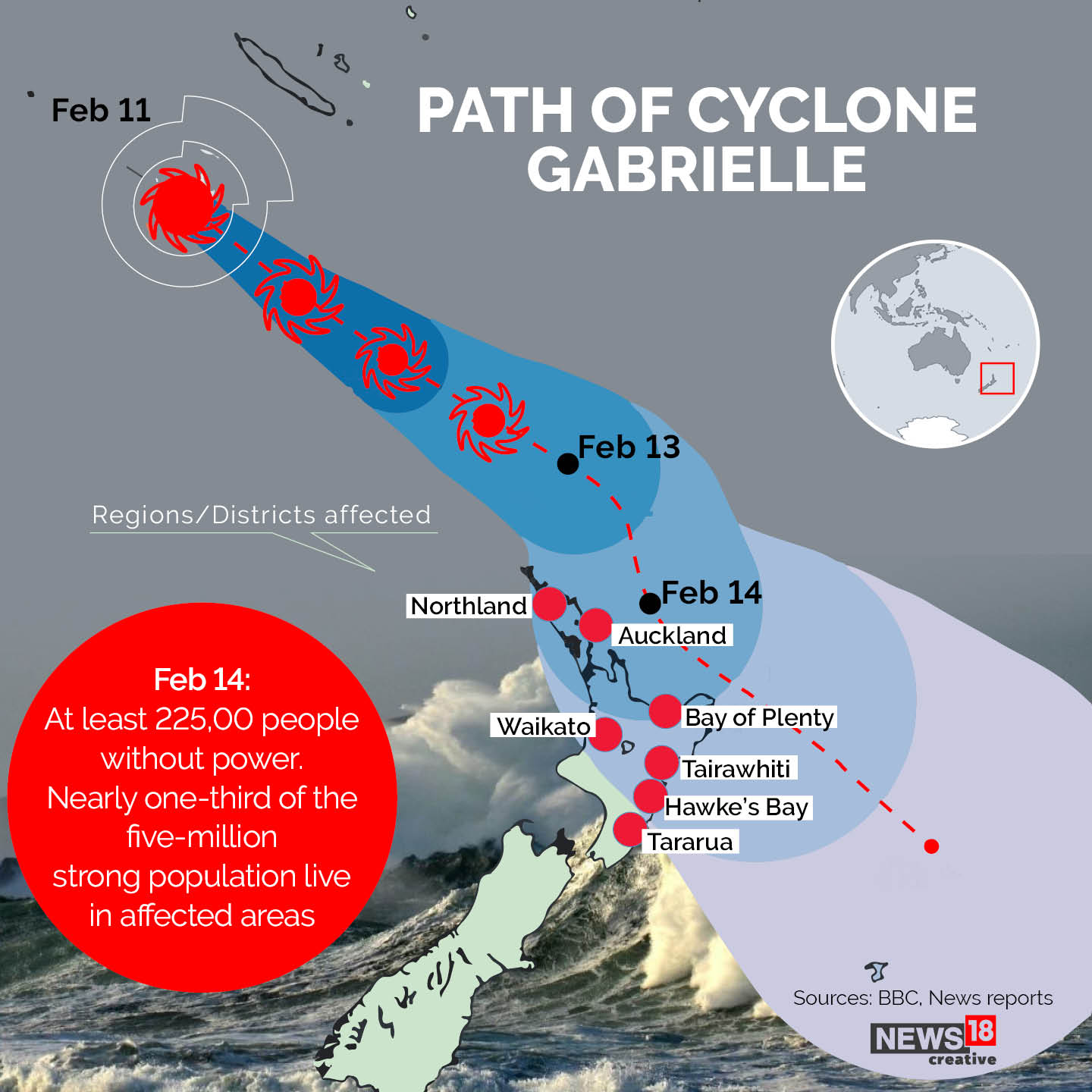
The sky didn't just turn gray; it turned a heavy, bruised purple before the North Island started taking a literal beating. If you're looking at the headlines about the latest cyclone hitting New Zealand, you're seeing the words "hundreds evacuated" and "state of emergency." But those dry phrases don't capture the sound of wind ripping corrugated iron off sheds or the sight of a river deciding your living room is its new path.
New Zealand's North Island is currently under siege. This isn't just another rainy weekend. It's a massive weather event that has forced families out of their homes in the middle of the night. Emergency services are stretched thin. Roads are vanishing under mud. Power grids are flickering out. When a cyclone hits this part of the world, the geography makes everything ten times worse. You've got steep hillsides that turn into sludge and narrow valleys that funnel water like a pressure washer.
Why this cyclone is hitting harder than expected
Meteorologists warned us, but the sheer volume of water is staggering. We aren't just talking about a bit of localized flooding. The ground in many parts of the North Island was already saturated from previous seasonal rains. When the soil can't hold any more water, it has nowhere to go but down the hill, taking houses and roads with it.
The low-pressure system sitting off the coast is acting like a giant pump. It's pulling moisture from the tropics and dumping it directly onto Northland, Auckland, and the Coromandel Peninsula. Hundreds of people have been moved to evacuation centers because their properties are no longer safe. Local councils didn't wait for things to get "bad enough." They triggered the sirens early. That's a lesson learned from past disasters—if you wait until the water is at your door, you're already too late.
The reality of the evacuation zones
Most people think an evacuation is an orderly line of cars. It's not. It's grabbing your cat, your meds, and a change of clothes while the wind screams outside. In areas like Tairāwhiti and Hawkes Bay, the situation is particularly grim. These regions have historical "sore spots" where the infrastructure simply can't handle a Category 2 or 3 equivalent storm.
Civil Defence has been incredibly blunt this time around. They're telling people: move now or we might not be able to reach you. This isn't about being "brave" and staying with your property. It's about not making a volunteer lifeguard risk their life to pull you off a roof at 3 AM. The evacuation centers are filling up with people who have lost everything, or at the very least, don't know if they'll have a floor to walk on when they return.
Infrastructure is the weak link in the chain
New Zealand prides itself on its rugged beauty, but that ruggedness is a liability in a cyclone. Our State Highways are often single lanes carved into cliffsides. One major slip and an entire region is cut off. We're seeing that right now with multiple road closures across the Coromandel.
The power companies are struggling too. Trees falling on lines is the number one cause of outages during these storms. When the wind gusts hit 120km/h, it doesn't matter how well-maintained the lines are; nature wins. Repair crews can't even get up the buckets to fix the lines until the winds die down, meaning some communities are looking at days, not hours, without light or heat.
What the authorities are getting right this time
I've watched enough of these disasters to know when the response is lagging. This time, the communication has been faster. The use of emergency mobile alerts—those heart-stopping loud blares on your phone—saved lives last night.
National and local leaders have been visible. They've shifted from "let's see what happens" to "prepare for the worst." This shift in mindset is crucial. By declaring states of emergency early, it allows for the mobilization of the defense force and gives local authorities the power to mandate evacuations. It's an aggressive stance, but it's the only one that works when you're fighting a weather system that doesn't care about your property rights.
The long-term cost of the North Island storms
The cleanup won't be a week-long affair. We're looking at months of engineering work to stabilize hillsides. The economic hit to the agricultural sector is going to be massive. Orchards in the Hawkes Bay and Northland regions are currently sitting in silt. For many farmers, this isn't just a bad season; it's a career-ending event.
Insurance companies are already bracing for the influx of claims. If you live in a flood-prone area of the North Island, your premiums are about to skyrocket—if you can get cover at all. This is the conversation no one wants to have, but the frequency of these "one-in-a-hundred-year" events is making some parts of the country virtually uninsurable.
Immediate steps if you are in the path
Stop checking the forecast every five minutes and start moving. If your local council suggests an evacuation, take it.
- Pack a 'Go Bag' with three days of meds, essential documents, and chargers.
- Move your stock. If you're on a lifestyle block, get animals to high ground now.
- Clear your gutters. It sounds small, but a blocked downpipe is the difference between a dry roof and a collapsed ceiling.
- Check on your neighbors. Especially the elderly who might not be looking at social media updates.
The wind is still howling outside for many of you. Stay off the roads. A flooded ford might look shallow, but it only takes 30cm of moving water to sweep a modern SUV off the road. Don't be the person the helicopter has to come find.
The focus now is on survival and the immediate protection of life. Once the rain stops and the rivers recede, the North Island faces a massive reckoning with how and where we build our homes. For now, keep your torches handy and stay high and dry.