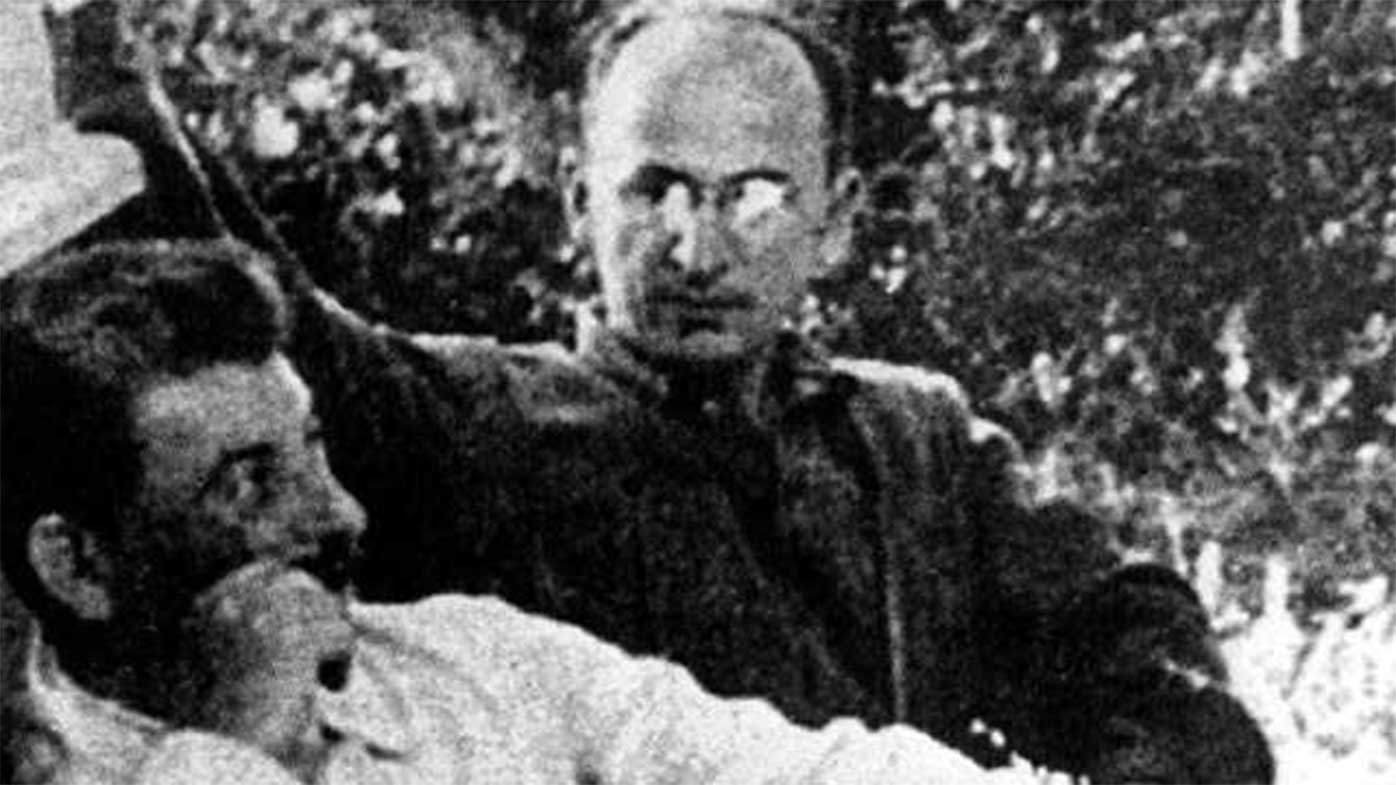
The floor of the Kuntsevo Dacha was damp with the smell of floor wax and stale tobacco. It was March 1, 1953. For decades, the mere mention of this pine-shrouded villa outside Moscow sent a rhythmic tremor through the hearts of every man from the Baltic to the Pacific. Inside, the world’s most feared man lay on a rug. Joseph Stalin, the Red Tsar, had collapsed. He was soaked in his own urine, unable to speak, his eyes tracking the ceiling with the frantic, helpless energy of a trapped bird.
His guards were terrified. Not of his enemies, but of him. They stood outside the heavy oak doors for hours, hearing the heavy thud of his body hitting the floor, yet they did nothing. To enter without a command was a death sentence. To call a doctor without permission was an act of treason. So they waited. They let the Master of the Soviet Union twitch in the dark because they had been trained, through years of purges and midnight disappearances, that initiative was a precursor to a firing squad.
When the inner circle finally arrived—Beria, Khrushchev, Malenkov—they didn't rush to his side with medicine. They stood over him and watched.
The Architect of a New Apocalypse
To understand why Stalin might have been murdered, you have to understand the specific flavor of the air in 1953. It tasted like ozone and ash. The Soviet Union had survived the meat-grinder of World War II, but Stalin wasn't satisfied with peace. He was seventy-four years old, paranoid, and convinced that the next Great War was not just inevitable, but necessary.
The Soviet economy was being cannibalized to build a blue-water navy and a fleet of long-range bombers. Construction on secret underground bunkers was accelerating. In the United States, Eisenhower had just taken office, and the rhetoric of "roll-back" was replacing "containment." The two giants were circling each other, and Stalin was the one holding the match.
He was planning a new purge. This one was aimed at the "Rootless Cosmopolitans," a thin veil for a massive anti-Semitic campaign known as the Doctors' Plot. He accused his own physicians of conspiring to kill Soviet leaders. By arresting the best doctors in Moscow, he had effectively removed the only people who could save his life when his arteries finally betrayed him. Or perhaps, that was exactly what his subordinates wanted.
The Man in the Shadow
Lavrentiy Beria was the head of the secret police, a man whose name was synonymous with the basement torture chambers of the Lubyanka. He was also a pragmatist. He knew that Stalin’s planned war with the West would mean the total annihilation of the Soviet elite. He knew that the purge Stalin was brewing would likely begin with his own head on the chopping block.
Imagine standing in that room at Kuntsevo. You see the man who has ruled your life for thirty years lying broken on the floor. If he recovers, he will kill you. If he dies, you inherit an empire.
The official version of history says Stalin died of a cerebral hemorrhage. Natural causes. A tired heart finally giving out under the weight of a billion sins. But the symptoms recorded by the few doctors eventually allowed into the room told a more jagged story. Stalin wasn't just fading; he was hemorrhaging from his stomach and skin. His blood was refusing to clot.
Warfarin. It’s a common rat poison. It’s also a blood thinner. Tasteless, odorless, and easily slipped into a late-night carafe of wine. If Beria or one of the others had spiked Stalin’s drink during their final dinner on February 28, the symptoms would have looked exactly like what the guards observed: a slow, agonizing dissolution of the internal organs.
The Invisible Stakes
Why does the ghost of a dictator dying in a puddle of his own making matter seventy years later? Because it was the first time the world survived the nuclear age by the skin of its teeth.
Had Stalin lived another year, the "Doctors' Plot" would have reached its crescendo. A massive deportation of Soviet Jews to Siberia was already being prepared. In the frenzy of the purge, Stalin likely would have pushed the button. He believed the Soviet people could survive a nuclear exchange because they were "harder" than the decadent West. He was prepared to sacrifice fifty million lives to prove a point.
The men who stood around his bed weren't heroes. They were killers, sycophants, and bureaucrats. But they were also human beings who liked their villas, their French cognac, and their lives. By allegedly speeding Stalin’s departure, they didn't just save themselves. They pulled the world back from a cliff.
The Silence of the Doctors
When the doctors finally arrived, thirty hours after the stroke, their hands were shaking so violently they could barely take his pulse. They had to take off his shirt, but they were afraid to touch the skin of the man who had sent so many of their colleagues to the Gulag.
They applied leeches to his ears. They gave him injections of camphor. It was theater. Everyone in the room knew the play was over. Beria, according to Khrushchev’s later memoirs, spent the deathbed vigil alternating between kneeling to kiss Stalin’s hand when he seemed to regain consciousness and spitting on the floor when the old man closed his eyes.
It was a masterclass in human duplicity.
The transition of power began before the heart stopped beating. The orders to stop the construction of the bombers and the naval bases were drafted while Stalin was still gasping for air. The "Doctors' Plot" was dropped almost immediately after his death. The gates of the Gulags began to creak open, just an inch.
A Legacy of Shadows
History is rarely a straight line. It is a series of frantic corrections made in dark rooms by terrified people. We like to think that global events are governed by treaties and grand strategies, but often, the fate of the species rests on whether a specific man wakes up in the morning.
We will never have a confession. Beria was executed months later, his secrets buried with him in an unmarked grave. The medical records were scrubbed. But the timing is too perfect, the symptoms too convenient, and the motive too absolute.
The Soviet Union didn't collapse in 1991. The rot started in that bedroom in 1953, when the inner circle realized that the only way to ensure a future was to eliminate the man who had created their present.
The pine trees around Kuntsevo still stand, tall and indifferent. They saw the guards standing frozen in the hallway. They saw the black limousines idling in the snow. They saw the end of an era that almost ended the world.
The Iron Master died not in a blaze of glory, but in a silence he had spent his entire life perfecting. It was a silence that finally turned against him.
Would you like me to find the original declassified medical reports that fueled these theories of poisoning?