The fan above Rafiq’s head didn’t just stop; it sighed. It was a slow, mechanical surrender that signaled the end of his productivity. In the humid, heavy air of a Dhaka evening, the silence that follows a power cut is louder than any noise.
For Rafiq, a third-year engineering student, that silence is now the new curriculum.
When the government of Bangladesh issued the directive to shutter universities early and trim operating hours to conserve electricity, the headlines read like a dry ledger of fuel costs and megawatt deficits. They spoke of global energy crunches and the soaring price of Liquified Natural Gas. But the balance sheets don't capture the smell of melting wax in a crowded dormitory or the frantic tapping of a laptop keyboard as a student races against a dying battery.
This is not just a story about a grid under pressure. It is a story about the sudden, sharp contraction of a nation’s ambition.
The Calculus of Darkness
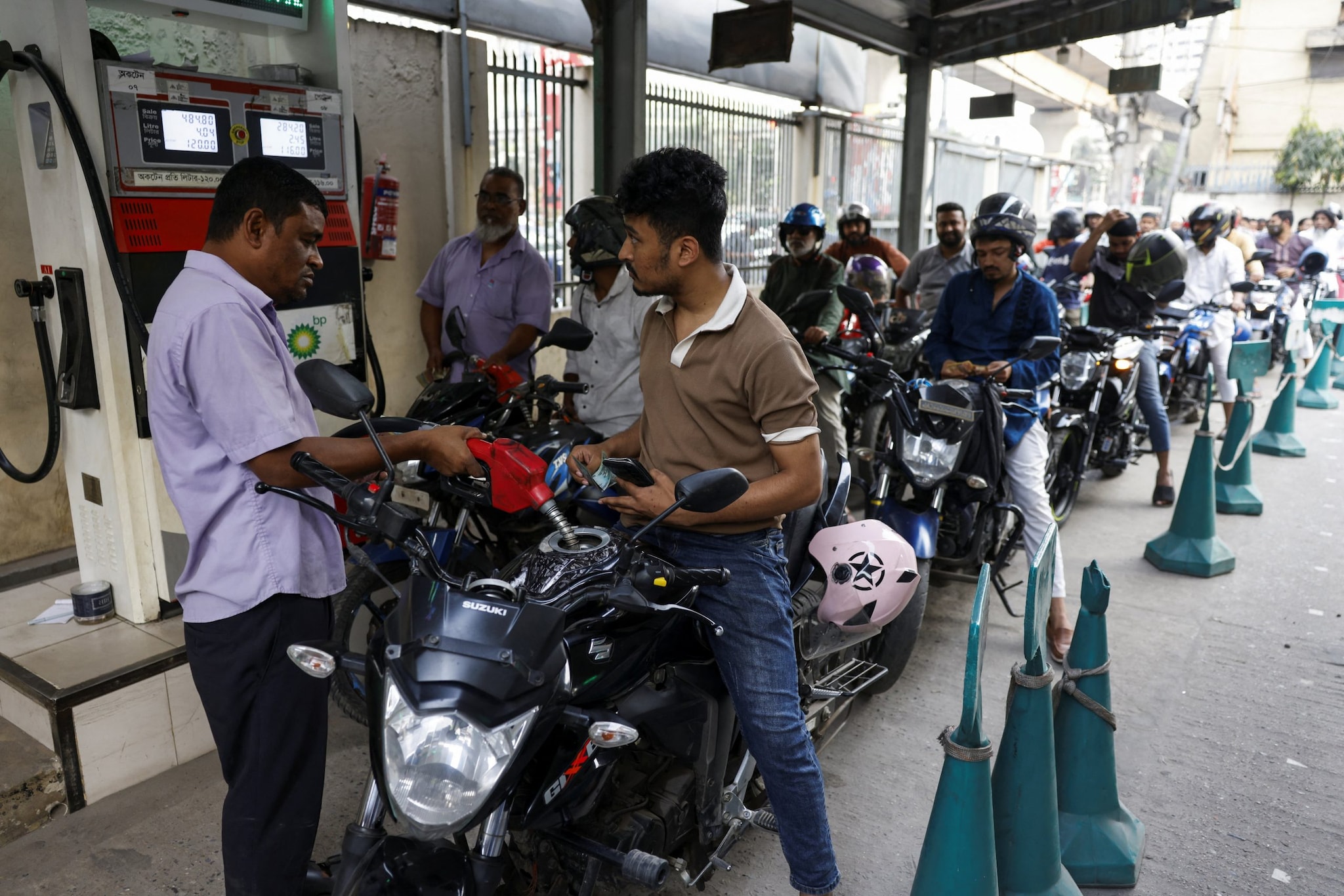
To understand why a country would intentionally dim the lights on its brightest minds, you have to look at the global chessboard. Bangladesh, a nation that has performed an economic tightrope walk for a decade, relies heavily on imported gas to keep its turbines spinning. When the geopolitical winds shifted and the cost of that gas spiked, the country found itself facing a brutal choice: keep the factories running to save the economy, or keep the schools open to save the future.
The government chose the factories.
It is a logical, cold-blooded decision. If the garment factories stop, the currency collapses. If the currency collapses, no one eats. So, the universities—the supposed engines of long-term growth—were told to power down.
Consider the physical reality of a modern campus. We think of them as bastions of thought, but they are, in fact, massive consumers of energy. Research labs require constant climate control for sensitive reagents. Server rooms heat up like ovens without industrial cooling. When you flip the switch at 4:00 PM, you aren't just saving a few units of electricity. You are effectively freezing the intellectual momentum of 4.3 million students.
The Invisible Shift
The policy isn't just about the time the doors lock; it's about the erosion of the "third space." For many students in overpopulated urban centers, the university library is the only place with reliable internet, a chair that doesn't share a room with four siblings, and a pocket of air that isn't thick with the exhaust of the streets.
When the libraries close early, the learning moves to the "mess" houses—the cramped, informal student hostels.
Imagine a hypothetical student named Samia. She is the first in her village to attend a major university in the capital. Her "study" is a bunk bed. Her "desk" is a piece of plywood balanced on her knees. Under the new energy mandates, the scheduled "load shedding" hits her neighborhood just as she returns from her shortened campus day.
She lights a candle. The flame flickers in the draft. She tries to read a PDF on a smartphone screen that she had to charge at a local grocery store because her hostel’s outlets were dead all afternoon.
This is the "human-centric" energy crisis. It is the friction added to an already difficult life. It is the subtle, daily tax on the poor that the wealthy—who have generators and solar panels—never have to pay.
The Grid and the Gap
The statistics tell a story of a system built on a fragile foundation. Bangladesh’s peak demand for power often outpaces its generating capacity by thousands of megawatts during the hottest summer months. The reliance on fossil fuels—especially LNG—is a vulnerability that cannot be patched with a single decree.
As the cost of fuel rose on the international market, the national budget took a battering that would have broken a weaker economy. To keep the lights on even part of the time, the government has had to spend billions of dollars on subsidies. The closure of universities is a frantic, necessary measure to prevent a total blackout.
But the real crisis isn't just in the cables. It's in the culture.
The shift to early closure has effectively turned university life into a 9-to-5 job. The late-night debates, the extracurricular clubs, the collaborative research that happens in the quiet of a library—all of it has been amputated.
A Quiet Resignation
When we talk about "conserving electricity," we use words that sound like a virtue. We "save." We "protect." We "husband" our resources.
On the ground, it feels like a retreat.
For the professors, the change means truncating their syllabi. There is no time for the deep, wandering conversations that define high-level learning. They are racing against a clock that is ticking toward a mandatory dark.
For the students, it is an exercise in resignation. They are the generation that was promised a "Digital Bangladesh." They were told that technology would be the great equalizer, the tool that would bridge the gap between their small villages and the global economy.
Now, they find themselves in a country where the digital infrastructure is the first thing to be sacrificed when the fuel ships don't arrive.
There is a particular kind of heartbreak in watching a laptop screen dim to save power while you are in the middle of a coding assignment. It is the realization that your ambition is tethered to a physical reality that you cannot control. Your mind is ready for the 21st century, but your physical world is still struggling to leave the 19th.
The Cost of the Long Night
There are no easy fixes here. No one can conjure a billion dollars of LNG out of thin air. No one can force the global markets to lower their prices.
The government’s decision to prioritize factories over classrooms is a gamble on the present over the future. It assumes that if we can just keep the industrial heart beating, we can fix the educational damage later.
But education is not a faucet. You cannot turn it off and expect it to flow at the same pressure when you turn it back on. Once a student loses their momentum, once they fall into the habit of doing the bare minimum because the lights won't stay on for the maximum, the damage is done.
The crisis in Bangladesh is a preview for many other nations. We are entering an era of energy scarcity where the "luxury" of constant power will be debated, rationed, and taken away.
As the sun sets over Dhaka, the university gates swing shut. The students spill out into the darkening streets, their bags heavy with books they won't be able to read tonight. They walk past the neon signs of the luxury hotels and the brightly lit showrooms of the garment district, moving toward the shadows of their own homes.
The fans stop. The silence begins. And in that silence, a million minds wait for a morning that feels farther away than it did yesterday.