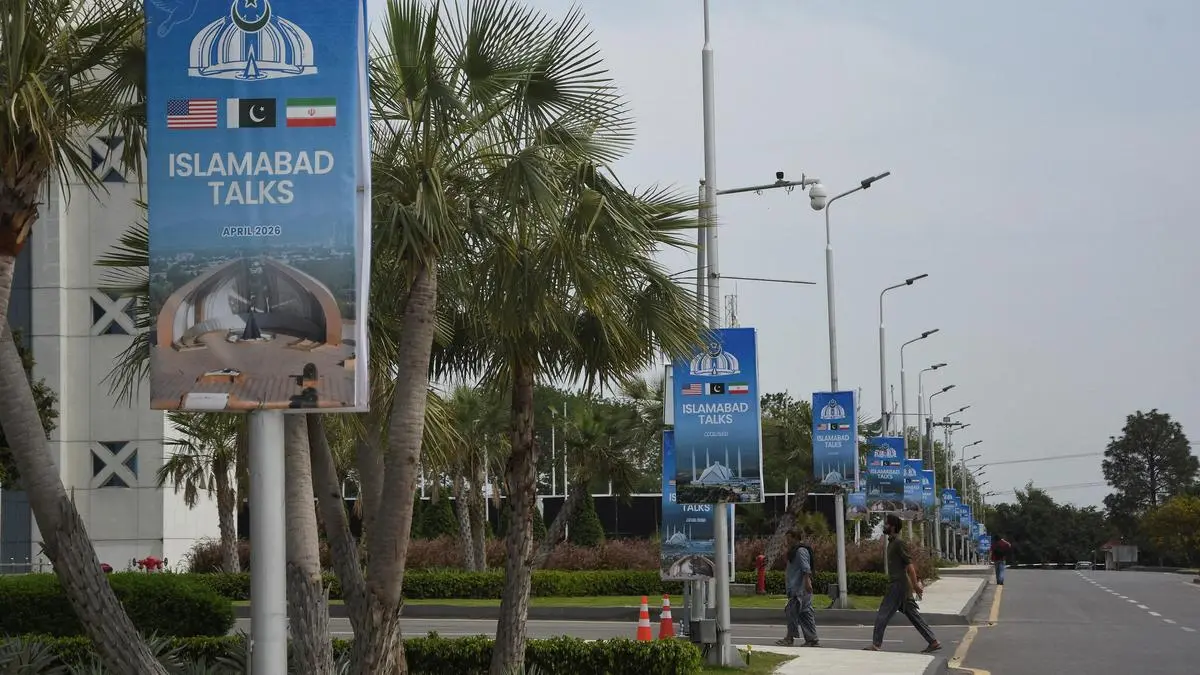
The air in Islamabad during the transition from winter to spring carries a specific, heavy scent. It is a mix of blooming jasmine, damp earth, and the sharp, metallic tang of exhaust from idling convoys. On a Tuesday evening that should have been unremarkable, a different kind of electricity hummed through the streets. It wasn’t the kind that powers the glowing signs of the Blue Area or the streetlights of the leafy F-6 sector. It was the static of anticipation—the kind that makes the hair on your arms stand up before a storm breaks.
For the average resident, the first sign of something unusual wasn't a press release or a news ticker. It was the sound of boots. Recently making headlines in related news: The Empty Pavements of Red Square.
Pakistan is a country that understands the language of security. We know the difference between a routine checkpoint and a "red alert" by the way a soldier holds his rifle. On this night, the grip was tighter. The barriers were higher. The capital was bracing itself, not for an invasion, but for a conversation.
Across the border, the geopolitical tectonic plates were shifting. US and Iranian officials were preparing to sit across from one another, and Pakistan, the bridge and the buffer, found itself holding its breath. When global powers talk, the neighborhood gets quiet. Very quiet. Further details regarding the matter are detailed by TIME.
The Human Cost of a Concrete Barrier
Consider a shopkeeper named Tariq. He operates a small stall near the diplomatic enclave. His world is measured in liters of milk sold and the number of regular customers who stop by for a cigarette and a chat about the cricket scores. To Tariq, "stringent security measures" isn't a headline. It is a closed road that cuts his daily earnings by half. It is the three extra hours his son spends on a diverted bus coming home from university.
Tariq watches the shipping containers being craned into place across the main arteries of the city. These rusted steel giants are the modern architecture of diplomacy in South Asia. They are deployed to ensure that no protest, no stray vehicle, and no unpredictable element can disturb the fragile vacuum required for high-level talks.
But for the people living behind the steel, the stakes are different. They aren't thinking about the Joint Comprehensive Plan of Action or regional hegemony. They are thinking about whether the ambulance can get through the back alleys if an elder falls ill. They are thinking about the silence.
The silence of a locked-down capital is eerie. It strips away the vibrant, chaotic soundtrack of Pakistani life—the honking rickshaws, the shouting vendors, the melodic calls to prayer—and replaces it with the low rumble of armored personnel carriers. This is the invisible price of peace. To keep the peace inside the meeting room, the city outside must be frozen in time.
The Shadow of the Neighbor
The relationship between Washington and Tehran has always been a tightrope walk for Islamabad. To the west lies Iran, a neighbor with deep cultural ties and the promise of much-needed energy. To the far west and across the oceans lies the United States, a primary security partner and a source of immense economic leverage.
When these two giants clash, Pakistan feels the tremors. When they talk, Pakistan provides the floor.
The security measures we saw weren't just about preventing physical violence. They were about optics. In the world of international relations, a secure environment is a form of currency. It signals to the world that Pakistan is a "responsible stakeholder"—a phrase loved by diplomats but felt by the citizens as a series of barbed wire coils.
The authorities didn't just double the guards; they intensified the digital dragnet. Intelligence agencies moved into a higher gear, monitoring the whispers in the bazaars and the chatter on encrypted apps. There is a specific kind of exhaustion that comes with being a "frontline state." It is a fatigue of the soul. You spend decades proving you are safe enough to talk in, while your people wonder when they will be free enough to walk in.
The Anatomy of a Lockdown
Why the sudden intensity? The intelligence reports were, as they often are, vague but alarming.
Sources hinted at "non-state actors" looking to sabotage the thaw in relations. In the cynical theater of regional politics, there are many who benefit from US-Iran enmity. A bomb in Islamabad during a week of diplomacy wouldn't just kill people; it would kill the dialogue.
So, the Rangers were deployed. The Islamabad Police canceled all leave. The "Red Zone" became a fortress.
- Strategic Choke Points: Authorities identified fourteen key entry and exit points that could be sealed within minutes.
- Surveillance Saturation: The Safe City project, a network of thousands of cameras, was put on a 24-hour dedicated feed to the interior ministry.
- Mobile Disruption: In certain pockets, the signals on phones flickered and died.
This isn't just logistics. It’s a psychological operation. It tells the population: Something is happening that is bigger than you. It tells the visitors: You are safe, even if the city is not.
The Invisible Stakes
We often talk about these events in terms of "bilateral ties" or "regional stability." Those are cold words. They don't capture the tension in a mother's voice when she calls her husband to ask why he’s late for dinner, only to hear that the bridge is blocked by a thousand tons of steel.
The real stakes are the long-term dreams of a region that has been at war with itself for forty years. If the US and Iran find a way to coexist, the Iran-Pakistan gas pipeline—a project that has been a ghost for a decade—might finally breathe life. The flickering lights in Tariq’s shop might stay on for twenty-four hours a day. The economy might stop gasping for air.
Security is the guard dog that protects the house, but if the dog never stops barking, no one in the house can sleep. On this night, the dog was barking at everyone who approached.
It is a strange irony. To reach a point where we no longer need these walls, we must first build them higher than ever before. We endure the checkpoints today so that, perhaps, our children won't know what a checkpoint feels like.
As the sun began to dip behind the Margalla Hills, casting long, jagged shadows across the deserted avenues, the city felt like a theater before the curtain rises. The stage was set. The lights were dimmed. The script was written in a language of caution and hope.
The soldiers stood at their posts, silhouettes against the orange sky. They are young men, mostly from villages in the Punjab or the rugged terrain of the North. They stand for twelve hours at a time, holding rifles that weigh more with every passing hour. They are the human face of "stringent measures." They are tired, they are hungry, and they are the only thing standing between a conversation and a catastrophe.
Islamabad went to sleep that night under a blanket of steel. The talks would begin in the morning. The world would watch the handshakes and analyze the communiqués. But the real story wasn't in the meeting room. It was in the quiet streets, the closed shops, and the patient, weary eyes of a city that has learned how to wait.
The lights stayed on, but the doors were locked tight. In this part of the world, that is what progress looks like. It is a heavy, silent, and deeply expensive kind of peace.
The metal of the containers began to cool in the night air, contracting with a series of sharp, rhythmic pings that sounded, if you listened closely enough, like a heartbeat.