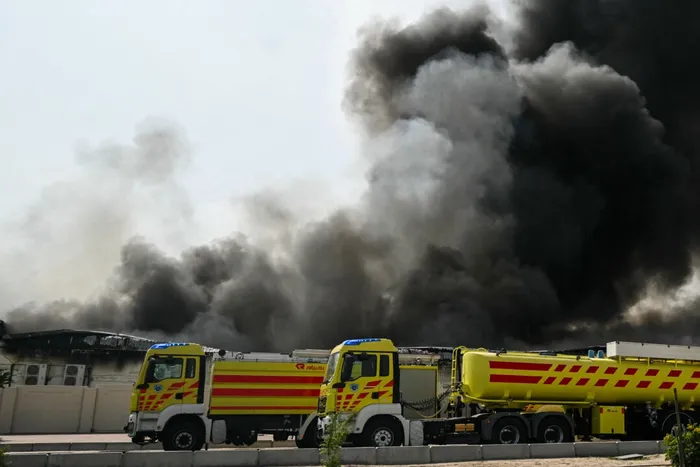
The Mediterranean breeze usually carries the scent of salt and drying cypress. In Akrotiri, on the southern tip of Cyprus, the air is thick with a different kind of tension. It is the heavy, electric hum of a British Royal Air Air Force base that serves as a vital nerve center for a region currently eating itself alive.
The sound came first. Not the roar of a jet engine or the familiar whistle of incoming artillery, but a low-frequency buzz—a persistent, mechanical drone that sounded like a swarm of angry wasps trapped in a glass jar. It was the sound of a "suicide drone," a piece of technology that costs less than a high-end sedan but possesses the power to rewrite the rules of international brinkmanship. When it struck the perimeter of the UK base, it didn't just rattle the windows of the barracks; it shattered the illusion that anyone, anywhere, is truly a spectator in this conflict.
Cyprus is an island of postcards and ruins. It is a place where people go to forget the world’s problems. Yet, as the debris was cleared from the airfield, the geography of the war between Israel, Iran, and Hezbollah shifted. The blast in Akrotiri was a telegram written in fire, delivered to the doorstep of the West. It said: The front lines are wherever we decide they are.
The Geometry of the Strike
To understand why a drone hitting a British base in Cyprus matters, you have to look at the map through the eyes of a commander in Tehran or a strategist in Tel Aviv. The distance between the Lebanese border and the Cypriot coast is roughly 150 miles. In the era of modern warfare, that is a backyard toss.
For decades, the "Rules of the Game" were predictable. Israel and Hezbollah would trade blows across the Blue Line. Iran would provide the hardware. The West would provide the diplomatic "red lines" that everyone eventually crossed. But the geometry has changed.
The strike on the UK base represents a calculated expansion of the theater. It suggests that the traditional sanctuary of sovereign European soil—even when it hosts military assets—is no longer a guaranteed "no-go" zone. It forces a terrifying question onto the desks of leaders in London and Washington: If a drone launched from the Levant can hit a base in Cyprus, what prevents the next one from finding a tanker in the Mediterranean or a power grid in a neighboring capital?
Voices in the Rubble
While the headlines focus on the "exchange of fire," the reality on the ground is a symphony of smaller, more jagged tragedies. Consider the families in the villages of southern Lebanon. They do not see "targets" or "strategic assets." They see the olive groves where their grandfathers sat, now scorched by Israeli strikes aimed at neutralizing Hezbollah launch sites.
In northern Israel, the story is a mirror image of displacement. Tens of thousands of people have become internal refugees in their own country. They live in hotel rooms and temporary shelters, their lives suspended in a permanent state of "not yet." They wait for the sirens to stop, but the sirens have become the soundtrack of their existence.
When Israel launches "fresh strikes" against Hezbollah positions, the objective is tactical. They seek to push the elite Radwan forces back from the border, to create a buffer of safety. But every explosion creates a new vacuum. Into that vacuum flows more resentment, more recruits, and more sophisticated weaponry provided by an Iranian regime that views this entire landscape as a chessboard where the pawns are made of flesh and bone.
The Architecture of the Shadow War
Iran’s strategy is not one of direct, conventional confrontation. They know they cannot win a traditional dogfight against the Israeli Air Force or a carrier strike group. Instead, they have perfected the art of the "Grey Zone."
This is a space where war is fought through proxies, through deniable assets, and through cheap, expendable technology. The drone that hit Cyprus is the perfect Grey Zone weapon. It is difficult to track, easy to deny, and psychologically devastating. It forces the adversary to spend millions of dollars on interceptor missiles to shoot down a "toy" that cost twenty thousand.
It is a war of attrition, not of territory. The goal is to make the status quo so expensive, so nerve-wracking, and so politically toxic that the "enemy" eventually loses the will to stay in the fight.
The UK’s involvement adds a layer of colonial history and modern geopolitical obligation. By hitting a British base, the message is sent to the entire NATO alliance: Your presence here is a liability. Your protection is a myth.
The Invisible Stakes
We often talk about these conflicts in terms of "escalation ladders." We imagine world leaders sitting in rooms, carefully deciding which rung to step on next. It’s a comforting thought because it implies control. It suggests that there is a ceiling to the violence.
But history tells a different story. Escalation is rarely a ladder; it is more often a landslide. It starts with a single stone—a drone in Cyprus, a rocket in a soccer field, a targeted assassination in a crowded city—and then the ground simply gives way.
The stakes are not just about who controls a specific hill in the Galilee or a valley in the Bekaa. The stakes are the viability of the international order itself. If a non-state actor like Hezbollah, backed by a regional power like Iran, can successfully challenge the military infrastructure of a G7 nation without consequence, the very concept of "deterrence" evaporates.
Without deterrence, we are left with a world of pure impulse. We are left with a reality where the only thing preventing a total regional conflagration is the hope that everyone involved remains a rational actor.
But war is the least rational thing humans do.
The Human Cost of Strategic Patience
There is a particular kind of exhaustion that sets in when a conflict becomes "permanent." You see it in the eyes of the journalists covering the strikes and the medics pulling bodies from the concrete dust. You see it in the stoicism of the Cypriot locals who are now wondering if their island is becoming a lightning rod for a storm they didn't start.
"Strategic patience" is a phrase often used by diplomats. It sounds wise. It sounds like the choice of a mature superpower. But for the people living under the flight paths of these drones, strategic patience feels like being told to wait quietly while the house burns down around you.
The strikes between Israel and Hezbollah are intensifying. The targets are becoming more ambitious. The weapons are becoming more autonomous. We are moving toward a point where the machines will be making the decisions on the battlefield faster than the politicians can debate them in the war rooms.
The Echo in the Night
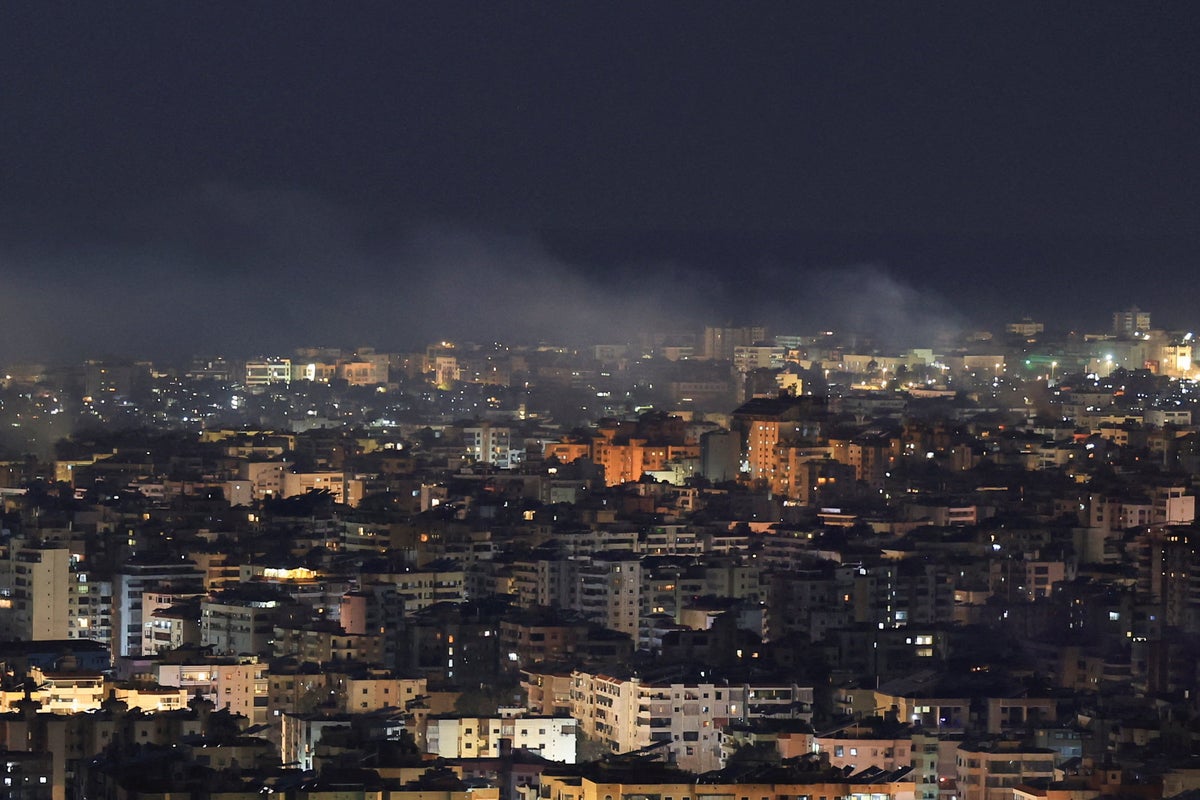
Night falls differently in a war zone. The darkness isn't a blanket; it's a blindfold. In the wake of the Cyprus strike, the Mediterranean night feels heavier.
We are no longer in a world where "foreign" wars stay foreign. The drone in Akrotiri proved that. The lines on the map are being blurred by the smoke of a thousand small fires. Whether it is a British airman in Cyprus, a mother in Kiryat Shmona, or a farmer in Tyre, the fear is becoming a shared language.
The drone didn't just hit a base. It hit the idea that we can remain insulated from the chaos of the Middle East by a few hundred miles of water. The ocean is no longer a moat; it is a bridge.
The buzz of the engine has faded, but the silence that followed is even louder. It is the silence of a region holding its breath, waiting to see if the next shadow in the sky is just a cloud, or the end of the world as they know it.
The salt air in Akrotiri is still there, but now, when the wind kicks up, people don't just smell the sea. They look up. They listen for the wasps. And they wonder if the shadows have finally decided to claim the land.