The siren does not scream. It moans. It is a low, mechanical wail that starts in the gut before it reaches the ears, a sound designed to trigger a primal, cellular panic. In Tel Aviv, a young father named Elias—a fictional composite of the thousands who spent Tuesday night in concrete boxes—doesn't look at the news. He doesn't need to. He simply scoops up his three-year-old, who is still clutching a half-eaten piece of toast, and moves toward the stairwell.
They call it the "Iron Dome," a name that suggests a static, protective lid over a civilization. But as 180 ballistic missiles streaked across the atmosphere from Iran, the reality was far more violent and fragile. This wasn't a skirmish. It was a choreographed rain of fire that stretched from the oil refineries of the Persian Gulf to the ancient stone corridors of Beirut and the high-tech hubs of central Israel.
The facts are cold. Iran launched a massive wave of missiles in retaliation for the deaths of high-ranking leaders in Lebanon and Tehran. The missiles crossed sovereign borders in minutes. Iraq’s airspace turned into a silent vacuum as commercial flights scrambled to escape the path of supersonic projectiles. But facts don’t capture the smell of ozone in the air or the way the ground vibrates when an interceptor hits its mark five miles above your head.
The Geography of Fear
When we look at a map of West Asia, we see lines drawn in the sand by colonial powers a century ago. When a missile is in flight, those lines vanish. The trajectory of a Fattah-1 hypersonic missile ignores the nuances of diplomacy. It only knows physics.
Consider the sheer scale of this escalation. For years, the conflict lived in the shadows—sabotage at sea, cyberattacks on power grids, whispers in dark rooms. Now, the shadows have been incinerated. By targeting central Israel, Iran moved from proxy warfare to a direct, state-on-state confrontation that threatens the very backbone of global energy.
In Iraq, the sound of the launches was a rhythmic thudding that shook windows in Baghdad. For the people there, the war isn't something they watch on a screen; it is an atmospheric condition. They live in the "in-between." They are the flight path. As missiles soared overhead toward their targets, the Iraqi government was forced to shut down its entire aviation sector. Imagine a country’s pulse simply stopping because the sky has become a graveyard for metal.
The Invisible Stakes of the Oil Fields
While the world watches the explosions in Beirut’s southern suburbs or the flashes over Jerusalem, the real "engine" of this conflict sits in the silence of the desert. Iran’s energy infrastructure—its refineries, its pumping stations, its lifeblood—now sits squarely in the crosshairs of a promised Israeli counter-response.
This isn't just about gas prices at a pump in Ohio or London. It is about the delicate, fraying thread of global stability. If the refineries at Kharg Island are neutralized, the shockwaves won't just be felt in Tehran. They will ripple through the markets of Shanghai and the manufacturing hubs of Europe.
War is often sold as a clash of ideologies. In reality, it is a clash of resources. The "invisible stakes" are the millions of barrels of oil that keep the modern world from sliding into a dark age. When a missile hits an energy site, it isn't just destroying a building; it is erasing the economic certainty that allows a family in a distant country to heat their home or a hospital to run its generators.
The Symphony of Interception
Back in the shelter, Elias listens. The "boom" of a hit is different from the "crack" of an interceptor. The Arrow-3 system, Israel’s top-tier defense, works by hitting a bullet with another bullet in space. It is a miracle of engineering born of a nightmare.
Crack.
Boom.
Silence.
The silence is the worst part. In that silence, you wonder where the debris fell. You wonder if the "hits" reported in the news—the craters near the Tel Nof airbase or the shrapnel that fell in the West Bank—belong to you or your neighbor.
In Beirut, the silence is even more elusive. The strikes on the Dahiyeh district aren't intercepted by high-tech domes. They are felt as a sudden displacement of air, a pressure that pops eardrums and collapses old masonry. The news reports call them "targeted strikes." To a grandmother sitting in a basement three blocks away, there is nothing targeted about the way her tea set rattles off the shelf and shatters on the floor.
The Gravity of the Choice
We are told that this is a cycle of escalation. That word—cycle—implies something mechanical, something that cannot be stopped. But cycles are made of choices.
Iran chose to fire.
Israel chooses how to respond.
The United States chooses how to mediate.
The complexity of these decisions is staggering. If Israel hits Iran’s nuclear facilities, the world enters a new era of uncertainty. If they hit the oil fields, the global economy shivers. If they do nothing, they signal that their "Iron Dome" is the only thing standing between them and extinction.
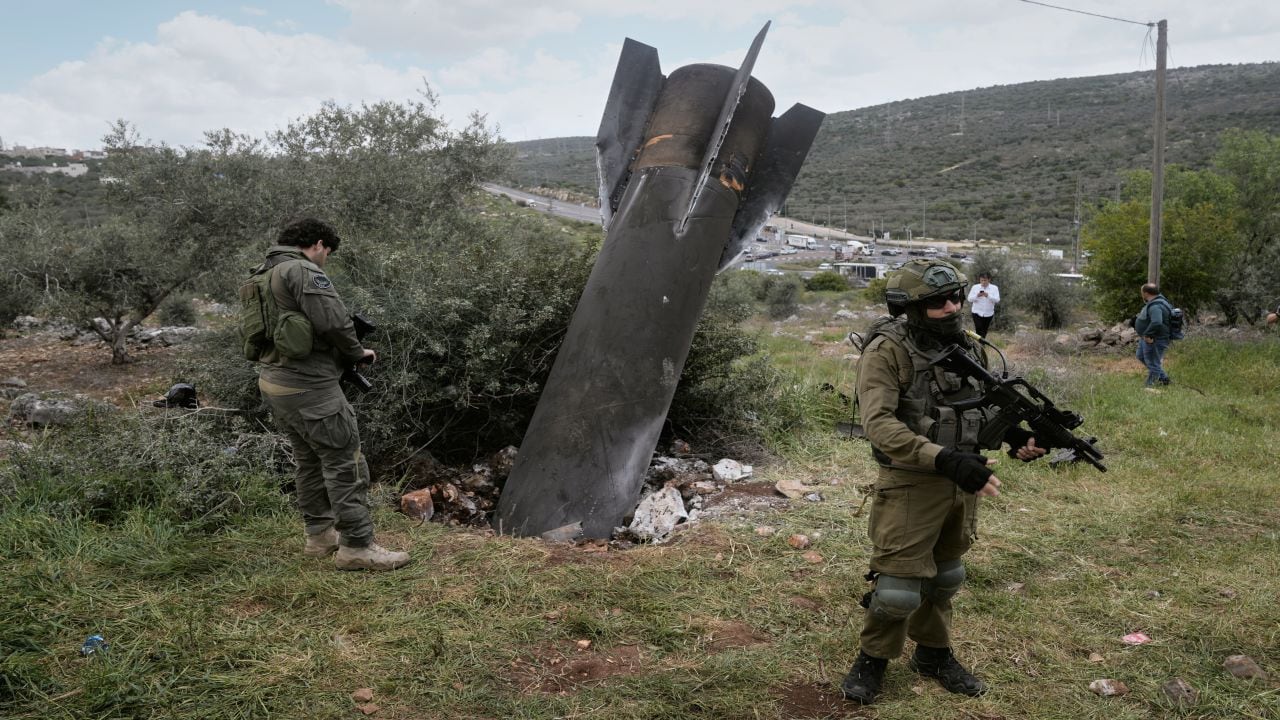
It is easy to get lost in the jargon of "strategic depth" and "deterrence parity." It is harder to look at the photo of a crater in the middle of a civilian road and realize that, just minutes before, someone was driving there, perhaps thinking about their taxes or what to have for dinner.
The truth is that we are witnessing the death of the "contained" war. The borders of this conflict have bled into Iraq, Yemen, Lebanon, and Syria. It is a regional wildfire fueled by decades of grievances and high-grade propellant.
Elias eventually leaves the shelter. The "all-clear" signal is a long, steady tone—the antithesis of the wail that brought him there. He walks back to his kitchen. The toast is cold. The TV is a frantic mosaic of maps and red dots.
He looks at his son, who is already asking to go back to sleep. The boy doesn't know about the Arrow-3 or the Kharg Island refineries. He doesn't know that his father’s hands are shaking. He only knows that the loud noises have stopped for now.
Outside, the sky is dark again, but it isn't empty. It is heavy with the weight of what comes next, a silence that feels less like peace and more like a held breath.
The iron is still up there, waiting for the next command to fall.