The flicker of a television screen in a darkened living room in Ohio rarely has anything to do with the price of a gallon of milk in London or the value of a retirement account in Tokyo. Usually. But tonight, the blue light reflecting off the walls carried a weight that made the air feel thin. For months, the headlines had been a drumbeat of escalation. Rhetoric between Washington and Tehran had moved past the point of posturing and into the realm of the inevitable. We were all just waiting for the first spark to hit the dry brush of the Persian Gulf.
Then, the ticker changed. For a different look, consider: this related article.
The scrolling red text at the bottom of the screen didn't announce a strike. It announced a signature. A ceasefire.
In the immediate wake of that news, something strange happened. The world didn't erupt in cheers; it erupted in math. Within minutes, the digital boards that track the lifeblood of the global economy began to bleed red in one column and glow green in another. To a casual observer, it was just data. To anyone who has ever worried about how they’ll afford to heat their home or whether their small business can survive another month of rising costs, it was a miracle of mechanics. Related insight on this matter has been published by The Motley Fool.
The Ghost in the Tank
Consider a man named Elias. He’s hypothetical, but his reality is repeated millions of times over across the globe. Elias runs a small trucking fleet in the Midwest. For the last six months, he hasn't been sleeping. Every time a new headline about a drone over the Strait of Hormuz hit the wires, the price of crude oil spiked. For Elias, that wasn't a geopolitical data point. It was a direct tax on his survival.
When oil prices sit at $95 a barrel because the world is terrified of a supply chokehold, Elias has to choose between maintaining his trucks and paying his drivers a living wage. The tension between the U.S. and Iran acted like a phantom hand reaching into his pocket every single morning.
Crude oil is the most sensitive barometer of human fear on the planet. It doesn't just react to what is happening; it reacts to what might happen. Traders call this a "risk premium." It’s essentially a surcharge for anxiety. For months, we have all been paying an anxiety tax on every plastic toy, every head of lettuce, and every commute.
The moment the ceasefire was confirmed, that premium evaporated.
The price of West Texas Intermediate (WTI) didn't just drift down. It plummeted. It fell by nearly 6% in a single trading session. In the sterile language of Wall Street, this is "volatility." In the language of the kitchen table, this is the sound of a heavy burden being set down. When the threat of a closed shipping lane vanishes, the oil that is already in the tanks suddenly becomes less precious. The scarcity was a hallucination born of fear, and the ceasefire was the cold water that woke everyone up.
The Great Migration of Capital
While the oil pits were seeing a sell-off, something diametrically opposite was happening a few miles away on the floor of the New York Stock Exchange. If oil is where fear is priced, the stock market is where hope is bought.
Imagine the market as a massive, panicked crowd that has been huddled under an umbrella during a thunderstorm. For months, investors have been sitting on cash, too afraid to buy into companies because a war would mean a global recession. The moment the ceasefire was announced, the sun didn't just come out—the umbrella was tossed aside, and the crowd started to run.
The Dow Jones Industrial Average and the S&P 500 didn't just tick up; they leaped.
This isn't just about rich people getting richer. It’s about the underlying machinery of the world. When stocks soar after a peace agreement, it’s because the cost of doing business just got cheaper. Airlines realize they won't have to spend their entire profit margin on jet fuel. Tech companies realize that the global supply chain for semiconductors—which relies on stable shipping—is no longer under immediate threat.
The market's surge is a vote of confidence in a future that actually exists.
But there is a nuance here that often gets lost in the "Oil Down, Stocks Up" headlines. The relationship between these two things is a seesaw. When oil is too expensive, it acts as a brake on the entire economy. It makes everything—from the power used to run a server farm to the gas used to deliver a pizza—more expensive. By removing that brake, the ceasefire effectively gave the global economy a massive, unannounced stimulus package.
The Invisible Stakes of the Strait
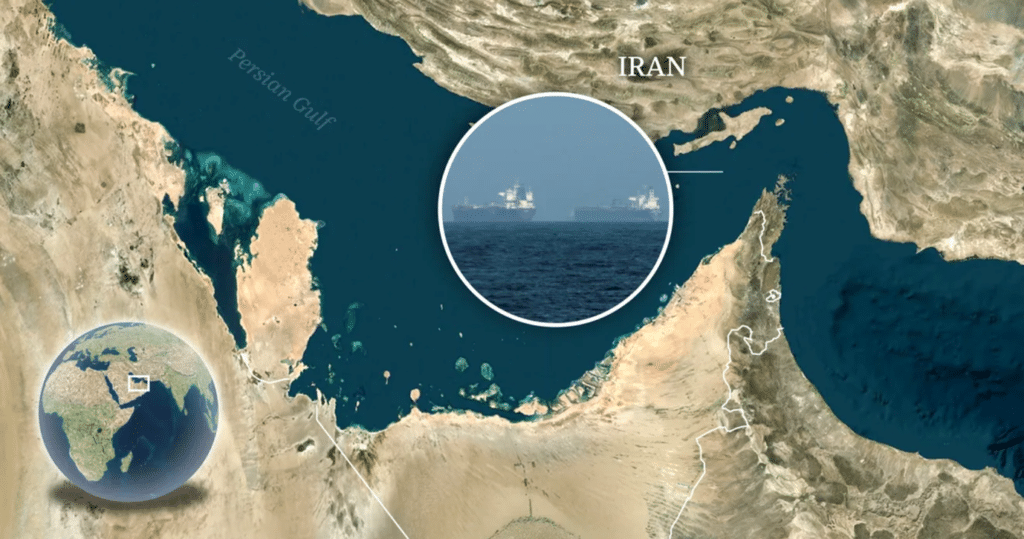
To understand why a few pens hitting paper in a neutral room could cause such a violent shift in wealth, you have to look at a map. Specifically, you have to look at the Strait of Hormuz.
It is a narrow stretch of water, barely 21 miles wide at its narrowest point. Through this tiny throat passes one-fifth of the world’s total oil consumption. It is the most significant chokepoint in the global energy supply. For months, the U.S. and Iran have been staring at each other across this water.
If a single tanker had been sunk, the price of oil wouldn't have just risen; it would have doubled. We would have seen $150 or $200 a barrel. The global economy isn't built to handle that kind of shock. It would have triggered a domino effect: bankruptcies, mass layoffs, and a freezing of international trade.
The ceasefire didn't just lower prices. It prevented a collapse.
The people who trade these commodities aren't looking at the morality of the deal. They aren't reading the fine print of the diplomatic cables. They are looking at the math of the "what if." The "what if" was a catastrophe. The "now is" is a return to a fragile, but functional, status quo.
The Human Side of the Ledger
We talk about "The Market" as if it is a sentient beast, a monster that lives in a cave and demands sacrifices. We say "The Market reacted" or "The Market is worried." But the market is just us. It is the collective sum of every person’s decision to buy, sell, or hold.
When oil prices plunge, it means a mother in a suburb can afford the "good" groceries this week because she saved $15 at the pump. It means a logistics manager in Germany can finally approve the purchase of new electric vans because his budget isn't being cannibalized by diesel costs.
When stocks soar, it means the pension funds that hold the life savings of teachers and firefighters are suddenly bolstered. It means the 401(k) that looked like it was in a death spiral for three months finally has a green line pointing toward the top right corner of the screen.
There is a profound irony in the fact that peace—a concept we usually associate with the soul, with ethics, and with the preservation of life—is so perfectly translated into the cold, hard currency of a spreadsheet. We measure the success of diplomacy by the absence of gunfire, but the world measures it by the abundance of opportunity.
The Uncertainty of the Morning After
However, we should be careful not to mistake a rally for a resolution.
The stocks are up today because the immediate threat of fire is gone, but the embers are still there. Geopolitics is rarely a clean break; it is a series of messy compromises. The ceasefire provides the "breathing room" that economists love to talk about, but it doesn't fix the underlying tensions that led us to the brink in the first place.
Supply and demand are still the ultimate masters. While the "fear premium" has been removed from oil, the physical reality of how much we produce and how much we burn hasn't changed overnight. If anything, lower prices might actually drive demand back up, eventually creating a new floor for how low the price can go.
And for the stock market, the "sugar high" of a peace deal can wear off quickly if it isn't followed by actual economic growth. Investors are fickle. Today they are celebrating peace. Tomorrow they will be worried about inflation, interest rates, or the next election.
The Weight of the Silence
For now, though, there is the silence.
The silence of the guns that didn't fire. The silence of the panic that subsided.
In the ports of the Persian Gulf, the tankers are moving with a little less shadow hanging over their decks. In the trading pits of Chicago and New York, the screaming has died down to a hum. And in that small office in the Midwest, Elias looks at the price of fuel on his phone, breathes a sigh of relief, and finally calls his wife to tell her he’ll be home for dinner.
The world is a complicated, often violent place where the interests of empires frequently collide with the needs of individuals. Sometimes, the only way we can see the true value of peace is by looking at the numbers it leaves behind. Tonight, those numbers are telling a story of a world that was given a second chance to keep moving.
Money is just a way of counting what we value. And today, the world decided that a future without a war was worth more than any price per barrel could ever capture.
The screens will keep flickering. The tickers will keep scrolling. But for one rare moment, the red and the green on the board actually meant exactly what we wanted them to: that the worst-case scenario stayed in the dark where it belongs.