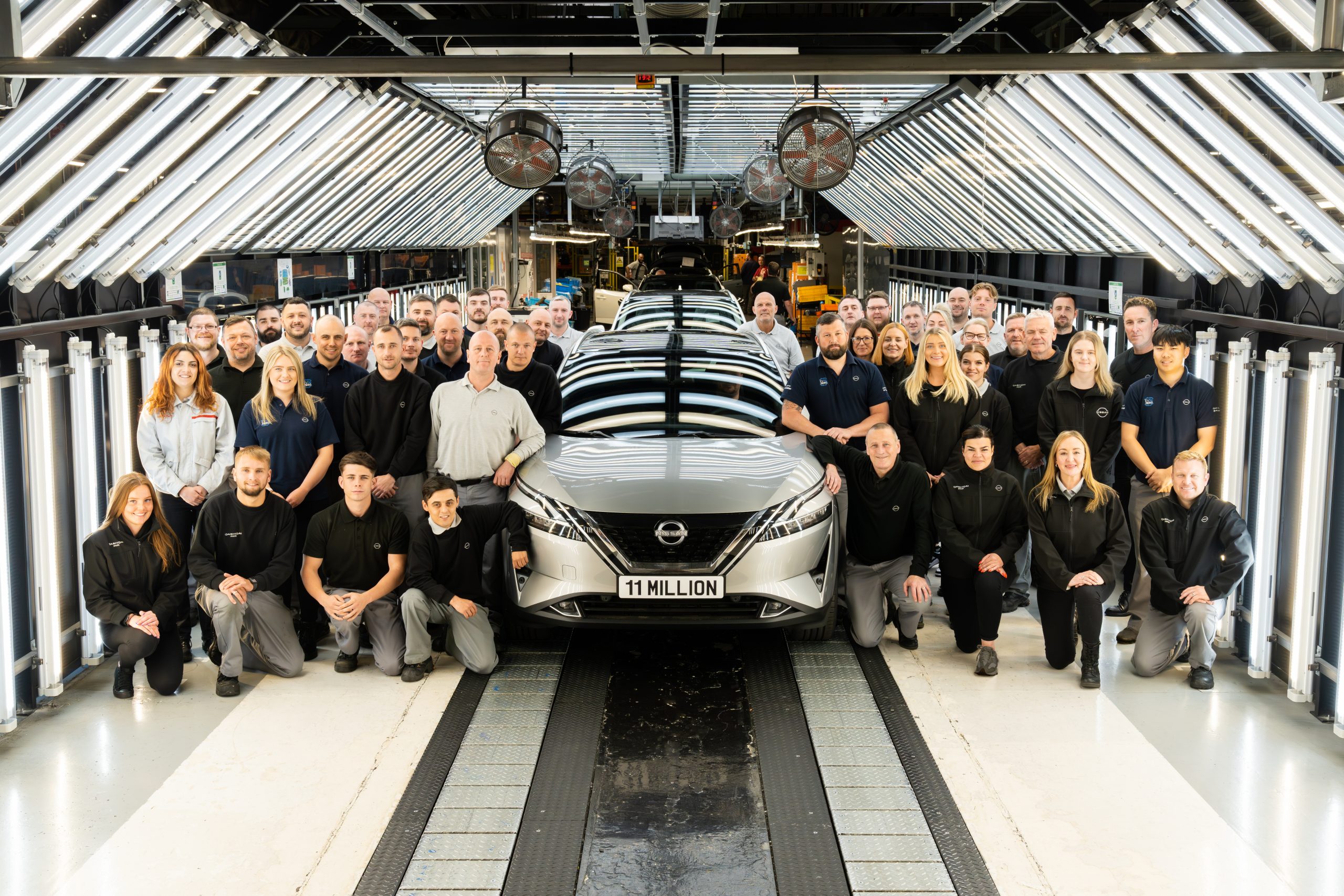
The threat of losing the UK’s crown jewel of automotive manufacturing isn't just another Brexit-flavored headline. It’s a cold, hard calculation of survival in a world where "Made in Europe" is becoming a gated community. Nissan has reportedly warned the British government that its massive Sunderland plant—a site that supports roughly 30,000 jobs—faces an "existential threat" if the UK is frozen out of new EU manufacturing incentives.
Honestly, this shouldn't surprise anyone. The European Union is currently drafting the Industrial Accelerator Act (IAA), a massive plan designed to shield its homegrown industries from cheap Chinese imports. The catch? As it stands, some of those juicy subsidies and fleet-purchasing perks are only for cars assembled inside the EU-27. Since the UK is no longer in that club, Sunderland-made cars like the Qashqai and the Juke could soon be treated like outsiders in their biggest market.
The billion-pound gamble at Sunderland
Sunderland isn't just a factory; it’s a bellwether for the entire British economy. Nissan has already poured billions into the site, including a recent £2 billion commitment to transform it into an "EV36Zero" hub. This isn't just about bolting parts together. We’re talking about a massive gigafactory for batteries, renewable energy microgrids, and the production of three all-electric models.
If the EU decides that "European" doesn't include the UK, those investments start to look very shaky. Two-thirds of car sales in Europe go to corporate fleets. The current EU proposals suggest that only EU-assembled cars would qualify for subsidies in that sector. If you're a fleet manager in Paris or Berlin, why would you buy a Sunderland-built Nissan if a Renault or VW comes with a massive government kickback? You wouldn't. It’s that simple.
Breaking down the Made in Europe rules
The core of the issue lies in the fine print of the Industrial Accelerator Act. The EU wants to build a fortress around its green tech. They’ve suggested a "content equivalent to Union origin" rule for some parts, which sounds good on paper. It means if a car uses enough EU-made parts, it might qualify for certain incentives.
But there’s a massive "but" here. The rules for corporate fleets and "super credits" for small EVs are still looking like they’ll require actual assembly within the EU borders.
- The Fleets Problem: Corporate buyers dominate the market. Losing access to this segment is a death sentence for high-volume plants.
- The Subsidy Gap: If an EU-made EV gets a €5,000 subsidy and a UK-made one doesn't, the UK car is dead on arrival.
- The Complexity Trap: Nissan has pointed out that having different rules for different types of subsidies is a nightmare. They want a "simple solution" where UK-made cars are treated as "Union origin" across the board.
Why this is different from previous Brexit scares
We've heard the "Nissan might leave" story before, usually right before a big government grant is announced. But 2026 feels different. The global automotive landscape has shifted. China is flooding the market with high-quality, low-cost EVs. The US is sucking up investment with the Inflation Reduction Act. The EU is reacting with its own version of protectionism.
The UK is caught in the middle. We don't have the fiscal firepower to match the US or EU in a subsidy war. Our only play is diplomacy. Business Secretary Peter Kyle has been in Brussels trying to play nice, but the EU isn't known for doing favors for "third countries" unless there’s something big in it for them.
The supply chain reality check
Here’s what people often get wrong: they think of car manufacturing as a local activity. It’s not. It’s a deeply integrated web. Nissan pays over €550 million every year to EU-based suppliers for parts that end up in cars built in Sunderland.
If Sunderland closes, those EU suppliers lose half a billion Euros in business. The Society of Motor Manufacturers and Traders (SMMT) estimates the total cross-channel trade at risk is nearly £70 billion annually. This isn't just a British problem; it's a European manufacturing crisis in the making.
What happens if the deal fails
If the UK fails to secure "trusted partner" status or equivalent origin rules, the 10% tariff cliff-edge—which we’ve managed to delay until now—becomes the least of our worries. The real killer is the exclusion from the subsidy ecosystem.
Without those incentives, Sunderland becomes a "high-cost" island. Nissan has been operating below its 600,000-car-a-year capacity for a while now. They need volume to stay profitable. If the EU market is restricted, that volume disappears, and the plant's business case collapses.
Survival steps for the UK auto sector
The government can't just write another check and hope for the best. This requires a structural fix to the Trade and Cooperation Agreement (TCA).
- Secure "Union Origin" Status: This is the top priority. The UK needs to be treated as part of the EU's internal market for the purposes of green subsidies.
- Re-join the PEM Convention: Getting back into the Pan-Euro-Mediterranean Convention would simplify rules of origin and make parts-sharing across borders much easier.
- Infrastructure Acceleration: If we can’t match EU subsidies, we have to make the UK the most efficient place to build. That means cheaper energy and faster planning for gigafactories.
Don't wait for the headlines to confirm a closure. If you're in the automotive supply chain or looking at the UK as an investment destination, the next six months of negotiations in Brussels will tell you everything you need to know about the future of British manufacturing. Focus on the annexes of the IAA—that's where the real power lies.
Reach out to your local MP or industry body to demand transparency on the progress of the "Trusted Partner" negotiations. The time for vague assurances is over; the industry needs a signed agreement that puts UK assembly on equal footing with the EU-27 before the next investment cycle begins.